
Timandra griseata
Timandra griseata
Description
How to identify
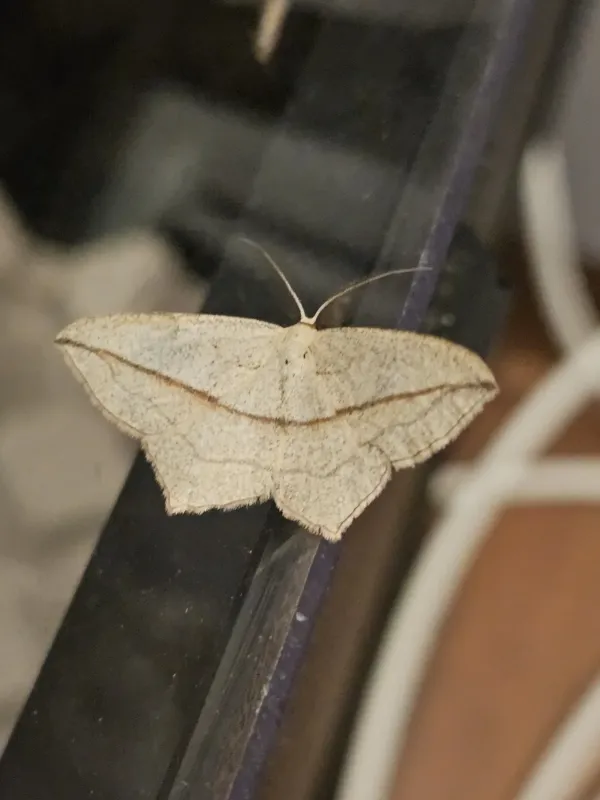
Timandra griseata belongs to the Geometridae family, known as geometer moths or loopers. These moths are distinct due to their triangular resting posture, where the wings are spread flat.
The adult moth features brownish-gray wings with a very thin, straight dark line that runs continuously across both the forewings and hindwings, acting as excellent camouflage.
The larvae, often referred to as loopers, move by drawing their hind legs forward to meet their front legs, which gives them a distinct arched back appearance while walking.
The life cycle involves metamorphosis, passing through the stages of egg, larva, pupa, and adult. The insect typically overwinters in the pupal stage within the soil or leaf litter.
Depending on the latitude, the insect can produce one or two generations per year, with activity peaking during the warm summer months when host plants are in full growth.
What it damages
This species is primarily known for infesting buckwheat crops (Fagopyrum esculentum), where larvae consume foliage and occasionally reproductive parts.
The damage caused by larvae leads to a significant loss of leaf area, reducing the plant's ability to perform photosynthesis and ultimately impacting grain development.
Severe infestations can lead to reduced vigor of the crop, making the plants more susceptible to environmental stressors and secondary fungal infections on injured tissues.
Although they rarely destroy entire crops, the cumulative impact of larval feeding during critical growth phases can lead to notable yield losses in terms of weight and quality.
Monitoring the population density is crucial, especially in regions with intensive buckwheat cultivation, to prevent the transition from minor grazing to economically significant damage.
Signs of infestation
The most common sign of infestation is irregular, ragged feeding holes on the leaf edges or interiors, which are typical of caterpillar grazing behavior.
Presence of larvae, which are often found resting on the underside of leaves or along the stem, provides definitive evidence of an ongoing active infestation.
Frass (larval excrement) observed on the surface of leaves beneath feeding sites is a clear indicator that the caterpillars are currently active and consuming plant tissue.
General wilting or delayed development of the crop, when observed alongside leaf defoliation, points to the potential impact of high larval populations.
Evening observations are the most effective way to detect the presence of adults, as the moths become active at dusk and can be spotted flying around the field margins.
Control measures
Cultural control practices, such as autumn plowing, are highly effective in disrupting the life cycle of the moth by destroying the pupae residing in the soil.
Maintaining clean field borders by removing wild host plants from the Polygonaceae family helps to reduce the local population reservoir and prevents re-infestation.
Biological control options, including the use of Bacillus thuringiensis sprays, provide an eco-friendly way to manage larvae while preserving beneficial insect populations.
Chemical control with systemic or contact insecticides should be reserved for scenarios where population levels surpass the established economic injury threshold.
Integrated Pest Management (IPM) strategies, combining regular field scouting and targeted application of pesticides, are the gold standard for managing this pest sustainably.
Taxonomy
- Latin name
- Timandra griseata
- Order
- Lepidoptera (butterflies)
- Family
- Geometridae
- EPPO code
- CLTHAM
Discussion
No discussions yet — be the first.