
Timandra
Timandra
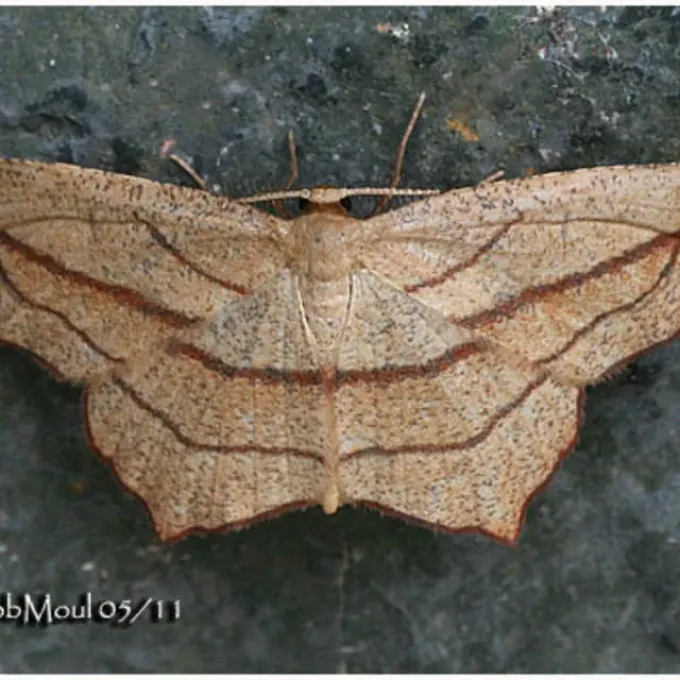
Description
How to identify
The genus Timandra belongs to the Geometridae family of moths. These are medium-sized insects characterized by the angular shape of their hindwings, which makes them easily recognizable in the field.
Adults typically display a yellowish-white or pale pink coloration with a distinct diagonal line crossing both forewings and hindwings. The head and thorax match the general wing color tone.
The larvae, known as loopers, possess slender bodies and have evolved to mimic plant twigs, making them extremely difficult to detect during routine crop inspections.
Systematically, the genus is part of the order Lepidoptera, subfamily Sterrhinae. Identifying specific species often requires a detailed analysis of genitalia, as the external appearance of the imago is remarkably similar across the group.
The development follows a complete metamorphosis cycle: egg, larva, pupa, and imago. Pupation usually occurs within a loose cocoon hidden among plant debris or in the topsoil.
What it damages
The primary host plants for Timandra larvae are members of the Polygonaceae family, with a particular affinity for dock (Rumex) and buckwheat (Fagopyrum) species.
In intensive agricultural settings, these pests can damage buckwheat crops by reducing leaf surface area and interfering with the development of reproductive organs.
The damage is most significant during the early vegetation stages, when larvae require high amounts of biomass to support their rapid growth.
Under high population pressure, the pests can consume entire leaf blades, leaving only the coarse veins behind, which severely hinders plant vigor and reduces overall grain yield.
In addition to crops, the larvae are often found on weeds such as knotgrass, allowing them to persist in agroecosystems even when primary crops are not present.
When it appears
Adult moth activity typically peaks during the summer months, often manifesting in two distinct generations, depending on local temperature regimes and seasonal climatic variations.
The first generation of adults is active in late spring or early summer, ensuring egg-laying on host plants to facilitate the development of the next generation of larvae.
The second generation reaches its peak activity in late summer, with larvae feeding intensively before entering the pupal stage to overwinter.
The optimal temperature range for development is between 20–25 degrees Celsius, while significant temperature drops can drastically slow down the life cycle.
Air humidity is a critical factor for egg and larval survival; therefore, prolonged droughts may naturally limit the spread of the population in open fields.
Signs of infestation
Initial signs of infestation include characteristic feeding patterns: larvae graze on leaf tissue from the edges or create irregular holes throughout the leaf blade.
The presence of frass (larval excrement) on leaf surfaces or beneath the plant is a strong indicator of active infestation and requires immediate field monitoring.
Wilting of young leaves or stem damage resulting from heavy feeding are also important diagnostic signs for agronomists during crop surveys.
During the evening or on overcast days, one may observe adult moths performing short, fluttering flights near their host plants, indicating their presence.
Careful inspection of the undersides of leaves often reveals clusters of eggs, which have a species-specific color and configuration.
Control measures
Agronomic control measures include deep autumn plowing (tillage), which helps destroy pupae overwintering in the soil and decaying plant debris.
Effective weed management, especially targeting Polygonaceae species like dock and knotweed along field margins, significantly reduces potential breeding reservoirs.
When the economic injury level is reached, the application of broad-spectrum insecticides, such as pyrethroids or organophosphates, is recommended for effective suppression.
- Implementation of crop rotation schemes.
- Timely inter-row cultivation.
- Utilization of biological control agents (entomophages).
In cases of mass outbreaks, spraying with microbial preparations based on Bacillus thuringiensis is a highly effective and eco-friendly control method that preserves beneficial insects.
Taxonomy
- Latin name
- Timandra
- Order
- Lepidoptera (butterflies)
- Family
- Geometridae
- EPPO code
- TIMNSP
Discussion
No discussions yet — be the first.