
Cicada
Tibicen haematodes
Description
How to identify
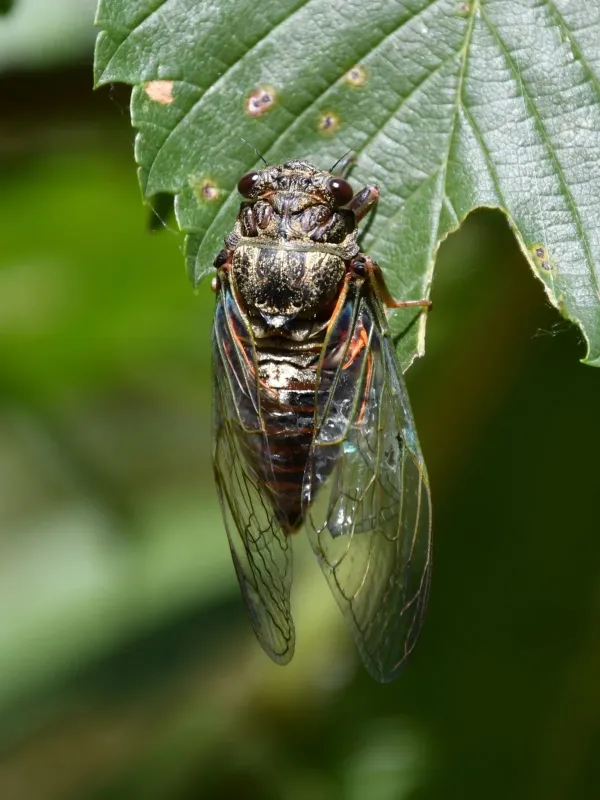
The common cicada (Tibicen haematodes) is a large insect belonging to the Cicadidae family, recognized by its distinct morphology and loud vocalizations.
Adults typically measure between 30 and 40 mm in length, featuring clear, membranous wings with prominent venation and a dark body with reddish-orange markings.
They possess a wide head with large, compound eyes located on the sides and a robust proboscis specifically adapted for piercing plant tissues and extracting sap.
The larval stage is spent underground, where nymphs live for several years, feeding on the roots of trees and shrubs using strong, specialized digging front legs.
Males are well-known for their loud, buzzing song, produced by tymbal organs located on their abdomen, which is primarily used to attract females during the breeding season.
What it damages
Adult cicadas cause damage by feeding on the sap of green shoots and young branches, which can weaken the plant and impede its overall growth and vigor.
The most significant harm is caused by females during the egg-laying process, as they utilize their saw-like ovipositor to create deep cuts in the stems of plants.
These incisions can lead to the wilting, drying, and eventual breaking of the shoots, especially under stress from wind or heavy foliage, negatively impacting the tree structure.
Affected plant species include a variety of fruit trees such as apple, pear, and peach, as well as grapevines, where stem damage can create entry points for pathogens.
In cases of severe infestation, the cumulative loss of annual growth can lead to reduced fruit yields and structural damage that compromises the longevity of the orchard.
When it appears
Adult cicadas emerge from the soil during the warm summer months, typically spanning from June through August, depending on regional climatic conditions.
This period corresponds with the peak activity of mating and oviposition, making summer the most critical time for monitoring and implementing control measures.
Nymphs remain active in the soil throughout the year, but their feeding impact is rarely noticeable compared to the immediate structural damage caused by adults.
The emergence of adults is often staggered, meaning protective interventions may need to be maintained over several weeks to cover the entire peak activity window.
Hot and dry weather cycles often favor the development and mass emergence of these insects, increasing the pressure on garden and orchard plants.
Signs of infestation
The most obvious sign of an infestation is the piercing, continuous buzzing sound made by males, which is clearly audible throughout the garden on sunny days.
Visual inspection of young branches often reveals linear patterns of slits or scars, which are the telltale indicators of egg-laying activities by the females.
Yellowing, flagging, or drooping of terminal shoots is a common symptom, indicating that the vascular system of the branch has been disrupted by insect feeding.
In the soil near the base of infested trees, small, round exit holes can be seen, which are left behind when nymphs emerge to undergo their final moult into adults.
Premature leaf drop and localized tissue necrosis around the oviposition scars can also serve as diagnostic features for gardeners identifying the presence of cicadas.
Control measures
Pruning and destroying infested branches is a primary management strategy to remove eggs and reduce the potential population of the next generation.
Maintaining clean orchard floors and practicing regular soil cultivation can help disrupt the life cycle of nymphs and reduce their survival rates in the root zone.
In instances of high insect pressure, selective use of registered insecticides can be effective, provided they are applied during the adult flight period before egg-laying occurs.
Biological control through the encouragement of natural predators, such as birds, small mammals, and predatory insects, can help maintain population balance in the garden.
Ensuring trees are well-irrigated and healthy helps them tolerate light feeding pressure and provides the necessary resources for rapid wound healing after damage.
Taxonomy
- Latin name
- Tibicen haematodes
- Order
- Hemiptera (bugs, aphids, leafhoppers)
- Family
- Cicadidae
- EPPO code
- TIBCHA
Discussion
No discussions yet — be the first.