
Cicada
Tibicen
Description
How to identify
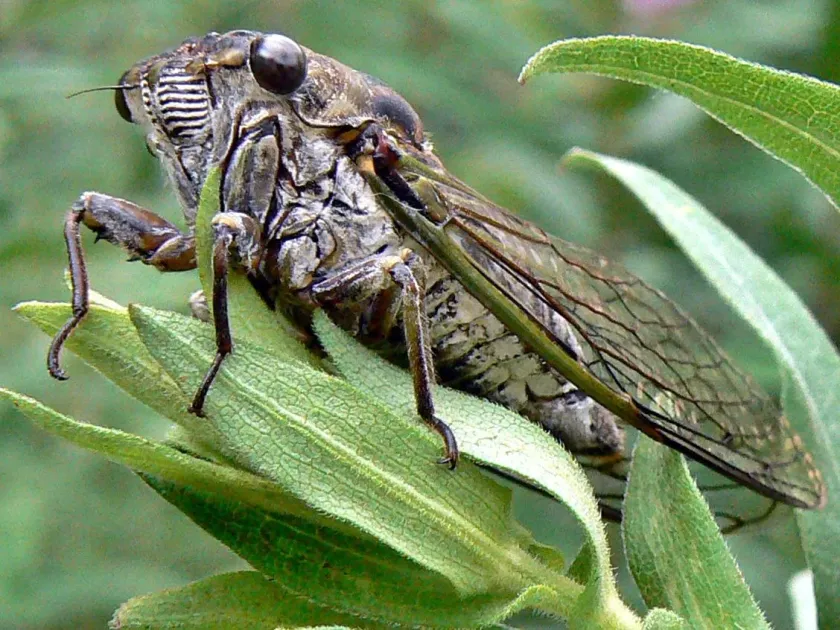
The cicada (genus Tibicen) is a large insect belonging to the order Hemiptera. These insects are easily recognized by their bulky bodies, prominent compound eyes, and transparent wings with intricate vein patterns, as well as the loud acoustic signals produced by males.
Adult cicadas measure between 30 and 50 millimeters in length. They possess a robust thorax and a broad head, making them one of the most physically imposing insects commonly found in forested and agricultural landscapes.
The life cycle of the cicada is uniquely long, with many species spending several years underground in the larval stage. During this time, they feed exclusively on the xylem sap from the roots of trees and shrubs.
Larvae are subterranean specialists, equipped with powerful forelegs designed for digging through dense soil. Because they spend the majority of their lives beneath the surface, they remain hidden from conventional pest monitoring efforts for most of their cycle.
After reaching maturity, the nymph crawls to the surface and climbs onto a vertical structure, such as a tree trunk. It then undergoes a final molt, leaving behind an empty exoskeleton (exuviae), which is a diagnostic sign of their recent activity.
What it damages
The primary agricultural damage is caused by females during oviposition. Using a specialized, sword-like ovipositor, they create deep, slanted incisions into young, tender twigs to deposit their eggs under the bark.
These incisions cause significant mechanical stress to the branch. Consequently, twigs often wilt, break under their own weight, or die off entirely. This results in reduced canopy density and can negatively impact the total fruit yield of the tree.
Adults also feed by piercing the bark with their proboscis to consume plant sap. While a single insect does minimal damage, high populations can induce stress in trees, particularly those already struggling with environmental factors like drought or disease.
Fruit trees, including apple, pear, peach, and plum varieties, are the most common targets. Additionally, grapevines and various ornamental trees can suffer severe damage during years of high cicada population density.
- Mechanical breakage of terminal branches.
- Wilt and necrosis of young vegetative growth.
- Increased tree stress and loss of vigor.
- Damage to fruit-bearing potential due to limb loss.
When it appears
Adult cicadas appear during the peak heat of summer. Their emergence is typically triggered by stable, high temperatures which facilitate the energetic requirements for their mating calls and reproductive success.
The characteristic loud buzzing is most prominent during the months of July and August. This period corresponds to the peak of adult activity, where they are visible throughout the canopy of affected trees.
Following the mating season, females focus on depositing eggs. Once the eggs hatch, the tiny nymphs fall to the ground and quickly burrow into the soil, where they will remain for the next several years.
The emergence of cicadas is often periodic. Some years may have very few visible individuals, while others may witness mass emergence events, creating localized outbreaks that require diligent management.
Timing interventions is critical. Pruning operations should target branches containing egg nests before the nymphs hatch and enter the soil to successfully reduce the number of insects emerging in future years.
Signs of infestation
The most evident sign of a cicada infestation is the appearance of longitudinal scars or split bark on young, succulent twigs. These scars often appear in repeating, jagged rows where the female has inserted her ovipositor.
Leaves turning brown or wilting at the ends of twigs during mid-summer is a clear indicator that the branch's vascular system has been compromised by the female's egg-laying activities.
Finding empty, translucent larval exoskeletons attached to the lower trunks of trees or nearby fence posts confirms that a cicada population has completed its life cycle in the immediate vicinity.
An intense, droning sound emanating from the canopy during sunny afternoons serves as an inescapable signal that a significant number of adult cicadas are present in the garden.
In cases of heavy feeding, you might observe sap or gum bleeding from the bark where the insects have tapped into the tree's xylem. This can sometimes attract secondary pests or pathogens that further weaken the tree.
Control measures
The most effective management strategy is the mechanical removal and destruction of damaged twigs. These branches must be collected and incinerated promptly to destroy the eggs before the nymphs emerge.
Insecticide use should be limited to instances of severe infestation and applied only during the peak emergence of adults. Always follow label directions to ensure safety and minimize harm to beneficial insects.
Promoting a garden environment that supports predatory birds and small mammals is highly recommended, as they are natural controllers of cicada populations and help keep numbers in check.
Maintaining high levels of plant vigor through proper fertilization and consistent irrigation allows trees to recover more efficiently from the mechanical wounds inflicted by cicadas.
Monitoring for the start of the emergence season helps gardeners prepare defensive measures. If infestation levels have been historically high, netting young trees during the peak flight season can prevent egg-laying damage.
Taxonomy
- Latin name
- Tibicen
- Order
- Hemiptera (bugs, aphids, leafhoppers)
- Family
- Cicadidae
- EPPO code
- TIBCSP
Discussion
No discussions yet — be the first.