
Thysanopyga intractata
Thysanopyga intractata
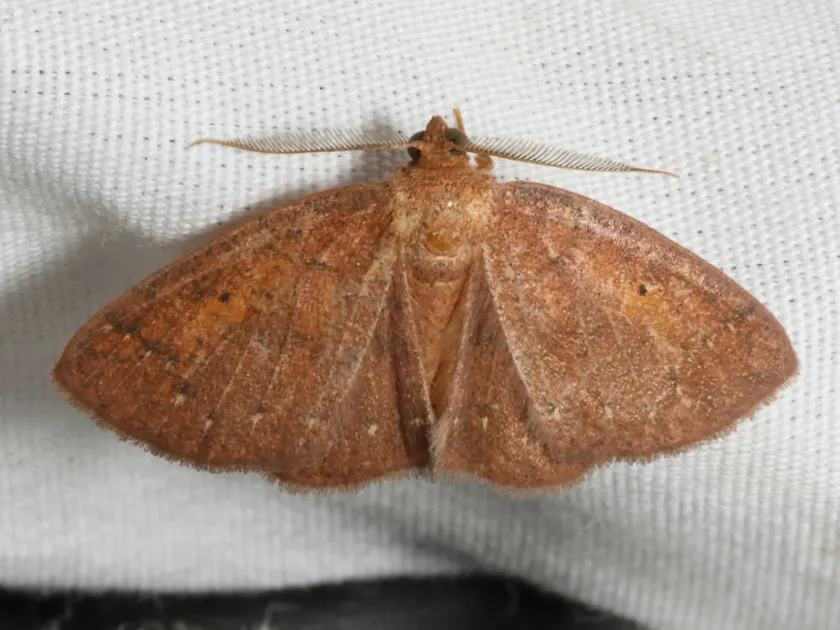
Description
How to identify
Thysanopyga intractata is a moth belonging to the Geometridae family, order Lepidoptera. These moths are characterized by their nocturnal behavior and specific larval movement patterns often seen in inchworms.
Adults are typically nocturnal, resting in hidden places during the day. Their wings often display cryptic coloration, blending seamlessly with tree bark, moss, or leaf litter to avoid detection by predators.
The larvae are easily identified by their "looping" locomotion, where they arch their body as they move, bringing their hind prolegs up to their thoracic legs. This unique movement is a hallmark of the Geometridae family.
Pupation typically occurs in the soil or within organic debris, providing the insect with a stable environment that protects the developing pupa from fluctuations in temperature and humidity.
The biological cycle is highly adaptive to tropical and subtropical climates, where these moths can undergo multiple generations per year, exploiting available resources throughout the growing season.
What it damages
The primary damage is caused by the larval stage, which feeds voraciously on the foliage of various host plants. These caterpillars possess strong mandibles capable of consuming large amounts of leaf tissue.
They target a wide variety of plants, including ornamental trees, shrubs, and commercial crops. Heavy infestation can lead to severe defoliation, leaving only the primary veins of leaves behind.
Such intense feeding significantly reduces the plant's photosynthetic capacity, resulting in stunted growth, reduced vigor, and lower yields in productive agricultural species.
In addition to direct loss of green mass, larvae can also damage flower buds and tender shoots, which often negatively impacts the architectural development of young trees in nurseries.
Defoliated plants are left highly susceptible to secondary stressors, including prolonged drought conditions and the invasion of opportunistic fungal or bacterial pathogens.
Signs of infestation
A primary indicator of infestation is the presence of frass (caterpillar droppings) on leaves or on the ground directly beneath the canopy, indicating active feeding sites above.
Visual inspection often reveals irregular, ragged holes in the leaves or entire sections of foliage missing, progressing from the margins or the center of the leaf blades.
During the day, larvae often attach themselves to twigs or leaf stems, extending their bodies rigid to mimic a natural twig, which serves as a highly effective form of camouflage.
Silken threads or webs connecting adjacent leaves or twigs are common signs of activity, as caterpillars use these to secure their positions or move between different parts of the plant.
In cases of high population density, one may observe a generalized thinning of the canopy and a yellowing appearance of the remaining foliage, signaling systemic stress in the host plants.
Control measures
Monitoring using light traps is essential to detect the onset of adult moth flight, which allows for the timely application of control measures before the next generation of larvae hatches.
Biological control agents, specifically products based on Bacillus thuringiensis, offer a targeted and environmentally safe method for managing larval populations without harming beneficial insects.
Cultural practices, such as maintaining cleanliness in orchard floor areas and pruning dead or infested branches, can significantly reduce the number of overwintering pupae and larvae.
If chemical intervention becomes necessary due to threshold exceedance, systemic or contact-action insecticides should be applied to ensure uniform coverage of the foliage.
Encouraging biodiversity by providing habitats for birds and predatory insects helps keep populations in check naturally, ensuring a sustainable balance within the garden or agricultural environment.
Taxonomy
- Latin name
- Thysanopyga intractata
- Order
- Lepidoptera (butterflies)
- Family
- Geometridae
- EPPO code
- THYSIN
Discussion
No discussions yet — be the first.