
Thysanopyga
Thysanopyga
Description
How to identify
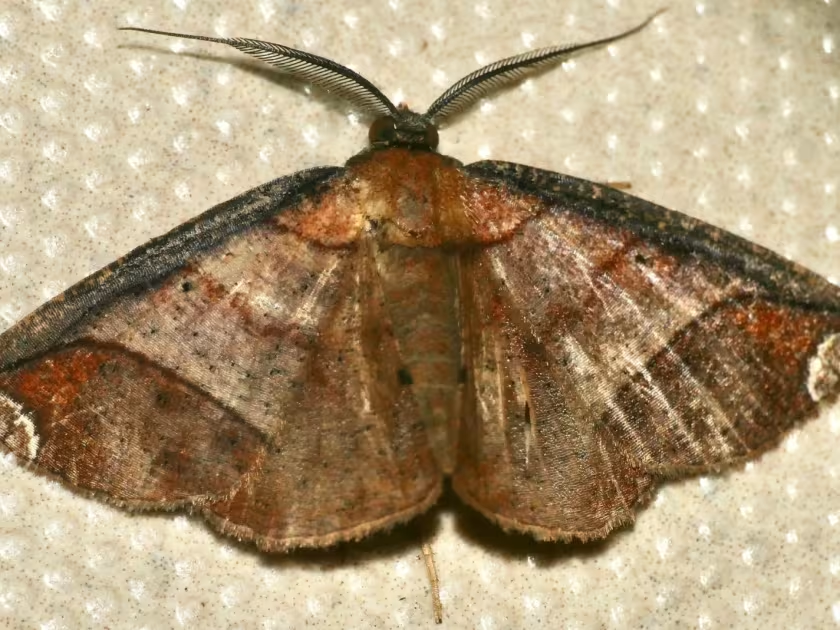
Thysanopyga is a genus of moths belonging to the family Geometridae, order Lepidoptera. These nocturnal insects are characterized by a specific looping movement of the larvae, caused by the reduction of abdominal prolegs.
The adult moths exhibit camouflage coloration, which allows them to remain effectively hidden on tree bark during daylight hours.
The larvae (caterpillars) often possess color patterns that mimic small twigs or leaf petioles, making them extremely difficult to detect during routine plant inspections.
Systematically, this genus includes several species that act as significant pests of woody plants in tropical and subtropical regions.
The life cycle consists of four stages: egg, larva, pupa, and adult moth, with the larval stage being the most destructive for cultivated plants.
What it damages
The primary hosts for Thysanopyga include various broad-leaved trees and shrubs, notably coffee plants and other technical crops.
The larvae actively feed on the leaf blade, starting from the edges and progressing to skeletonization, leaving only the larger veins intact.
During mass outbreaks, the pest can cause complete defoliation of individual branches or even entire young trees, significantly reducing their overall yield potential.
The damage caused by Thysanopyga weakens the plant, making it increasingly susceptible to secondary fungal and bacterial infections.
In commercial plantation settings, the damage results in substantial loss of biomass and a reduction in fruit or seed production volumes.
When it appears
Adult activity of Thysanopyga is typically observed during warmer periods when temperatures are favorable for rapid generational development.
The development cycle is closely linked to the phenological phases of host plants, ensuring an adequate supply of nutritional substrate for the larvae.
In tropical zones, development can occur continuously throughout the year, though population peaks often coincide with periods of active growth and new leaf flushing.
Temperatures ranging from 20 to 28 degrees Celsius are considered optimal for accelerating metamorphosis and egg-laying by the females.
Overwintering usually takes place at the pupal stage, either in the soil or in sheltered crevices under the bark, ensuring the population's survival through unfavorable periods.
Signs of infestation
The primary indicator of infestation is the appearance of jagged, eaten leaf margins that resemble ornamental cutouts.
The presence of small, pellet-like frass on the leaf surface beneath feeding sites is a reliable sign of larval presence.
Detecting the larvae themselves is challenging due to their perfect camouflage as twigs; therefore, a thorough inspection of lower canopy tiers is required.
Leaf rolling or silk webbing, which some larvae create for protection, serves as an additional visual cue of an active infestation.
In cases of severe infestation, visible slowing of shoot growth and chlorosis or yellowing of foliage occur due to disrupted photosynthetic capacity.
Control measures
Agrotechnical methods include regular sanitary pruning of infested branches and the removal of plant debris where pupae may be overwintering.
Biological control agents, such as formulations based on Bacillus thuringiensis, demonstrate high efficacy against early-instar larvae.
In cases of critical population densities, treatments with systemic or contact insecticides authorized for use on specific crops are recommended.
Monitoring adult populations using light traps allows growers to track moth flight and time chemical control measures effectively.
The promotion and conservation of natural enemies, such as predatory bugs and parasitic wasps, are essential for limiting pest reproduction through biological means.
Taxonomy
- Latin name
- Thysanopyga
- Order
- Lepidoptera (butterflies)
- Family
- Geometridae
- EPPO code
- THYSSP
Discussion
No discussions yet — be the first.