
Brown Hairstreak
Thecla betulae
Description
How to identify
The Brown Hairstreak (Thecla betulae) is a butterfly species belonging to the Lycaenidae family. It is recognized as one of the larger hairstreak butterflies with a wingspan ranging from 30 to 40 mm.
The upper side of the wings is dark brown in both sexes, with females distinguished by a prominent orange patch on the forewings. The underside is a rich ochre-yellow with distinct white stripes, serving as excellent camouflage.
The larvae are bright green with yellowish-white side stripes and small diagonal markings on their backs, perfectly mimicking the leaf veins of their host plants.
Pupae are brown and rounded, usually found hidden among twigs or within the leaf litter at the base of the plant, making them difficult to detect without a systematic search.
Taxonomically, this species is well-adapted to woody plants. While frequently found in deciduous woodlands, they can transition to orchards if suitable fruit tree hosts are present.
What it damages
The larvae primarily feed on the foliage of Prunus species, including plums, blackthorn, and occasionally cherries. They consume young leaves and buds, causing holes or skeletonized leaf patterns.
Significant damage occurs in the early stages of larval development. If populations are high, they can defoliate portions of the tree, hindering the plant's ability to photosynthesize effectively.
Young trees are particularly vulnerable to this damage, as the loss of leaf surface area can stunt their growth and reduce the plant's overall vigor during the critical spring growing season.
Although the pest does not usually cause tree mortality, severe infestations can lead to a reduction in fruit yield due to the destruction of buds that would have otherwise developed into flowers.
The adult butterflies do not cause any harm to the crops, as their diet consists entirely of nectar and honeydew, making the larval stage the only point of concern for orchard management.
When it appears
The Brown Hairstreak is a univoltine species, meaning it completes only one generation per year. It overwinters in the egg stage, which are laid singly in the forks of young branches.
Larval emergence happens in the spring, typically coinciding with bud burst of the host plants, ensuring that the neonate larvae have access to fresh, nutrient-rich tissue immediately.
The peak feeding activity of the larvae takes place throughout May and June. During this time, they undergo several instar stages, growing significantly in size and appetite.
Pupation occurs in early summer, typically in June or July. The pupal stage lasts for several weeks before the adult butterflies emerge in late summer.
Adult flight occurs from mid-July through September. During this period, mating and egg-laying for the next year's generation take place, completing the insect's annual cycle.
Signs of infestation
Look for skeletonized leaves or irregular holes in the foliage on the upper branches of fruit trees during late spring, which serves as a primary indicator of larval presence.
The presence of adult butterflies in the orchard during late summer is a sign that egg-laying is occurring. Monitoring these flight periods can help in predicting future outbreaks.
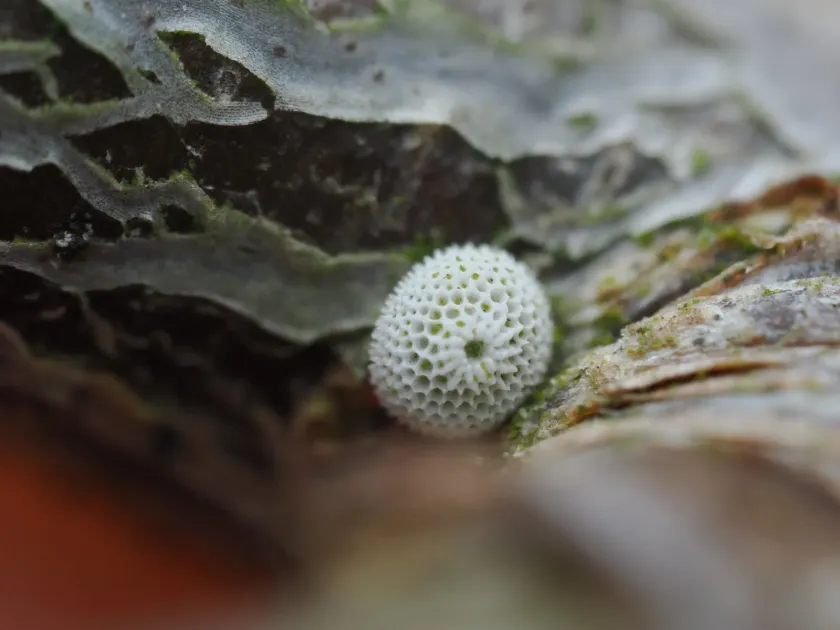
Small, white, disc-shaped eggs found in the forks of young twigs during autumn or winter are a clear sign of an overwintering population that needs attention.
Early spring damage to developing buds is a sign that the larvae have hatched and begun feeding, often before the full foliage has developed on the tree.
Ant activity on tree branches can sometimes be an indirect indicator, as ants are occasionally observed interacting with larvae on the host plant surface.
Control measures
The most effective management approach is winter pruning, which involves identifying and removing branches containing overwintering eggs, thus significantly reducing the population for the following year.
When infestation levels exceed the economic threshold, biological control agents such as Bacillus thuringiensis sprays can be used to target the larvae while sparing beneficial insects.
Maintaining a healthy orchard ecosystem is vital. Encouraging natural predators, including spiders, predatory beetles, and birds, helps keep the pest population naturally suppressed.
Selective chemical control should be used only as a last resort, as broad-spectrum insecticides can disrupt the balance of the garden and impact natural populations of beneficial pollinators.
- Inspect young shoots during spring for larval presence.
- Remove infested twigs during winter pruning.
- Utilize biological insecticides only when necessary.
Taxonomy
- Latin name
- Thecla betulae
- Order
- Lepidoptera (butterflies)
- Family
- Lycaenidae
- EPPO code
- THECBE
Discussion
No discussions yet — be the first.