
Cicada
Tettigia
Description
How to identify
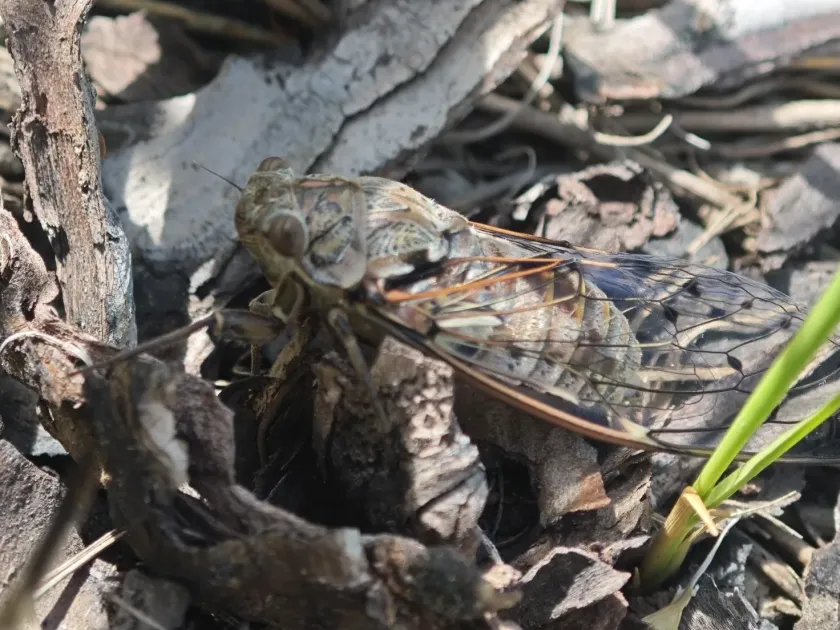
The common cicada (scientific name Cicada orni, often referenced as Tettigia) belongs to the order Hemiptera, family Cicadidae. Adult specimens typically measure 25–30 mm in length with a wingspan reaching up to 8 cm.
The body is covered in camouflage-like brownish patterns with dark spots. The transparent wings feature distinct venation, which allows the insect to blend perfectly into tree bark.
Males are famous for their loud, rhythmic songs produced by specialized organs called tymbals. This acoustic signal is primarily used to attract females during the mating season.
Nymphs lead a cryptic subterranean life. They possess robust, specialized front legs designed for digging through soil and extracting sap from the root systems of host plants.
The lifecycle is notoriously long and complex. Depending on the species and environmental conditions, development from egg to adult can take several years, with most of that time spent underground.
What it damages
Adult cicadas cause significant damage to fruit trees, forest species, and ornamental plants. Common hosts include olives, grapevines, citrus, apple, and peach trees.
Pests feed by piercing the bark of young shoots with their piercing-sucking mouthparts. This process drains vital cell sap, leading to plant weakening and stress.
Females cause mechanical damage to twigs during oviposition. By using their ovipositor to create incisions in the wood, they disrupt the sap flow and create entry points for pathogens.
Affected branches often wither, dry out, or snap under the weight of fruit or heavy wind. Open wounds frequently become sites for secondary fungal infections.
Mass outbreaks can lead to substantial yield losses across entire orchards and cause permanent structural deformity in young nursery trees.
When it appears
Adults emerge from the soil during the peak of the hot summer months, usually between June and August. This timeframe corresponds with their maximum activity level.
Mating occurs during the warmest days of the season. Cicadas thrive in hot, dry weather, which is crucial for the successful maturation of eggs within the female.
The nymph stage persists throughout the entire year within the soil profile. They remain active during the entire growing season, continuously feeding on roots.
Once mating is completed, females lay eggs, and young nymphs eventually hatch. They migrate into the soil immediately to begin their multi-year developmental cycle.
While mass emergence patterns vary by region, this pest is a consistent threat in warmer climates where the developmental cycle is never interrupted by severe cold.
Signs of infestation
The most unmistakable sign of a cicada presence is the loud, continuous buzzing or trilling sound coming from tree canopies, which often indicates a dense population.
Physical inspection of young shoots reveals specific puncture marks or linear scars on the bark. These areas often discolor or become yellowed due to the localized damage.
High infestation levels lead to premature leaf yellowing and shedding on branches where intense feeding or egg-laying activities have taken place.
- Withered or dead tips of young branches.
- Mechanical bark damage arranged in chain-like patterns.
- Reduced plant turgor without visible soil-borne disease symptoms.
- Empty nymphal skins (exuviae) left on tree trunks after molting.
Small circular holes about 1 cm in diameter in the soil surface are clear indicators where nymphs have exited the ground to reach their adult stage.
Control measures
Controlling cicadas is difficult due to their life cycle. Integrated pest management (IPM) practices, including proper tree pruning and maintenance, are the first line of defense.
Chemical control is most effective when adults first emerge but before they start laying eggs. Targeted application of systemic insecticides is typically recommended.
Cultivation of the soil around the base of the trees can disrupt the nymphs as they prepare to emerge and molt, reducing the local population.
Biological control involves maintaining a healthy ecosystem that supports natural predators, such as birds and various insectivorous mammals.
For commercial orchards, the use of pheromone traps and acoustic monitoring helps track emergence patterns, allowing for precise timing of defensive treatments.
Taxonomy
- Latin name
- Tettigia
- Order
- Hemiptera (bugs, aphids, leafhoppers)
- Family
- Cicadidae
- EPPO code
- TTTGSP
Discussion
No discussions yet — be the first.