
Tephroclystia
Tephroclystia
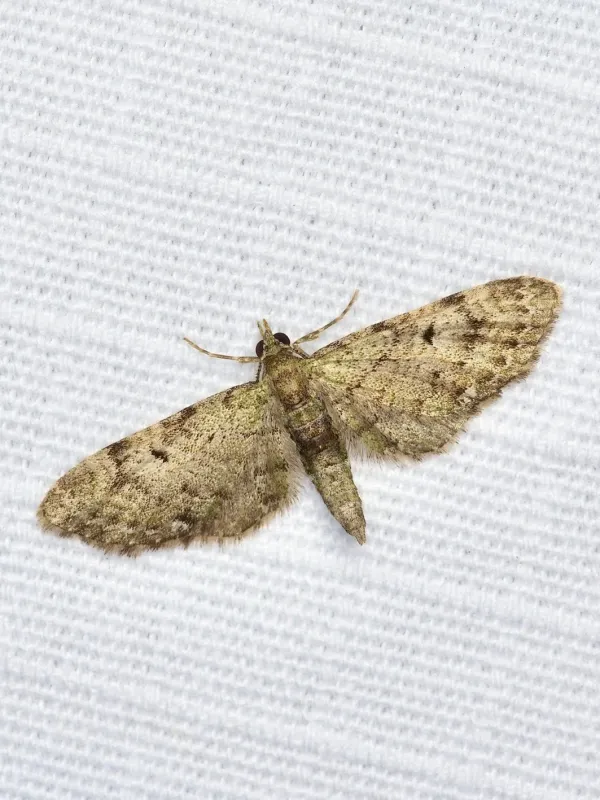
Description
How to identify
Tephroclystia is a genus of moths belonging to the Geometridae family, order Lepidoptera. These small moths are known for their larvae, which often inhabit the interior of flower buds or fruits of various host plants.
Adult moths typically display cryptic coloration, which helps them blend into tree bark or leaf litter. The wingspan usually ranges from 15 to 25 millimeters, and the wings feature complex patterns of transverse lines.
The larvae, commonly known as inchworms or loopers, have a reduced number of prolegs, resulting in their characteristic looping gait.
Larval coloration often varies from light green to brownish, allowing them to remain effectively camouflaged on flower stalks or within plant buds.
Precise species identification often requires professional morphological analysis of the adult moth's genitalia under a microscope due to the visual similarity between species within this genus.
What it damages
This pest causes significant damage to both ornamental plants and fruit crops by feeding primarily on the generative organs of the plants.
Host plants often include species from the Asteraceae family, as well as various fruit-bearing shrubs, where larvae penetrate developing ovaries.
The primary damage involves the destruction of flower buds, which prevents blooming, reduces the aesthetic value of landscapes, and leads to yield losses.
Infested flower heads become deformed, dry up prematurely, and fall off, hindering the normal development of seeds or fruits.
High populations can destroy up to 60-80% of flower buds in a single season, necessitating immediate management actions to save the crop.
When it appears
The life cycle of Tephroclystia is closely synchronized with the phenological phases of its host plants, typically beginning in early spring.
The first generation of adults emerges in late spring, coinciding with the active bud formation stage of most garden plants.
Females lay their eggs directly on or near the flower buds, ensuring that newly hatched larvae have immediate access to food.
Larval development takes several weeks, with the rate of growth being highly dependent on ambient temperatures.
The pupal stage is the most common form of overwintering, occurring either in the soil or within sheltered plant debris beneath the host plant.
Signs of infestation
The first signs of infestation include the presence of larval frass on the surface of buds, often covered by light webbing.
Inspection of flower clusters reveals "bored" holes within the buds, while the flowers themselves may appear wilted or misshapen.
In some cases, petals are found webbed together by silk produced by the larvae, which serves as a key diagnostic indicator.
Heavy infestations lead to mass shedding of unopened buds, a phenomenon often misdiagnosed as damage caused by adverse weather conditions.
- Small holes at the base of buds.
- Visible fine webbing between flowers.
- Premature yellowing and dropping of flower stalks.
- Presence of larvae inside the bud upon careful dissection.
Control measures
Integrated management begins with cultural practices, such as deep autumn soil cultivation to destroy pupae overwintering in the ground.
Regular manual removal and destruction of infested buds and stalks while larvae are still inside is a highly effective control measure.
When infestation levels exceed economic thresholds, the application of biological pesticides based on Bacillus thuringiensis is recommended.
Chemical control involves systemic insecticides that penetrate plant tissues, effectively reaching pests that live within buds or fruits.
It is crucial to time spray applications with the peak emergence of larvae and to strictly follow dosage and frequency guidelines provided on the product label.
Taxonomy
- Latin name
- Tephroclystia
- Order
- Lepidoptera (butterflies)
- Family
- Geometridae
- EPPO code
- TEPHSP
Discussion
No discussions yet — be the first.