
Tenuitarsus
Tenuitarsus
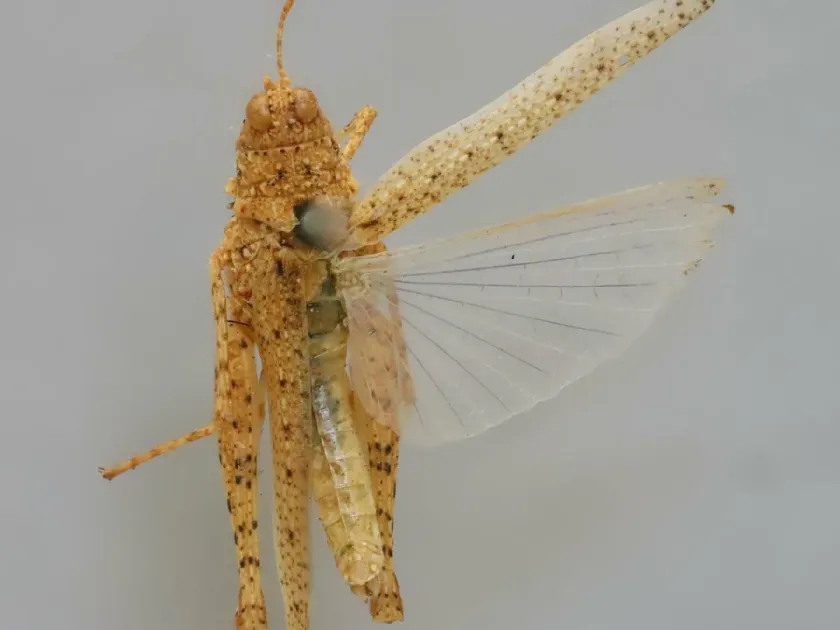
Description
How to identify
Tenuitarsus is a genus of insects belonging to the lace bug family (Tingidae) within the order Hemiptera. Adult specimens are recognized by their intricate, net-like pronotum and wing covers, which give them their common "lace" appearance.
These insects are exceptionally small, often requiring a magnifying lens for precise identification in the field. Their bodies typically exhibit light or yellowish coloration, serving as camouflage against the undersides of host plant leaves.
The genus includes several species, with the most significant agricultural pests primarily associated with plants in the Brassicaceae family. While they resemble other true bugs, their specific wing venation patterns are key taxonomic markers used by entomologists.
Imago stages possess well-developed wings, enabling active dispersal across fields to locate optimal feeding grounds. Nymphs share a similar morphology to adults but are wingless and smaller, often found clustering together.
Accurate field identification often involves inspecting the specific patterns of the wing veins and the structure of the antennae. Their small size makes them easily overlooked until significant damage occurs.
What it damages
Tenuitarsus primarily targets crops within the Brassicaceae family, including oilseed rape, mustard, and various vegetable varieties. In agricultural settings, oilseed crops are particularly susceptible to infestation.
Feeding damage occurs as these insects pierce plant tissues to extract sap. This process disrupts the plant's photosynthetic capability and significantly weakens the host’s overall physiological health.
Mass outbreaks can lead to substantial yield losses, especially when infestations coincide with early growth stages. Damaged crops exhibit increased vulnerability to opportunistic fungal and bacterial pathogens.
The insects typically congregate on the underside of leaves, where they establish large colonies. Feeding sites initially show chlorotic spotting, which progresses to necrosis and premature leaf drop.
The economic impact is a combination of direct green matter loss and reduced seed quality. During periods of drought, the physiological stress on the plant is compounded, making the damage more severe.
When it appears
Insects typically emerge in spring, coinciding with the rise in ambient temperatures. Their development cycle is highly dependent on regional climatic conditions, typically spanning a few weeks per generation.
Peak population densities are usually observed during the hotter summer months when higher temperatures accelerate metabolic rates. In favorable years, multiple generations can occur within a single season.
Overwintering usually occurs as adult imagoes hiding in plant debris or the upper soil horizons. As autumn approaches, they migrate to these sheltered areas to enter a period of diapause.
The species is capable of rapid population growth, allowing it to colonize new fields effectively. Population peaks often align with the active vegetative growth phases of the host crops.
Environmental factors like extreme humidity may slow population growth, but the inherent biological resilience of the genus allows it to persist under diverse conditions.
Signs of infestation
The primary symptom of infestation is the development of light or yellow chlorotic spots on the leaf surface. This is a direct consequence of chlorophyll depletion at the insect's feeding sites.
Inspecting the underside of the leaf often reveals the characteristic "lace-like" cast skins of the insects, along with small black excrement pellets. These are definitive indicators of an active colony.
High infestation intensity leads to leaf deformation and curling. Affected plants show significantly stunted growth compared to healthy ones in the same field.
As the damage progresses, affected leaf sections dry out, eventually leading to holes and total necrosis of the tissue. In severe cases, the entire plant may appear scorched or withered.
- Presence of small lace bugs on leaf undersides.
- Small, speckled chlorotic spots on foliage.
- Visible black fecal deposits on affected surfaces.
- Curling and deformation of young, tender leaves.
Control measures
Crop rotation is a fundamental management practice that disrupts the pest's life cycle. Eliminating wild Brassicaceae weeds significantly reduces the local population reservoir.
The application of systemic insecticides is recommended when economic injury thresholds are exceeded. Applications should be performed during cooler times of the day to ensure optimal coverage and safety.
Biological control strategies emphasize the preservation of natural predators and parasitoids that naturally regulate lace bug populations. This reduces the need for synthetic chemical interventions.
Cultural practices, such as deep autumn plowing, are highly effective at destroying overwintering sites for the imagoes. This significantly lowers the pest pressure for the following planting season.
Routine scouting using yellow sticky traps allows farmers to detect the initial migration and expansion of the population, facilitating timely intervention before extensive damage occurs.
Taxonomy
- Latin name
- Tenuitarsus
- Order
- Orthoptera (locusts)
- Family
- Pyrgomorphidae
- EPPO code
- TNTASP
Discussion
No discussions yet — be the first.