
Chinese conehead grasshopper
Atractomorpha sinensis
Description
How to identify
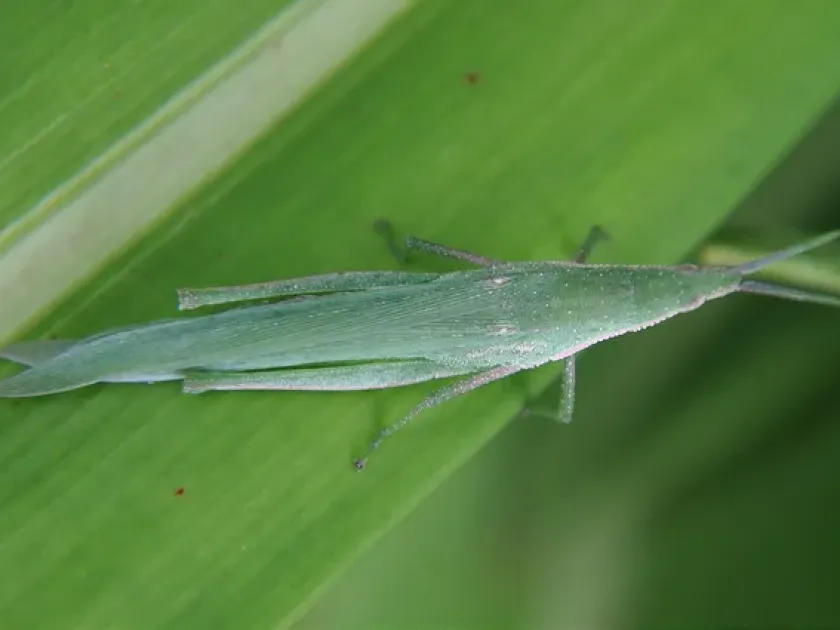
The Chinese conehead grasshopper (Atractomorpha sinensis) is a member of the order Orthoptera and the family Pyrgomorphidae. It is characterized by its distinctive conical head shape, which makes it easily distinguishable from other grasshopper species.
Adult insects usually exhibit green or brownish coloration, providing excellent camouflage against leaves and stems. Their bodies are relatively elongated, and females are generally larger than males, reaching lengths of up to 40 mm.
This species undergoes incomplete metamorphosis, passing through egg, nymph, and adult stages. Unlike migratory locusts, these grasshoppers are typically sedentary, staying within a limited area throughout their life cycle.
Eggs are deposited in moist soil, where embryonic development depends heavily on ambient temperature. This makes the timing of their emergence and peak activity predictable based on seasonal climate patterns.
These insects are primarily diurnal, meaning they are active during the day. Despite their mobility, they are not fast fliers and often rely on their cryptic coloration to remain hidden from predators and human observers.
What it damages
Atractomorpha sinensis is a polyphagous pest, capable of feeding on a wide range of botanical hosts. Primary targets include vegetable crops such as tomatoes, peppers, eggplants, and various Brassica species.
Beyond vegetables, they frequently infest field crops like soybeans and maize. In nurseries and orchards, they may feed on young, succulent shoots of fruit trees and ornamental shrubs, causing significant growth retardation.
Both nymphs and adults possess strong mandibles designed for chewing. They consume leaf tissues rapidly, often starting from the edges and progressing inwards, which significantly reduces the photosynthetic surface area.
Heavy feeding pressure during the crop's development phase can lead to yield losses and weakened plant health. This stress makes the plants more susceptible to environmental factors and secondary infections.
The aesthetic damage is particularly problematic for produce destined for fresh markets, as leaf consumption renders the vegetables unmarketable. In severe cases, the damage to young buds can prevent fruit formation.
Signs of infestation
The primary symptom of an infestation is the presence of irregular, notched holes in the leaves. These bite marks often leave the leaf edges looking ragged or completely destroyed.
When populations are high, the grasshoppers may skeletonize the leaves, leaving behind only the toughest veins. Observing the plant's overall canopy often reveals missing sections of foliage where the insects have been feeding.
Frass (droppings) deposited on leaf surfaces under feeding sites is another clear indicator of their presence. Furthermore, one can spot the insects themselves by carefully examining stems and the underside of leaves.
Because they are masters of disguise, they are often difficult to see until disturbed. Once approached, they may leap or move to the other side of a leaf to hide from view.
Infestations typically begin in patches within a field or garden. Identifying these initial hot spots is crucial for taking corrective action before the grasshoppers move to healthy sections of the crop.
Control measures
Cultural control measures, such as deep plowing or soil cultivation, are effective at disrupting the egg-laying sites in the soil. This reduces the number of nymphs emerging in the following season.
Weed management is a vital component of integrated pest management. Removing weeds from the field perimeter and within the rows minimizes the available food and shelter for the grasshoppers.
If thresholds are reached, contact and stomach-action insecticides should be applied. Treatment is most effective when targeted at the nymph stages, as they are less mobile and more vulnerable to chemicals.
Biological control agents, including entomopathogenic fungi, can offer a sustainable solution for protecting crops in greenhouses or organic farms without relying on harsh synthetic chemicals.
Ongoing monitoring programs, including the use of visual inspections and evening sweeps, ensure early detection. Proactive management remains the best defense against population surges.
Taxonomy
- Latin name
- Atractomorpha sinensis
- Order
- Orthoptera (locusts)
- Family
- Pyrgomorphidae
- EPPO code
- ATRCAM
Discussion
No discussions yet — be the first.