
Atractomorpha lata
Atractomorpha lata
Description
How to identify
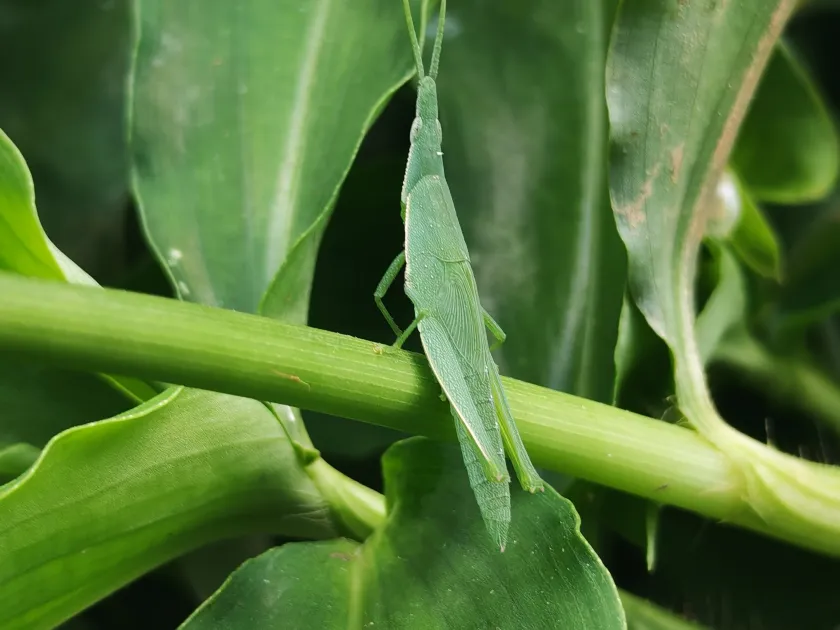
Atractomorpha lata, commonly known as a type of slant-faced grasshopper, belongs to the family Pyrgomorphidae. Its most distinct feature is a slender, conical head and an elongated, streamlined body that ranges in color from bright green to brown.
The species exhibits sexual dimorphism, with females being significantly larger than males. They are known for their excellent camouflage abilities, making them difficult to detect while resting on plant stems.
Unlike migratory locusts, Atractomorpha lata maintains a non-gregarious lifestyle. They are typically found in localized populations within vegetable gardens, parks, and agricultural fields where they feed and reproduce.
The life cycle follows a hemimetabolous pattern: egg, nymph, and adult. Eggs are laid in the soil in protected clusters, where they undergo a diapause period to survive adverse environmental conditions.
They are particularly active during the warmer months. As temperatures rise, nymphal stages emerge, which are highly voracious and capable of causing rapid damage to host plants.
What it damages
Atractomorpha lata is a generalist herbivore, capable of feeding on a wide variety of plants including vegetables, ornamentals, and certain grain crops. They possess strong mandibles designed for cutting tough leaf tissues.
Major crops affected include various brassicas, potato plants, tobacco, and leafy greens. In nursery settings, they can cause severe damage to young seedlings, often leading to total plant loss if left unmanaged.
Feeding damage is characterized by large, irregular holes in the leaf blades. In cases of high infestation, they may consume entire leaves, leaving behind only the tougher midribs and main veins.
The physical damage caused by the grasshoppers creates wounds that serve as entry points for secondary fungal and bacterial infections. This leads to reduced plant vigor, stunted growth, and lower yield quality.
The economic impact is heightened when these pests target high-value ornamental plants or vegetables, where any cosmetic damage significantly reduces the marketability of the product.
Control measures
Managing Atractomorpha lata requires a multi-faceted approach that emphasizes preventive measures alongside targeted interventions to maintain crop health.
Cultural practices are paramount; deep plowing of fields after the harvest helps expose egg pods to cold and predators, effectively reducing the population for the next growing season.
Biological control, including the application of entomopathogenic fungi or the conservation of natural predators like birds and spiders, can provide sustainable population suppression in integrated pest management programs.
Chemical control should be considered as a last resort when threshold levels are exceeded. Using selective insecticides that target nymphs in their early stages is more effective than attempting to control adult populations.
- Remove weed hosts around field borders to eliminate breeding grounds.
- Regularly inspect the underside of leaves for early signs of nymphal feeding.
- Use physical barriers like netting to protect sensitive crops during peak infestation periods.
Taxonomy
- Latin name
- Atractomorpha lata
- Order
- Orthoptera (locusts)
- Family
- Pyrgomorphidae
- EPPO code
- ATRCLA
Discussion
No discussions yet — be the first.