
Atractomorpha acutipennis
Atractomorpha acutipennis
Description
How to identify
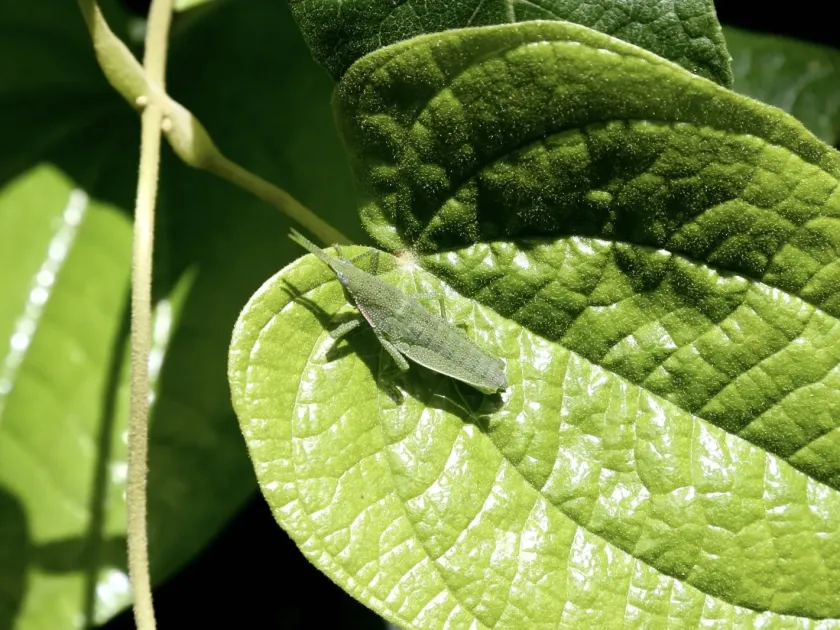
Atractomorpha acutipennis, commonly known as the point-headed grasshopper, is a member of the Pyrgomorphidae family. Its most distinctive feature is the elongated, cone-shaped head and pointed tegmina.
Adult grasshoppers typically display a green or brown coloration, which provides effective camouflage among crops and foliage. Their bodies are relatively slender and designed for both jumping and crawling.
Sexual dimorphism is evident, as females are generally larger and more robust than males. Their length ranges from 20 to 35 mm, making them noticeable but often well-hidden in dense vegetation.
Unlike many other grasshopper species, they lack specialized stridulatory organs, meaning they do not produce the typical buzzing sound associated with these insects.
The species is widespread across tropical and subtropical regions. They are frequently found in agricultural fields, vegetable gardens, and wild grasslands where they find abundant food sources.
What it damages
This grasshopper is a polyphagous pest, meaning it feeds on a wide variety of plant species. Vegetables like tomatoes, eggplants, and peppers are particularly susceptible to their damage.
Both nymphs and adults possess chewing mouthparts, which they use to devour leaf tissue. This feeding behavior often leaves large, irregular holes in the leaves, significantly reducing photosynthetic efficiency.
Beyond vegetables, they can impact ornamental plants and several grain crops. Heavy infestations can lead to total defoliation, which severely stunts the plant's growth and overall productivity.
Seedlings and young plants are at the highest risk, as the loss of vital leaf surface area during early growth stages can be fatal to the plant.
In addition to physical damage, the presence of these pests reduces the marketability of the produce, leading to direct economic losses for farmers and agricultural producers.
When it appears
The life cycle of Atractomorpha acutipennis is heavily influenced by regional climate conditions. In tropical zones, breeding and development can occur continuously throughout the year.
Active feeding peaks during the growing season when crops are at their most vulnerable stages. Multiple generations can occur within a single year if the temperature and moisture conditions are optimal.
Females lay their eggs in the soil, which serve as the primary reservoir for the next generation. The incubation period is temperature-dependent and faster in warmer climates.
Nymphs undergo several molting stages, with each stage requiring increasing amounts of nutrition. As they mature, their mobility increases, allowing them to spread across larger fields.
In regions with distinct seasons, adult activity typically diminishes during cooler months, though they remain present in sheltered areas or greenhouses where the microclimate remains stable.
Signs of infestation
The most visible sign of an infestation is the presence of chewed leaf edges and irregular holes. Leaves may appear ragged, and missing tissue is often concentrated at the margins.
Small, dark, pellet-like droppings (frass) on the surface of lower leaves or on the ground indicate the presence of feeding grasshoppers in the immediate vicinity.
Plant distress, such as wilting or delayed development of fruit, may occur as a secondary effect of severe defoliation and stress caused by the feeding insects.
Finding the grasshoppers themselves can be a challenge due to their excellent camouflage. Inspecting the undersides of leaves and leaf axils during the early morning hours is the most effective way to spot them.
Increased activity of insects jumping or flying away when a plant is disturbed is a clear indicator that the population density of the pest has reached a significant level.
Control measures
Cultural control is a foundational strategy. Removing weeds from field edges is essential, as these areas act as breeding grounds and refuge for the grasshoppers.
Biological control using entomopathogenic fungi, such as Beauveria bassiana, can be highly effective in reducing population numbers without harming the environment.
Chemical intervention should be reserved for periods of high infestation. Insecticides, such as pyrethroids, can provide quick control, but they must be applied according to pre-harvest interval guidelines.
Hand-picking remains a viable strategy for small home gardens or organic farms. Regular monitoring allows for the early detection and manual removal of adults before they lay eggs.
Monitoring with sticky traps or pheromone-based lures helps track population trends, allowing farmers to time their interventions precisely and maintain crop health throughout the season.
Taxonomy
- Latin name
- Atractomorpha acutipennis
- Order
- Orthoptera (locusts)
- Family
- Pyrgomorphidae
- EPPO code
- ATRCAG
Discussion
No discussions yet — be the first.