
Atractomorpha crenaticeps
Atractomorpha crenaticeps
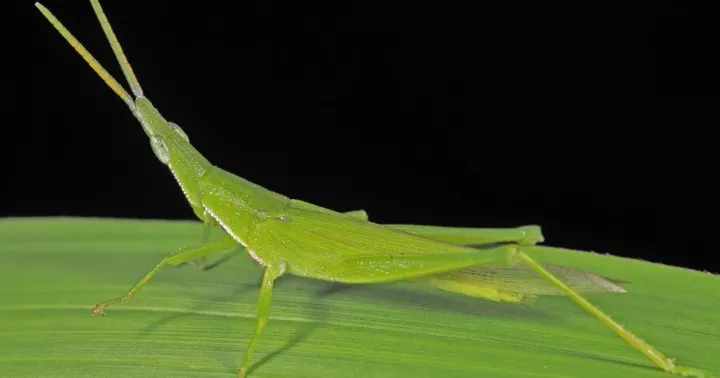
Description
How to identify
Atractomorpha crenaticeps belongs to the family Pyrgomorphidae within the order Orthoptera. This insect is easily recognized by its elongated, slender body and distinctive cone-shaped head.
The coloration of this species is typically vibrant green or brownish, providing excellent camouflage against vegetation, which makes it a difficult pest to spot in the field.
Adult insects measure between 25 and 40 mm in length. Females are generally larger than males, a common trait in this family of grasshoppers which are significant agricultural pests.
Their life cycle involves incomplete metamorphosis, meaning the nymphs resemble miniature, wingless versions of the adults as they progress through several growth stages.
They prefer dense vegetation habitats, where they can hide during the day. Their cryptic appearance helps them evade predators and survive in varied agricultural environments.
What it damages
As a polyphagous insect, Atractomorpha crenaticeps feeds on a wide range of plants, making it a versatile and persistent pest in both tropical and subtropical agricultural zones.
Primary crops at risk include rice, corn, various vegetable crops, and ornamental plants. They can also cause damage to young fruit tree saplings in nursery settings.
Both nymphs and adults consume foliage, creating irregular holes in leaves. In severe infestations, they may strip entire leaves, leaving only the midribs behind.
The damage significantly reduces the leaf surface area available for photosynthesis, which stunts the growth of the plant and diminishes overall crop yields.
Additionally, feeding on tender buds and shoots can lead to malformed plant growth, further impacting the marketability and health of the cultivated crops.
When it appears
The activity of these grasshoppers is heavily influenced by the season and local climate, with populations peaking during warm, humid periods of the year.
Nymphs typically emerge in the spring once the soil temperature is high enough to trigger development. They remain active throughout the growing season.
Adults are most active during the summer months, which coincides with the period when most crops are in their vigorous growth phase and are highly susceptible to damage.
Egg laying occurs toward the end of the season, usually in the soil. These eggs serve as the overwintering stage, ensuring the pest's survival until the next spring.
In regions with mild winters, the life cycle may be less distinct, allowing for continuous activity if food sources remain available throughout the year.
Signs of infestation
The most obvious signs of an infestation are jagged leaf edges and large holes found throughout the foliage of your crops, typically occurring in clusters.
Searching for the insects early in the morning can reveal their presence, as they are often more active and less camouflaged while feeding during the cooler hours.
Fecal pellets (frass) found on the leaves or the ground beneath infested plants are reliable indicators that a pest population is currently feeding in the area.
Stunted plant growth and wilted stems can often be observed in fields where high densities of Atractomorpha crenaticeps have been feeding for several weeks.
Localized patches of destroyed vegetation are typical, as these grasshoppers tend to stay within a preferred area as long as food supplies remain adequate.
Control measures
Cultural control is a primary management strategy. Deep plowing of fields after the harvest destroys egg pods located in the soil, preventing the next generation's emergence.
Chemical control with insecticides is effective when applied during the nymphal stages. It is recommended to use systemic or contact pesticides only when thresholds are exceeded.
Maintaining a weed-free environment around fields is crucial, as surrounding wild vegetation often serves as a reservoir for the pest to colonize crops.
Biological control methods, such as utilizing entomopathogenic fungi, offer an environmentally friendly alternative to traditional pesticides for managing population spikes.
- Monitor fields regularly during the early vegetative stage.
- Remove crop debris to eliminate potential hiding spots.
- Practice crop rotation to disrupt the pest's breeding cycle.
Taxonomy
- Latin name
- Atractomorpha crenaticeps
- Order
- Orthoptera (locusts)
- Family
- Pyrgomorphidae
- EPPO code
- ATRCCA
Discussion
No discussions yet — be the first.