
Black field cricket
Teleogryllus commodus
Description
How to identify
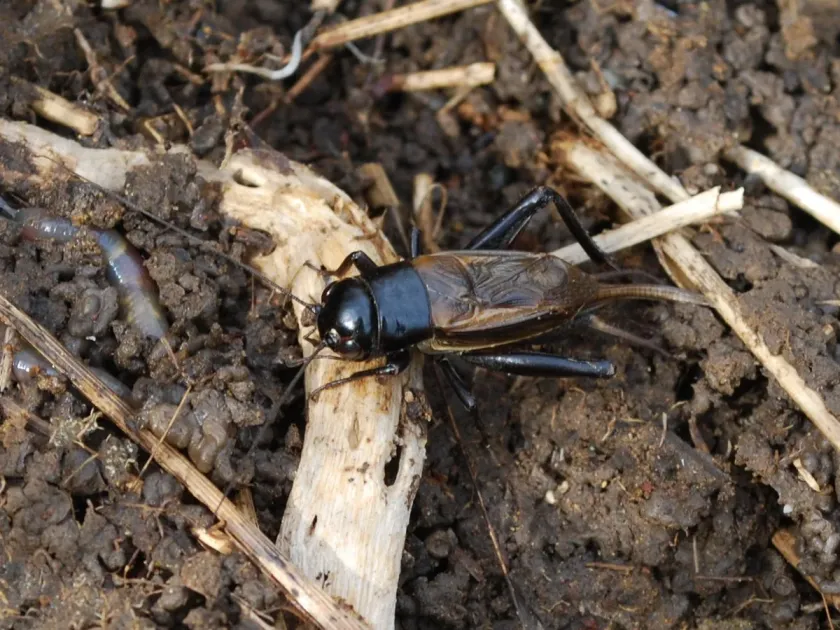
The black field cricket (Teleogryllus commodus) belongs to the order Orthoptera and the family Gryllidae. Adults typically measure between 20 and 25 mm, exhibiting a dark, shiny black or brownish coloration.
They possess a robust body structure with powerful hind legs for jumping. While they have wings, they are primarily ground-dwelling insects that rely on running rather than flying for displacement.
The head features strong mandibles suited for chewing tough plant tissues. Females are distinguished by a long ovipositor, which they use to insert eggs into the soil.
Nymphs resemble smaller versions of the adults but lack developed wings and sexual maturity. They grow through several molting stages, increasing in size as they transition to adulthood.
Identifying the species is often done by their distinct night-time chirping. Males produce loud, rhythmic acoustic signals to attract mates, which helps agronomists locate infestations.
What it damages
This species is a notorious polyphagous pest capable of devastating a wide variety of agricultural crops, including cereals, oilseeds, and various vegetable plants during the seedling stage.
The primary damage is caused by the nymphs and adults chewing through the stem at the base of the plant, which often results in total crop failure across infested fields.
In addition to direct destruction of young seedlings, these crickets can severely damage pastures and forage crops, consuming leaves and reducing the overall productivity of the land.
During germination, they may feed on seeds lying in the soil, preventing proper establishment and necessitating costly reseeding operations by the farmer.
Their feeding activity is particularly destructive during dry weather conditions, as they turn to green crops as a primary source of water and nutrients when natural grasses dry out.
When it appears
The life cycle of the black field cricket is closely tied to soil temperature and moisture levels. Overwintering occurs primarily in the egg stage deep within the soil.
Nymphs typically emerge in late spring or early summer as soil temperatures rise. Their development is accelerated in warmer climates, leading to rapid population growth.
Adults are most active during the summer and early autumn months. They are nocturnal creatures, spending their daylight hours hidden in cracks or burrows to avoid desiccation.
The peak of their damaging behavior often coincides with the germination phase of secondary crops, posing a significant risk to field and vegetable production cycles.
Environmental factors, especially rainfall patterns, play a crucial role in population dynamics; high moisture during the egg-laying period can lead to massive outbreaks.
Signs of infestation
A primary indicator of a cricket infestation is the appearance of numerous holes or cracks in the soil surface, which serve as their subterranean daytime shelters.
Fields may show irregular patches of decimated seedlings, often with plants cleanly severed at the soil level, which is a classic symptom of cricket feeding damage.
During the night, loud acoustic chirping throughout the field is a definitive sign of high population density, indicating an urgent need for monitoring and management.
Careful inspection of plant stems will reveal gnawed edges and irregular bite marks that differ significantly from those made by caterpillars or leaf-eating beetles.
Presence of cricket feces near burrow entrances and distinct movement trails on the soil surface after light rain also confirm their presence and active feeding areas.
Control measures
Cultural control through intensive tillage is highly effective, as it destroys burrows and exposes eggs or nymphs to desiccation and natural predators.
The application of insecticide-treated baits is a common and efficient method for controlling populations, specifically targeting the insects while minimizing unnecessary chemical exposure.
Maintaining clean field margins and controlling weeds are essential practices, as these areas provide refuge and alternative food sources for the crickets between crop seasons.
When economic thresholds are exceeded, targeted application of foliar or soil-applied insecticides can be used to protect vulnerable seedling stages of the crop.
Integrated Pest Management (IPM) strategies, incorporating biological agents like parasitic wasps or pathogenic fungi, are encouraged for sustainable long-term control.
Taxonomy
- Latin name
- Teleogryllus commodus
- Order
- Orthoptera (locusts)
- Family
- Gryllidae
- EPPO code
- GRYLCM
Discussion
No discussions yet — be the first.