
Black cricket
Acheta morio
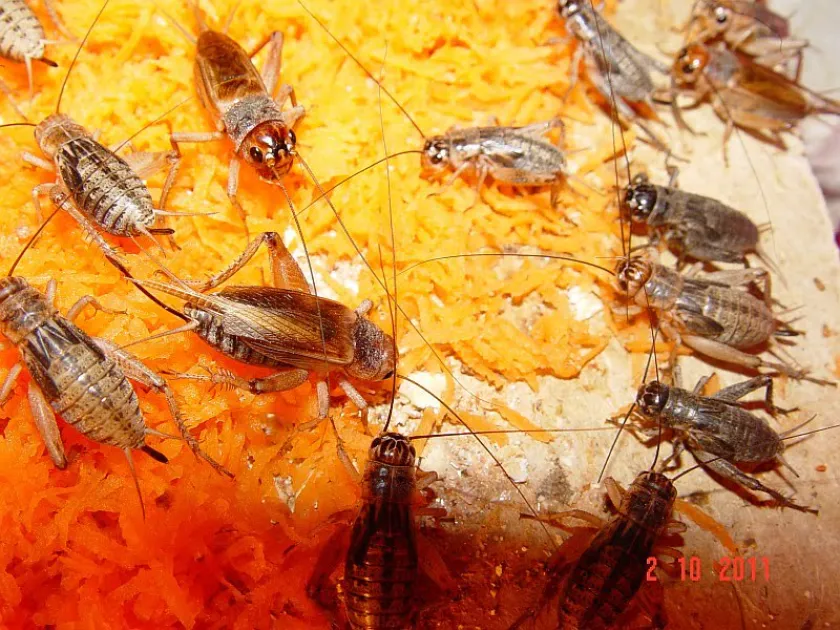
Description
How to identify
The black cricket (Acheta morio) belongs to the order Orthoptera and the family Gryllidae. These insects are medium-sized and distinguished by their glossy black or deep brown coloration.
Adult crickets possess well-developed wings, allowing for short-distance flight, and powerful hind legs adapted for jumping. Their head features long, thread-like antennae and robust, chewing-type mouthparts.
Nymphs resemble the adults in body shape but lack wings and are typically smaller in size. As they undergo hemimetabolous development, they pass through several molts, gradually increasing in size and developing wing pads.
They are primarily nocturnal, preferring to remain hidden during the day in soil crevices, under leaf litter, or within debris where moisture levels are consistently high.
The acoustic signal produced by males is a distinctive chirping sound. This behavioral trait is a vital field diagnostic tool that allows agronomists to detect infestations even when the insects are not visually apparent.
What it damages
Black crickets are polyphagous, meaning they consume a wide variety of plant material and decaying organic matter. They pose the greatest threat to seedlings and young crop plants.
In greenhouses and nursery beds, they can be particularly devastating, as they frequently girdle stems of young seedlings at the soil surface, leading to rapid plant death.
Large populations can quickly deplete entire seedling stands, resulting in sparse crop density and the subsequent economic burden of replanting affected areas.
Beyond vegetative tissues, these insects feed on reproductive structures, including flowers and developing fruit buds, which causes significant loss in marketable yield and produce quality.
They also consume seeds directly from the soil, feeding on the endosperm and embryo, which significantly reduces the germination rate and field establishment of agricultural crops.
When it appears
Black crickets show peak activity during the warmer months, as high ambient temperatures accelerate their metabolic processes, feeding habits, and reproduction cycles.
Overwintering typically occurs in the nymph stage or as eggs deposited within the soil, depending on local climatic conditions and regional variations in insect behavior.
Population levels generally peak during mid-summer, coinciding with the maturation of the insect population, which leads to heightened grazing pressure on agricultural fields.
In protected agricultural environments, such as greenhouses or indoor farms, the life cycle may persist year-round due to stable temperatures and constant food availability.
As temperatures drop during autumn, crickets seek out sheltered environments, often migrating into storage sheds, greenhouses, and structures where they continue to cause damage.
Signs of infestation
The first signs of infestation are irregularly chewed leaf margins, which may sometimes be confused with damage caused by slugs, although the edges appear more jagged.
Massive stem damage near the soil level is a primary symptom. Unlike some other pests, crickets leave no slime trails, which helps distinguish their damage from mollusks.
The presence of small, circular burrow holes in the ground near damaged plants is a strong indicator of active cricket colonies localized within that specific crop area.
Accumulated dark fecal pellets found in the vicinity of feeding areas serve as secondary evidence that confirms high-density infestations are present on the site.
Evening chirping signals are the most reliable auditory cues for farmers to assess the presence and scale of a cricket population before visual damage becomes extensive.
Control measures
Controlling the black cricket effectively requires an integrated pest management (IPM) strategy that combines cultural practices, physical barriers, and chemical interventions.
Sanitation is a critical preventive measure; removing weeds, crop residues, and piles of organic debris minimizes the habitats available for breeding and daytime shelter.
Deep plowing during the post-harvest period helps disrupt the life cycle by exposing soil-bound eggs and nymphs to environmental extremes and natural predators.
When infestation levels exceed the economic threshold, the application of registered insecticides (such as pyrethroids) may be necessary to protect high-value crops.
The strategic use of toxic baits in the evening can be highly effective, as it minimizes the overall environmental impact while targeting the foraging population directly.
Taxonomy
- Latin name
- Acheta morio
- Order
- Orthoptera (locusts)
- Family
- Gryllidae
- EPPO code
- ACHTMO
Discussion
No discussions yet — be the first.