
House cricket
Acheta
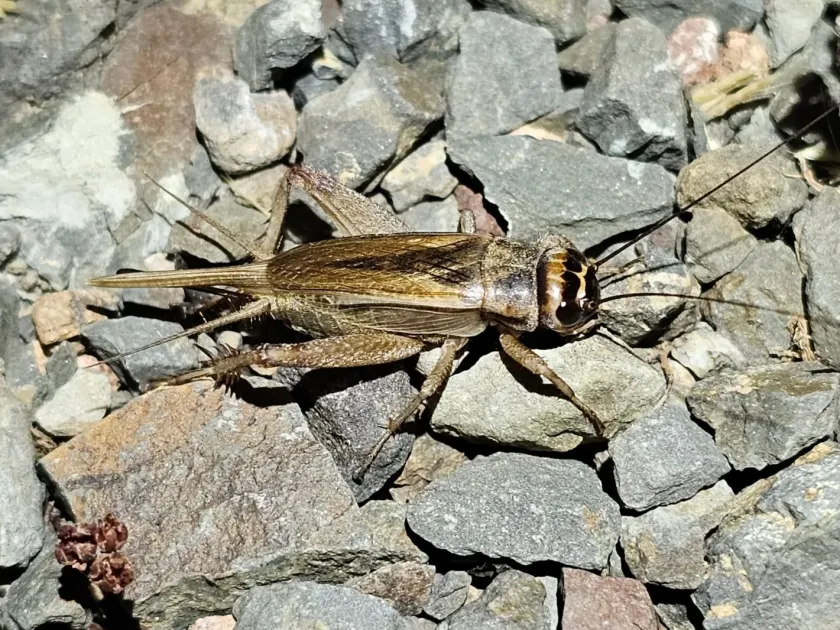
Description
How to identify
The house cricket (Acheta domesticus) belongs to the order Orthoptera, family Gryllidae, and is widely known as a synanthropic insect.
Adult crickets typically measure between 16 and 26 mm in length and exhibit a straw-yellow to brownish coloration with distinctive dark markings on the head and thorax.
They possess long, thread-like antennae that are highly sensitive to vibrations and environmental changes, aiding their movement in low-light conditions.
Both males and females have functional wings, though they are more prone to jumping and running as their primary means of locomotion in agricultural settings.
The life cycle consists of three stages: egg, nymph, and adult. Nymphs closely resemble adults but lack fully developed wings and reproductive organs until their final molts.
What it damages
In greenhouses and nursery environments, the house cricket is considered a sporadic but potentially devastating pest for young seedlings and tender crops.
The primary damage is caused by the insects gnawing on the stems of young plants at the soil line, which causes them to collapse and die rapidly.
They are generalist feeders and can consume germinating seeds, leaves, and soft plant tissues, significantly reducing the success rate of crop establishment.
In addition to direct feeding, their burrowing activity can disturb the root systems of small potted plants, leading to moisture stress and overall plant decline.
High populations of crickets can cause rapid and widespread destruction of vegetable seedlings, such as tomatoes and peppers, if left unmanaged.
When it appears
House crickets are highly adaptable and can survive year-round in indoor environments like greenhouses, where stable temperatures are maintained.
While they prefer warm conditions, they do not have a strict dormant season when protected by human-made structures, allowing for continuous breeding cycles.
The most active period for population growth often aligns with the spring season, as rising temperatures promote egg hatching and rapid nymph development.
During the transition from summer to autumn, crickets often migrate from outdoor habitats into greenhouses to seek shelter and warmth for the winter months.
Throughout the year, their activity levels remain highest at night, as they are nocturnal creatures that hide in dark, sheltered crevices during daylight hours.
Signs of infestation
A classic sign of a cricket infestation is the rhythmic chirping produced by males, which acts as a clear acoustic indicator of their presence.
Physical evidence includes finding young plants severed at the base, often with ragged or uneven edges characteristic of their chewing mouthparts.
Gardeners may observe small holes or tunnels in the growing medium, indicating where the insects have been resting or laying eggs.
Small, dark fecal droppings found near the base of plants or on greenhouse benches are another indicator of significant cricket activity.
Sudden sightings of quick, jumping insects when disturbing mulch or pots are an immediate visual confirmation of an active cricket population.
Control measures
Sanitation is the most important cultural practice; removing debris, dead plant material, and weeds eliminates potential harborages for the pests.
Sticky traps placed on the floor or near the edges of benches are highly effective for monitoring population levels and catching mobile adults.
Sealing gaps in greenhouse structures, such as doors and foundation cracks, is essential to prevent re-infestation from outside sources.
When chemical intervention is necessary, bait formulations containing low-toxicity active ingredients are preferred to minimize impact on non-target species.
- Regular removal of organic waste and clutter.
- Monitoring with light or glue traps.
- Using biological controls like entomopathogenic nematodes or fungi.
- Maintaining dry, clean conditions in greenhouse walkways.
Taxonomy
- Latin name
- Acheta
- Order
- Orthoptera (locusts)
- Family
- Gryllidae
- EPPO code
- ACHTSP
Discussion
No discussions yet — be the first.