
Large-headed cricket
Brachytrupes megacephalus
Description
How to identify
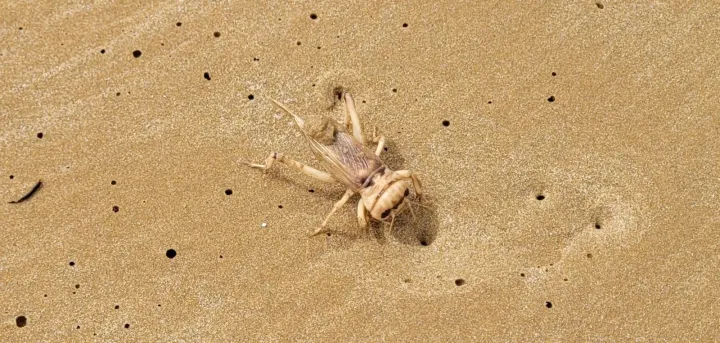
The large-headed cricket (Brachytrupes megacephalus) belongs to the order Orthoptera and the family Gryllidae. It is a robust insect, reaching lengths of 4 to 5 centimeters.
The species is easily identified by its disproportionately large, massive head, which provides the common name. The body color ranges from tan to dark brown.
Both males and females possess powerful, chewing mouthparts designed to sever tough plant stems. Their hind legs are well-developed, adapted for both jumping and excavating deep soil tunnels.
Unlike many other cricket species, Brachytrupes megacephalus leads a secretive, subterranean lifestyle, spending most of its time in deep burrows.
Development involves incomplete metamorphosis. The life cycle consists of the egg, nymph, and adult stages, with nymphs resembling smaller versions of the adults.
What it damages
This pest is a generalist polyphagous insect that causes significant damage to various agricultural crops, particularly affecting young seedlings and emerging plants.
Major economic damage occurs in tomato, pepper, eggplant, and cabbage fields, where crickets can completely destroy young plants by cutting through the stems at the soil surface.
In addition to vegetable crops, the pest damages cereal grains such as wheat and barley, targeting both newly sprouted seeds and young shoots during early growth stages.
In warmer southern regions, the cricket is known to damage nursery saplings, feeding on bark and young stems, which can stunt or kill the young woody plants.
The cricket can also infest decorative flower beds, posing a threat to ornamental horticulture in addition to its impact on field crops.
When it appears
Activity typically begins in spring as soil temperatures rise, allowing adults to emerge from their overwintering burrows and initiate the reproductive cycle.
During the summer months, population numbers peak, coinciding with the period of intense egg-laying and nymphal development in the soil.
The large-headed cricket prefers loose, well-drained, and warm soils, which are ideal for tunneling and maintaining the necessary environmental conditions for their survival.
As temperatures decline in autumn, the crickets reduce their surface activity and burrow deeper into the soil layers to prepare for the winter dormancy period.
The life cycle can be quite long, and depending on the local climate, various stages of development may overlap, making it a persistent pest throughout the growing season.
Signs of infestation
The most prominent sign of infestation is the appearance of clear, circular holes in the soil, approximately 1 to 1.5 centimeters in diameter, leading to deep tunnels.
Plants damaged by the cricket typically show clean or slightly ragged cuts at the stem base, causing the plant to wilt and collapse suddenly without signs of disease.
- Sudden wilting or lodging of seedlings without apparent pathogenic causes.
- Small mounds of excavated soil near the burrow entrance.
- Evidence of feeding on foliage close to the ground level.
- Distinguishable chirping sounds produced by males in the evening and at night.
Affected fields often exhibit patchy areas or thin spots where the concentration of cricket burrows is at its highest.
Control measures
Effective management requires a combination of cultural and chemical strategies. Deep plowing and soil cultivation are essential to destroy tunnels and disrupt the habitat of the crickets.
The use of toxic baits is one of the most reliable methods for population suppression. These baits are placed strategically near burrow entrances to target the insects directly.
Installing physical barriers, such as protective collars made of plastic or metal around seedlings, can effectively prevent the crickets from reaching the stems.
During periods of severe outbreaks, soil drenches with appropriate insecticides can be utilized to treat the upper soil layers and control the nymph population.
Preventative measures, such as proper crop rotation and the rigorous elimination of weeds, are crucial to reducing food sources and habitats for the crickets.
Taxonomy
- Latin name
- Brachytrupes megacephalus
- Order
- Orthoptera (locusts)
- Family
- Gryllidae
- EPPO code
- BRCTME
Discussion
No discussions yet — be the first.