
Spring field cricket
Acheta veletis
Description
How to identify
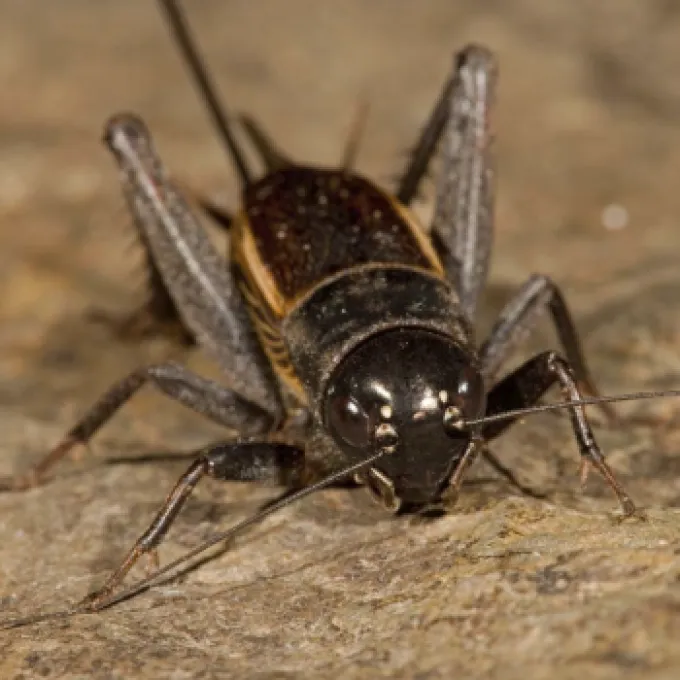
The spring field cricket (Acheta veletis) belongs to the order Orthoptera and the family Gryllidae. These insects are characterized by a robust body, typically measuring 20–25 mm in length, with a dark brown or black coloration.
The head is relatively large and features strong, chewing mouthparts, which are perfectly adapted for consuming various types of vegetation and crop tissues.
Key morphological features include long, thread-like antennae that act as primary sensory organs, and powerful hind legs designed for jumping when the cricket feels threatened.
Nymphs resemble the adults but are smaller in size and lack fully developed reproductive organs and wings. They undergo several molts before reaching the final adult stage.
As nocturnal creatures, they spend most of the daylight hours hidden in burrows or beneath plant debris, making them difficult to detect during standard daytime field surveys.
What it damages
This species is highly polyphagous, meaning it feeds on a wide range of plants, posing a significant risk to various agricultural crops throughout the growing season.
The most severe damage occurs at the seedling stage, where crickets chew through the stems of young cereals, such as wheat or barley, leading to immediate plant death.
Vegetable crops, including sugar beets, potatoes, and various cabbage species, are also susceptible to leaf and growth point damage caused by these insects.
In greenhouses and nursery environments, high populations of field crickets can destroy vast amounts of seedlings, resulting in substantial financial losses for producers.
Furthermore, the physical damage caused by their feeding creates entry points for various phytopathogens, potentially leading to secondary fungal or bacterial infections in the crop.
When it appears
Cricket activity typically begins in the early spring as soil temperatures rise, prompting nymphs to emerge from their overwintering locations in the soil.
The peak period of damage coincides with the germination and early growth phases of crops, when plants are most fragile and vulnerable to feeding injury.
Adult crickets are most active during the first half of summer, which corresponds with their mating season and egg-laying activity in moist soil environments.
The life cycle is univoltine, meaning there is only one generation per year. Overwintering usually occurs in the nymphal stage within deep soil burrows.
Mild and wet spring weather conditions are known to favor faster development and population growth, increasing the overall risk to agricultural fields.
Signs of infestation
The most visible sign of cricket presence is the existence of small, circular holes in the soil, which serve as entrances to their diurnal burrows.
Plants damaged by crickets show characteristic signs of gnawed leaf edges or stems that have been completely severed at the base near the soil line.
In the evening, the characteristic rhythmic chirping of the males provides a strong indication of a high pest population density in the nearby area.
Tiny dark granular pellets, which are cricket feces, found around the base of damaged plants are a reliable indicator of their recent feeding activity.
Using a flashlight during nighttime hours is the most effective way to observe the insects, as they are actively foraging for food and are highly visible on the surface.
Control measures
Effective management of the spring field cricket relies on integrated agricultural practices designed to disrupt their habitat and reduce population levels.
Deep autumn plowing is a highly recommended practice, as it destroys the soil burrows and exposes overwintering nymphs to harsh weather conditions and predators.
Maintaining clean fields by removing weeds and plant debris minimizes available hiding spots and secondary food sources for the crickets.
- Implementing crop rotation to prevent the buildup of pest populations.
- Using insecticide-treated baits for targeted control in high-density areas.
- Applying seed treatments to protect young plants during the vulnerable seedling stage.
Chemical control measures are most effective when applied in the evening when the insects are active on the soil surface, ensuring better contact with the pests.
Taxonomy
- Latin name
- Acheta veletis
- Order
- Orthoptera (locusts)
- Family
- Gryllidae
- EPPO code
- ACHTVE
Discussion
No discussions yet — be the first.