
Short-winged cricket
Anurogryllus muticus
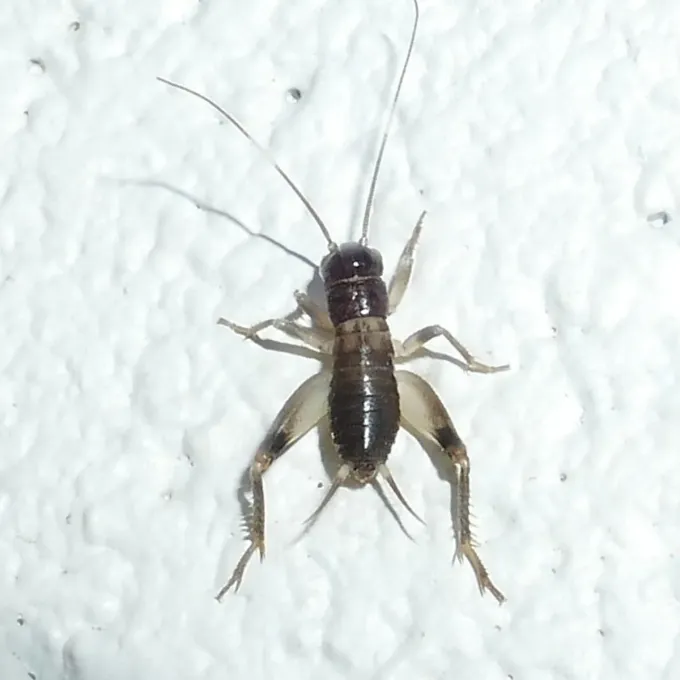
Description
How to identify
The short-winged cricket (Anurogryllus muticus) belongs to the order Orthoptera and the family Gryllidae. These insects are typically medium-sized with a robust, brownish body structure.
A defining characteristic of this species is their short wings, which render the adults generally flightless. Males possess specialized organs for stridulation, producing sounds to attract females.
These crickets are nocturnal, spending their days hidden in deep soil burrows. These burrows can reach depths of up to 50 cm, providing safety from predators and environmental extremes.
Unlike many other crickets, this species exhibits notable maternal care. Females guard their nests and actively forage to bring food to the nymphs developing within the burrow.
The life cycle encompasses eggs, nymphs, and adults. The generation time is typically about one year, strongly influenced by the climatic conditions of the habitat.
What it damages
This pest poses a significant threat to a wide range of agricultural crops, including various vegetables, ornamental plants, and some young tree seedlings.
The primary damage occurs to the root systems of plants. Both nymphs and adults feed on roots, causing wilting and eventual death of the affected plants.
In addition to root feeding, they often chew the stems of plants near the ground. This behavior is especially lethal to young seedlings and transplants.
Crickets frequently drag vegetation and organic matter into their burrows to consume, which can lead to large bare patches in nurseries or gardens.
In areas with high population densities, Anurogryllus muticus can destroy a substantial portion of a crop, with losses potentially reaching 30-50% in untreated areas.
Signs of infestation
The most prominent sign of infestation is the presence of small, circular holes in the soil, often accompanied by mounds of excavated earth.
Unexpected, localized wilting of plants that show no signs of foliage disease often points to subterranean feeding activity on the root system.
Inspecting the base of dead plants often reveals chewed stems and soil tunnels leading directly into the ground, which are clear indicators of cricket activity.
During the night, the audible stridulation of males serves as a reliable indicator of the presence and population density of the crickets in the area.
Missing or "pulled down" young shoots around the base of plants provide further evidence of the crickets dragging plant material into their underground nests.
Control measures
Deep cultivation and plowing of the soil during the autumn months are highly effective, as they destroy the burrows and expose the insects to predators.
The use of insecticidal baits containing systemic or stomach poisons, placed near burrow entrances, is a standard method for reducing local populations.
Biocontrol methods, such as the application of entomopathogenic nematodes or fungi into the soil, offer an effective and eco-friendly suppression strategy.
For high-value crops, installing physical barriers or guards around the stem base can prevent crickets from accessing the plants and causing mechanical injury.
Maintaining a weed-free environment and removing excess plant debris reduces the available food sources and shelter, making the habitat less suitable for colonization.
Taxonomy
- Latin name
- Anurogryllus muticus
- Order
- Orthoptera (locusts)
- Family
- Gryllidae
- EPPO code
- ANUGMU
Discussion
No discussions yet — be the first.