
African buffalo
Syncerus
Description
How to identify
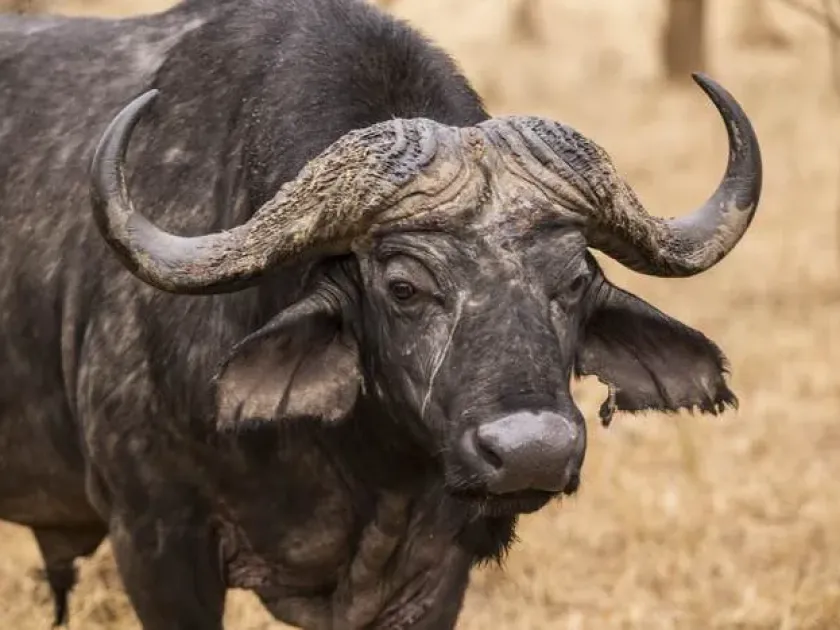
The African buffalo (Syncerus caffer) is a large bovid of the family Bovidae. It is a robust animal that can weigh up to 900 kg, characterized by its formidable physical presence and thick, fused horns.
These animals are gregarious, living in large herds that can cause extensive environmental impact. In agricultural settings within Africa, they are recognized as significant herbivores capable of devastating cultivated land.
African buffaloes are strongly tied to water sources, which often leads them to conflict with farmers operating near rivers, lakes, or irrigated fields. Their social structure is highly organized, facilitating collective movement.
The species displays remarkable adaptability to various environments, ranging from dense forests to open savannas. This allows them to exploit agricultural regions that provide easy access to high-quality feed.
Their biological cycle is driven by seasonal rainfall patterns. As pastures dry out, buffalo herds expand their grazing range, often moving into agricultural zones in search of succulence and nutrients.
What it damages
African buffaloes cause catastrophic damage to cereal crops such as maize, sorghum, and millet. Their grazing behavior involves not only consuming the harvest but also destroying entire plants through trampling.
The sheer weight of the herd causes severe soil compaction. This detrimental effect reduces soil aeration and water infiltration, leading to a significant decrease in future agricultural productivity.
Furthermore, these animals frequently damage farming infrastructure, including irrigation pipes, protective fencing, and storage facilities, resulting in costly repairs for local farmers.
A single herd can devastate a large portion of a farm's annual yield in a single night. Such occurrences pose a serious threat to local food security and the economic stability of rural communities.
- Consumption of cereal stalks and leaves.
- Severe trampling of seedlings and mature plants.
- Destruction of irrigation infrastructure.
- Negative impact on soil structure due to compaction.
Signs of infestation
The presence of buffaloes is marked by wide, distinct trails leading through fields toward water or food sources. Deep hoof prints in the soil are a reliable indicator of their movement.
Signs of infestation include large patches of flattened crops where the animals have grazed or bedded down. Broken stalks and uprooted plants scattered across the field are common symptoms of an intrusion.
Frequent accumulations of dung in fields and around damaged fencing confirm the herd's passage. This biological residue can also serve as a vector for various crop pathogens and weed seeds.
Visible damage to irrigation systems, such as crushed pipes or breached dams, often indicates the path of the herd. These areas become focal points for muddy patches and subsequent water loss.
Auditory evidence is another sign, as buffalo herds produce loud grunts and noises during their nighttime foraging sessions, allowing attentive farmers to identify their presence early.
Control measures
Protecting crops from African buffaloes requires robust physical barriers. Heavy-duty fencing, often reinforced with wire or logs, is the most effective way to prevent herd entry into agricultural plots.
Electric fencing, designed specifically for large game, provides a non-lethal deterrent that encourages herds to bypass protected fields entirely, preserving both the crop and the animals.
Community-based monitoring programs are highly effective. By sharing information about herd locations, farmers can implement early warning systems to drive buffaloes away before they reach critical crops.
Non-lethal scaring tactics, including noise-making devices and bright lights, can be deployed when a herd is detected nearby. These methods work best when combined with consistent patrols.
Long-term mitigation strategies focus on landscape planning and creating buffer zones. By maintaining natural migratory corridors away from arable land, the frequency of human-wildlife conflict can be significantly reduced.
Taxonomy
- Latin name
- Syncerus
- Family
- Bovidae
- EPPO code
- SYKRSP
Discussion
No discussions yet — be the first.