
Sulcopolistes sulcifer
Sulcopolistes sulcifer
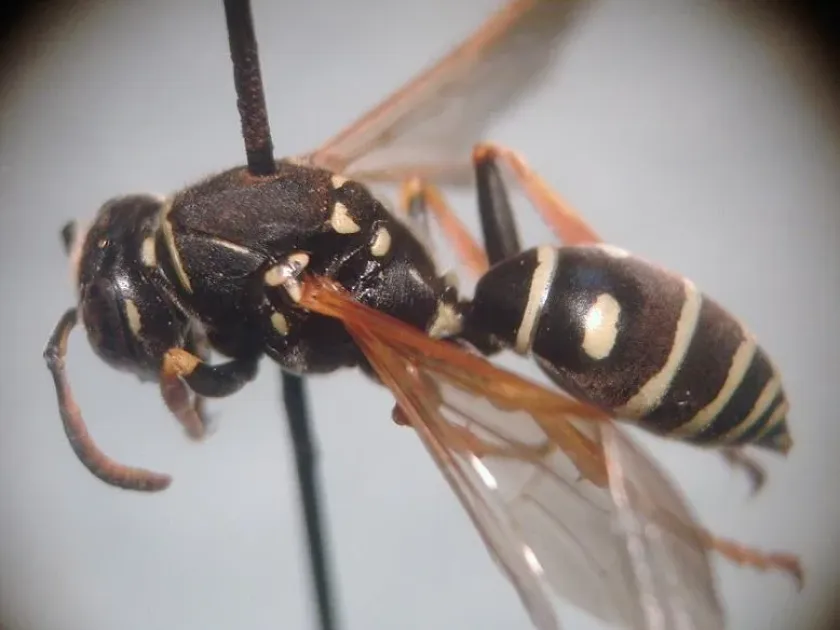
Description
How to identify
Sulcopolistes sulcifer is a specialized species of social parasitic wasps belonging to the family Vespidae. It functions as an obligate social parasite.
Morphologically, it resembles common paper wasps but possesses a more rugged, robust body structure, which is an adaptation to its parasitic lifestyle.
A distinctive feature of this species is the total absence of a worker caste. It entirely relies on the worker force of its host species.
These wasps are known to use chemical mimicry to infiltrate the nests of the genus Polistes without being attacked by the host's residents.
Their life strategy involves the assassination or subjugation of the host queen during the early stages of colony formation.
What it damages
Sulcopolistes sulcifer does not cause direct damage to cultivated plants, as it is an insect parasite rather than a phytophagous pest.
The indirect harm caused by this species is the depletion of Polistes wasp populations, which are significant predators of agricultural pests.
By eliminating the host colony's labor force, the parasite disrupts the natural biological control of leaf-eating larvae in the garden.
This reduction in the predator population leads to an increase in the number of caterpillars and other pests that feed on fruits and vegetables.
The presence of this parasite effectively weakens the ecosystem's ability to maintain a natural balance of insect populations.
When it appears
The life cycle begins in early spring, when overwintered females emerge to search for host nests to infiltrate.
The peak period of activity occurs during the months of May and June, coinciding with the nesting season of Polistes wasps.
Throughout the summer, the parasite's larvae develop within the captured nest, feeding on resources gathered by the host's workers.
By late summer, a new generation of reproductive males and females emerges from the host nest to mate.
Only the fertilized females survive the winter by hibernating in sheltered locations like cracks in walls or under tree bark.
Signs of infestation
A primary sign of infestation is a decrease in nest productivity and a lower number of workers seen entering and exiting the nest.
Colonies inhabited by Sulcopolistes sulcifer often appear less organized and show signs of declining nest maintenance compared to healthy colonies.
The host wasps might exhibit atypical behavior, appearing sluggish or failing to defend the nest effectively when disturbed.
Nest abandonment often occurs prematurely as the parasite does not sustain the colony as efficiently as the original queen would.
Observing the parasite females flying around existing wasp nests during the early nesting season is a common indicator of potential infiltration.
Control measures
Direct control is rarely necessary as Sulcopolistes sulcifer populations typically remain small and do not reach pest status.
Maintaining a balanced garden environment that supports healthy populations of predator wasps is the best long-term strategy.
Avoid excessive use of broad-spectrum insecticides that may kill both beneficial predatory wasps and the parasitic species alike.
If nest removal is required for safety reasons, ensure it is performed in the evening when the insects are less active and less likely to swarm.
Promote biodiversity in the landscape to naturally manage insect population densities and reduce the reliance on chemical interventions.
Taxonomy
- Latin name
- Sulcopolistes sulcifer
- Order
- Hymenoptera
- Family
- Vespidae
- EPPO code
- SULCSU
Discussion
No discussions yet — be the first.