
White-letter Hairstreak
Strymonidia w-album
Description
How to identify
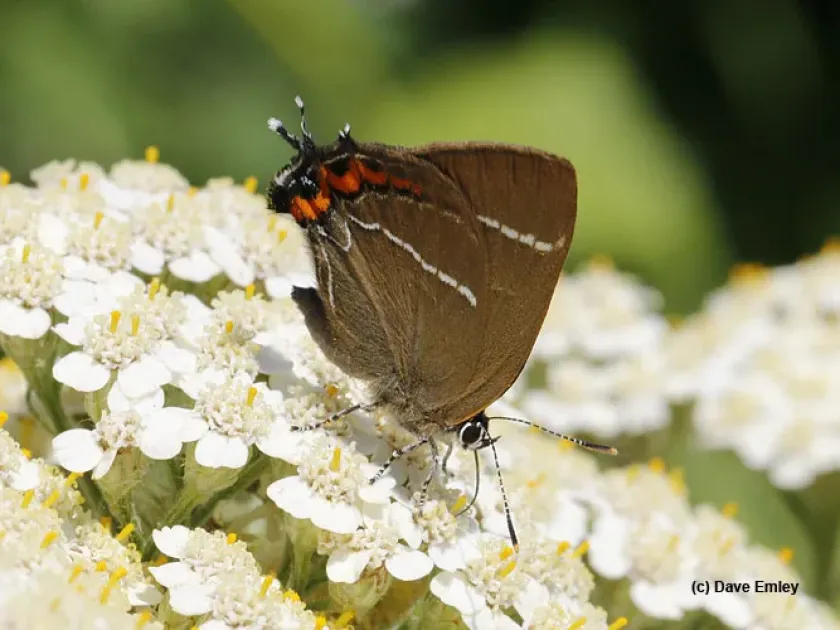
The White-letter Hairstreak (Satyrium w-album) is a small butterfly belonging to the Lycaenidae family. Adult butterflies typically have a wingspan of 30–35 mm.
The upper surface of the wings is a dark brownish-black, while the underside features a distinct white 'W' shaped mark on the hindwing, which serves as the primary diagnostic feature.
Larvae are bright green with yellowish lateral stripes, perfectly adapted for camouflage against the leaves of their host trees, resembling a flattened slug or woodlouse.
The pupae are mottled brown or grey, allowing them to remain well-hidden when attached to the twigs or bark of the host tree during metamorphosis.
This species is found across temperate regions of Europe and Asia, preferring habitats like woodland edges, hedgerows, and parks where elm trees are present.
What it damages
The primary host plants for this species are members of the Ulmus (Elm) genus, including Wych Elm and English Elm.
Caterpillars feed on the flower buds, catkins, and developing seeds of the host tree, which can significantly inhibit the reproductive output of affected elms.
As the larvae develop, they transition to feeding on the foliage, causing holes and skeletonization, which may lead to partial defoliation in cases of high population density.
Damage to the foliage stresses the trees, making them more susceptible to secondary pests and various fungal pathogens commonly associated with elms.
Heavy infestations can diminish the aesthetic and ecological value of urban landscapes and parklands, necessitating proactive management.
When it appears
The life cycle of the White-letter Hairstreak is univoltine, meaning there is only one generation per year, with activity concentrated in the spring and summer.
The species overwinters in the egg stage, with females laying eggs on the twigs or at the base of buds on the host elm tree during mid-summer.
Larvae emerge in the early spring, coinciding precisely with the bud burst and flowering of the elm trees, allowing them to feed immediately.
Pupation occurs in early summer, typically in June, after the caterpillars have completed their development within the canopy of the tree.
Adult butterflies emerge in July and early August, at which time they are primarily nectar feeders and focus on mating and egg-laying for the next cycle.
Signs of infestation
The first signs of infestation include the consumption of young flower buds and the appearance of small, irregular holes in the developing spring leaves.
Careful examination of the canopy during the larval stage may reveal the green, flattened caterpillars clinging to the undersides of leaves or twigs.
Wilting of young elm shoots or premature falling of damaged flower clusters can indicate that larvae have been feeding in that specific area.
Accumulation of larval frass (droppings) on the leaves or branches below the canopy can serve as an indicator of an active population above.
Observations of adult butterflies circling the tops of elm trees in mid-summer are a clear sign of an established local breeding population.
Control measures
Chemical control involving systemic insecticides may be employed if the population reaches economic or aesthetic injury levels, ideally applied shortly after larval emergence.
Biological control using Bacillus thuringiensis sprays is highly recommended as it targets the larvae while preserving the beneficial insect population.
Routine tree care, including the removal of deadwood or heavily infested branches during the dormant season, can reduce the number of overwintering eggs.
Encouraging natural predators such as insectivorous birds and parasitic wasps helps maintain the butterfly population within natural limits.
- Monitor elm canopies in late spring for larval activity.
- Prioritize the use of selective biological pesticides.
- Maintain tree health through proper watering and pruning practices.
Taxonomy
- Latin name
- Strymonidia w-album
- Order
- Lepidoptera (butterflies)
- Family
- Lycaenidae
- EPPO code
- STYMWA
Discussion
No discussions yet — be the first.