
Strymon ziba
Strymon ziba
Description
How to identify
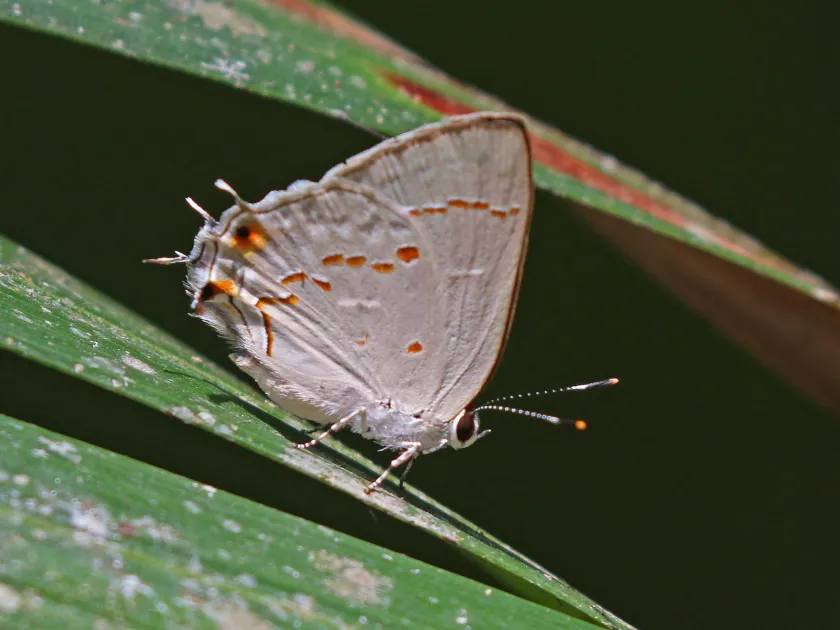
Strymon ziba is a species of butterfly belonging to the Lycaenidae family, commonly known as hairstreaks. As part of the Lepidoptera order, this insect undergoes a complete metamorphosis, including egg, larval, pupal, and adult stages.
Adult butterflies are characterized by specific wing patterns typical of the Strymon genus. While adults feed on nectar and are not directly destructive, they are responsible for egg placement on suitable host plants, which facilitates the start of a new generation.
The larval stage, or caterpillar, is the primary period of development during which the insect grows and prepares for pupation. The larvae are often cryptically colored to blend in with their host plants, making them difficult to detect.
The life cycle duration is highly dependent on environmental factors, particularly ambient temperature and humidity levels. Optimal conditions allow for rapid population growth, which can lead to significant infestations in specific agricultural regions.
Identifying the pest at the egg and early larval stages is essential for implementing early warning systems and preventing widespread crop damage during the growing season.
What it damages
The main host plants for Strymon ziba larvae belong to the Fabaceae family. They are particularly attracted to various legume crops where they find abundant food resources for their growth.
Damage is primarily caused by caterpillars feeding on reproductive organs, including buds, flowers, and developing pods. By consuming these parts, they directly reduce the plant's potential to produce seeds and yield.
Heavy infestations can lead to substantial losses in seed quality and quantity. The consumption of developing seeds inside the pods makes the product unmarketable and unsuitable for processing.
In addition to direct consumption, the wounds created by the larvae provide entry points for secondary pathogens, such as fungi and bacteria, which can cause further degradation of plant tissues.
Economic impact is generally observed when pest density exceeds tolerable thresholds, necessitating planned intervention strategies to secure the harvest.
Signs of infestation
Early signs of an infestation include small entry holes in the buds or pods of legume plants, often accompanied by the presence of frass (larval excrement) near the damaged areas.
Premature abscission (dropping) of flowers and pods is a common indicator of larval feeding. Plants often appear stressed or stunted if the infestation is concentrated on the most active growth points.
Larvae may create protective shelters using silk threads to bind leaves or flower parts together, providing them with cover from predators and environmental stress.
Regular visual inspections of the terminal shoots and inflorescences can reveal the presence of eggs or young caterpillars before they cause extensive visible destruction.
The use of pheromone traps for monitoring adult flight activity is highly effective for timing field scouting and implementing timely control measures.
Control measures
Integrated Pest Management (IPM) is the most effective approach for Strymon ziba control. This includes crop rotation to break the pest's life cycle and reduce the local population density.
Biological controls involving the use of entomopathogenic bacteria, such as specific strains of Bacillus thuringiensis, offer a targeted solution that minimizes impact on non-target beneficial insects.
When chemical control is necessary, applications should be timed to coincide with the presence of early larval instars, as they are most susceptible to contact or systemic insecticides.
Maintaining clean fields by removing wild host plants that serve as reservoirs for the pest helps to lower the pressure on commercial crops throughout the season.
- Implementing pheromone traps for population monitoring.
- Using microbial insecticides during the early larval stage.
- Practicing strict crop rotation and field sanitation.
- Applying selective insecticides only when economic thresholds are met.
Taxonomy
- Latin name
- Strymon ziba
- Order
- Lepidoptera (butterflies)
- Family
- Lycaenidae
- EPPO code
- STRYZI
Discussion
No discussions yet — be the first.