
Strymon melinus
Strymon melinus
Description
How to identify
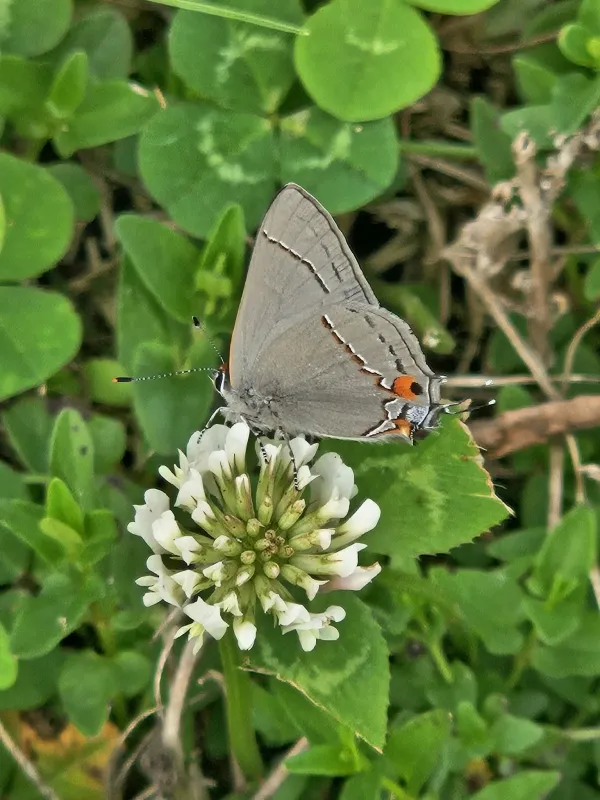
Strymon melinus, commonly known as the grey hairstreak, is a butterfly in the Lycaenidae family. The adult butterfly typically has a wingspan of 25 to 30 millimeters.
The upper surface of the wings is generally dark gray or brown. A distinctive feature is the presence of a bright orange spot with a black center located at the anal angle of the hindwings.
The underside of the wings is lighter, featuring a thin white line and several dark spots, which helps the butterfly blend in with its environment to avoid predators.
The larvae are typically flattened in shape, often described as woodlouse-like, and range from green to yellow-green in color with fine hair covering the body.
Pupae are stout, brownish in color, and are usually secured to the undersides of leaves or stems using a silk girdle to remain stationary during metamorphosis.
What it damages
Strymon melinus is a polyphagous pest that affects a wide variety of agricultural crops. It is particularly known for damaging legumes, mallows, and nightshade family members.
Affected crops frequently include beans, soybeans, cotton, tomatoes, and cucumbers. The larvae feed primarily on flower buds, leaves, and developing fruit of these plants.
Damage is most severe during the flowering and fruit-setting stages. When larvae consume reproductive organs, it leads to premature fruit drop and significant yield loss.
In addition to crops, the pest commonly utilizes wild hosts like mallow, which serve as reservoirs for infestations that eventually spread to commercial fields.
Mass outbreaks in fields can significantly impact both the quantity and quality of the harvest, making it a pest of concern in several vegetable production regions.
When it appears
The life cycle begins in early spring as overwintering pupae or adults emerge. The number of generations per year depends heavily on the local climate and temperature.
In warmer southern regions, this species can complete three to four generations within a single growing season, complicating efforts to manage its population.
Adults are active during the day, feeding on flower nectar and depositing eggs on the surfaces of host plants, which provides immediate access to food for the larvae.
The larval stage lasts approximately several weeks, during which the caterpillars undergo multiple instars, feeding continuously to gather energy for pupation.
Peak activity and damage typically occur during mid-summer, when overlapping generations can create persistent pressure on crops, requiring consistent field scouting.
Signs of infestation
The primary signs of infestation include irregular holes in leaves and chewed edges, which can reduce the plant's overall photosynthetic capacity.
Larvae frequently bore into fruit, such as bean pods or tomatoes, leaving entry holes and excrement, which causes the fruit to rot or drop prematurely.
Scouting for eggs, which are laid singly or in small clusters on the undersides of leaves, can help detect the presence of the pest before significant damage occurs.
Withered or deformed buds are common indicators of larval activity. Stunted development of fruit pods is another clear sign that reproductive organs have been compromised.
- Woodlouse-shaped larvae present on buds or fruits.
- Visible entry holes and frass on legumes and tomatoes.
- High concentration of adult butterflies on flowering weeds near crops.
Control measures
Effective cultural control includes the removal of host weeds, especially mallows, from field borders and irrigation ditches to eliminate alternative breeding sites.
Implementing crop rotation is an essential strategy to disrupt the life cycle of the insect and reduce the overall pest pressure in the cropping system.
Biological control, such as the use of Bacillus thuringiensis-based insecticides, is effective against early larval stages while preserving beneficial predator populations.
Chemical control should be employed only when monitoring reveals that the pest density has surpassed the economic injury level for the specific crop.
The use of pheromone traps or systematic scouting allows for precise timing of interventions, ensuring that control measures are as targeted and efficient as possible.
Taxonomy
- Latin name
- Strymon melinus
- Order
- Lepidoptera (butterflies)
- Family
- Lycaenidae
- EPPO code
- STRYME
Discussion
No discussions yet — be the first.