
Strymon megarus
Strymon megarus
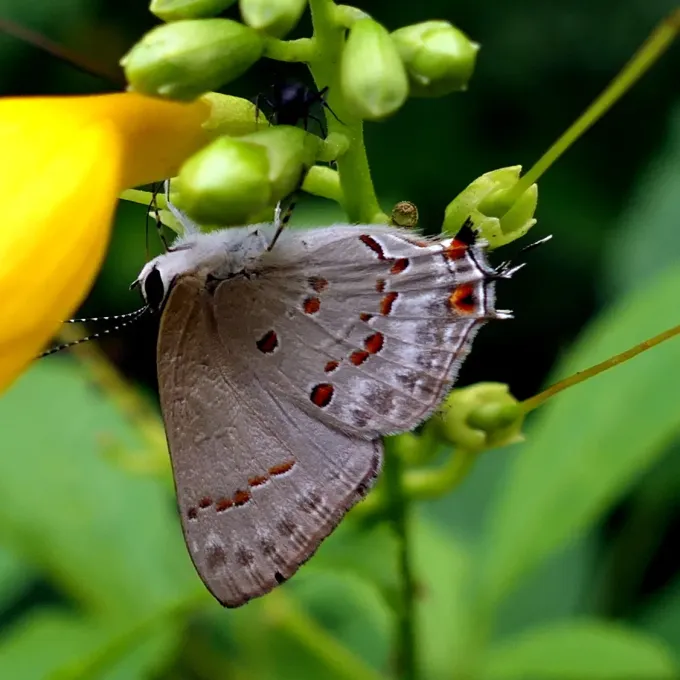
Description
How to identify
Strymon megarus is a butterfly species within the family Lycaenidae. Known primarily for its role as an agricultural pest, the adult stage is characterized by specific wing patterns and modest size, common among many hairstreak butterflies.
The larval stage, or caterpillar, is the phase where the insect is most damaging. Its morphology is adapted for a concealed life, often living within the host plant's tissues, which provides protection from both natural predators and external environmental factors.
The life cycle of this pest involves a complete metamorphosis. Adults lay eggs on the host plant, and upon hatching, the larvae immediately seek to bore into the plant structure, typically targeting the developing fruit.
Identifying this species requires careful observation of both the adult butterfly and the specific damage patterns caused by the larvae. Entomologists often use morphological traits of the pupae and adults for definitive classification.
Belonging to the order Lepidoptera, this pest requires systematic monitoring to prevent its population from reaching economic injury levels. Understanding its phenology is crucial for successful integrated pest management (IPM).
What it damages
The primary crop affected by Strymon megarus is the pineapple (Ananas comosus). The larvae act as fruit borers, creating tunnels within the flesh of the fruit, which compromises its structure and quality.
These boreholes serve as entry points for secondary pathogens, such as fungi and bacteria, leading to rot and rapid decay of the fruit. This makes the product unsalable and unsuitable for international trade.
In addition to direct physical damage, the presence of larvae can cause physiological stress to the plant, potentially affecting the growth rate and overall development of future yields on the plantation.
The economic impact is particularly severe in large-scale pineapple production. Losses can be substantial if infestation is detected too late, necessitating strict field surveillance and proactive measures.
Host susceptibility is highest during the flowering and fruit-setting stages. Protection of the developing fruit is the main priority for farmers in regions where this butterfly is endemic.
Signs of infestation
The most visible sign of an infestation is the presence of small entry holes on the fruit surface. Frass (larval excrement) is often found near these holes, indicating active feeding by the caterpillar inside.
An increased presence of adult butterflies over the pineapple fields during the day serves as a warning sign. This indicates an active egg-laying phase, suggesting that future larval activity is imminent.
Discoloration of the fruit skin, often appearing as dark or sunken spots around the entry point, signals that the larvae have caused significant internal damage to the tissue structure.
Upon inspecting a damaged pineapple, one may find internal tunnels or evidence of webbing material used by the larvae to secure their environment. The fruit texture may also become soft due to internal decay.
Wilting of the crown or localized tissue collapse in young fruits can sometimes indicate the early stages of larval colonization, necessitating an immediate assessment of the entire plantation area.
Control measures
Chemical control is often the primary strategy, involving the application of insecticides during the adult flight stage. This timing is essential to prevent eggs from being laid and larvae from boring into the fruits.
Cultural practices, such as the removal and destruction of crop residues post-harvest, are vital. This limits the availability of host plants for the next generation and helps disrupt the life cycle of the pest.
Biological control methods, such as the deployment of parasitoids or the use of microbial insecticides like Bacillus thuringiensis, offer a more sustainable alternative to synthetic chemical sprays.
Effective management relies on a regular monitoring program using pheromone or light traps. By tracking the population density, farmers can time their treatments to coincide with the most vulnerable developmental stages.
- Regular field scouting to identify early signs of infestation.
- Implementation of integrated pest management (IPM) protocols.
- Maintenance of clean plantation borders to reduce nesting sites.
- Application of approved insecticides at critical growth stages.
Taxonomy
- Latin name
- Strymon megarus
- Order
- Lepidoptera (butterflies)
- Family
- Lycaenidae
- EPPO code
- THECBA
Discussion
No discussions yet — be the first.