
Strymon bazochii
Strymon bazochii
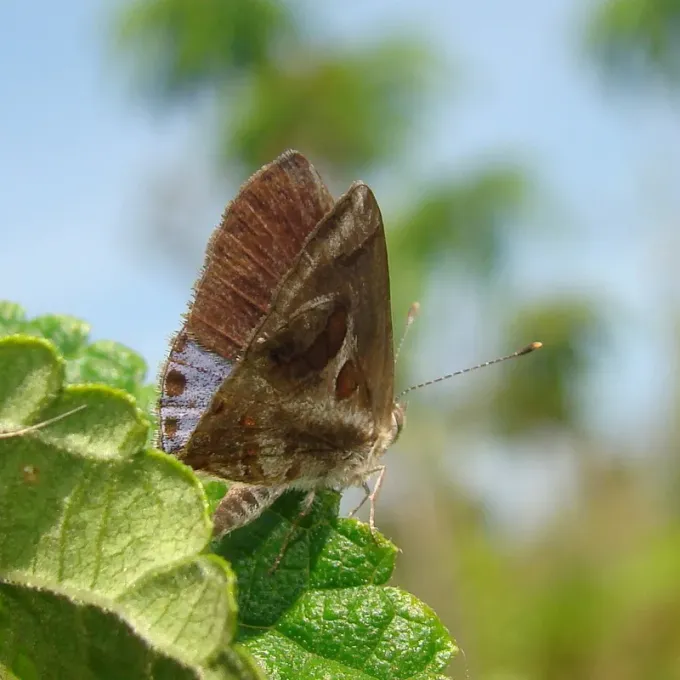
Description
How to identify
Strymon bazochii belongs to the order Lepidoptera and the family Lycaenidae. This species is a small butterfly whose larval stage can cause significant economic damage to various legume crops.
Adult butterflies exhibit the typical coloration of the family, featuring brownish-gray hues on the dorsal side of the wings. Due to their small size, they often remain unnoticed during routine crop inspections.
The larvae (caterpillars) possess a characteristic flattened shape and are usually greenish in color, providing excellent camouflage against the foliage and pods of the host plant.
The insect undergoes a complete life cycle, consisting of egg, larva, pupa, and imago stages. The caterpillar is the primary destructive stage, equipped with chewing mouthparts that facilitate feeding.
This species is predominantly found in warmer climates, where favorable temperatures allow for the development of multiple generations within a single growing season.
What it damages
The primary hosts for Strymon bazochii larvae are members of the Fabaceae (legume) family. Common targets include beans, peas, and various other cultivated legume species.
The larvae preferentially attack the reproductive parts of the plant. They bore into young pods and consume the developing seeds, leading to direct yield loss and reduced commodity quality.
In cases of high population density, caterpillars may also consume generative buds, causing flower drop and preventing the formation of fruit, which significantly impacts total yield.
The pest can also utilize certain weeds as alternative hosts, which allows it to maintain its population in the agricultural landscape even when the main crop is absent.
Beyond direct feeding damage, the entry holes created by the larvae provide an entry point for various secondary fungal and bacterial infections, further damaging the crop.
Signs of infestation
The first indicator of an infestation is the presence of small, characteristic holes on the surface of the pods, created by the larvae as they enter to feed on the seeds.
Opening infested pods often reveals larval frass (excrement), which confirms the presence and active feeding of the larvae inside the developing fruit.
Externally, affected pods may show signs of deformation, premature yellowing, or desiccation, making it easier for agronomists to identify infested areas in the field.
Observing adult butterflies flying around crops during the flowering stage is a clear sign that egg-laying is occurring, signaling a high risk for the upcoming pod formation.
The presence of fine webbing on young leaves and clusters of flowers may also indicate the activity of older larvae within the plant canopy.
Control measures
Managing Strymon bazochii populations requires integrated pest management (IPM) practices, such as proper crop rotation and spatial isolation from previous host crops.
Maintaining field margins and eliminating host weeds is essential to reduce the reservoirs of the pest and prevent population buildup during the off-season.
When economic thresholds are exceeded, the application of contact or systemic insecticides is recommended, but timing is crucial: applications must occur before larvae bore into the pods.
Biological control strategies, including the use of beneficial insects or microbial biopesticides, are effective if implemented during the early stages of larval development.
Monitoring using pheromone traps is highly recommended to detect the start of adult flights, allowing for precise timing of preventive measures and minimizing pesticide use.
Taxonomy
- Latin name
- Strymon bazochii
- Order
- Lepidoptera (butterflies)
- Family
- Lycaenidae
- EPPO code
- STRYBG
Discussion
No discussions yet — be the first.