
Stigmella plagicolella
Stigmella plagicolella
Description
How to identify
Stigmella plagicolella is a member of the Nepticulidae family, known as the pigmy moths. These are extremely small insects, with a wingspan of only 5 to 6 mm.
Adult moths possess dark, metallic-colored wings, often featuring distinct, shiny transverse bands across the forewings.
The larvae are specialized miners, characterized by a flattened, legless body shape, which is perfectly adapted for living between the epidermal layers of a leaf.
The life cycle undergoes complete metamorphosis, consisting of egg, larva, pupa, and adult stages, allowing the species to survive various environmental conditions.
Overwintering occurs primarily in the pupal stage within a dense, protective cocoon, typically hidden in the soil or under leaf litter near host plants.
What it damages
This moth primarily targets species within the Rosaceae family, including blackthorn (Prunus spinosa), plums, cherries, and occasionally apples.
The larvae feed on the leaf parenchyma, creating intricate, winding tunnels known as mines inside the leaf tissue.
Severe infestations can lead to premature yellowing and leaf drop, which significantly impacts the tree's health and ability to store reserves for the next season.
Young trees and saplings are particularly vulnerable, as extensive mining can stunt growth and weaken the overall structure of the plant.
In commercial orchards, high pest pressure can reduce the photosynthetic capacity of the canopy, indirectly affecting fruit quality and tree vigor.
When it appears
The emergence of the first generation of adults usually coincides with the spring budding or flowering period of the host trees.
Females lay individual eggs on the underside of leaves, often near the leaf veins to allow the hatching larva direct access to the interior tissues.
Depending on regional climatic conditions, the moth can complete one or two generations per year, with activity peaking during warmer months.
The larval feeding stage occurs during early and mid-summer, when the characteristic serpentine mines are actively being expanded.
Pupation takes place in late summer, as the mature larvae exit the mines and seek suitable locations in the soil or debris to pupate and overwinter.
Signs of infestation
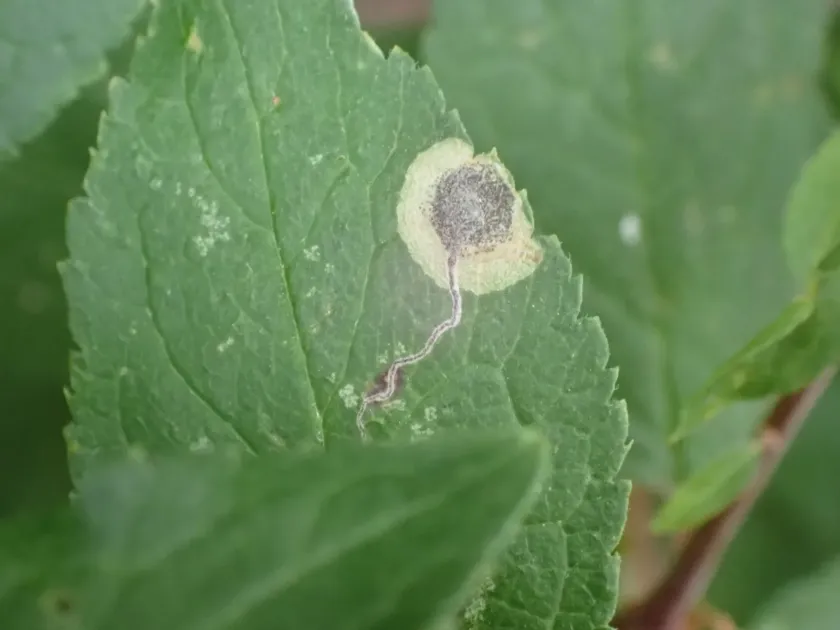
The most distinctive sign of infestation is the appearance of narrow, winding, serpentine mines on the surface of the foliage.
Within the mine, a dark, narrow line of larval excrement is clearly visible, marking the path the larva has traversed through the leaf.
As the larva grows, the mine gradually widens, creating a distinct pattern that is easily recognizable compared to other leaf-mining insects.
Damaged leaves may show signs of necrosis, turning brown in areas where the leaf tissue has been entirely consumed by the feeding larva.
When held up against the light, the mines appear as translucent or lighter-colored paths, making them easy to identify during routine garden checks.
Control measures
Sanitation practices, such as the thorough collection and removal of fallen leaves in autumn, are critical for reducing the overwintering pupal population.
Cultivating the soil around the base of the trees helps disrupt the pupation sites and exposes the pupae to natural predators.
Chemical control, if necessary, should be applied during the period of adult flight and early larval emergence to prevent the formation of extensive mines.
Encouraging natural biological control by protecting parasitic wasps and other beneficial insects helps maintain the moth population at manageable levels.
Regular monitoring of orchards using pheromone traps can help track adult activity and optimize the timing of any required intervention.
Taxonomy
- Latin name
- Stigmella plagicolella
- Order
- Lepidoptera (butterflies)
- Family
- Nepticulidae
- EPPO code
- STGMPL
Discussion
No discussions yet — be the first.