
Raspberry leaf miner
Ectoedemia arcuatella
Description
How to identify
The raspberry leaf miner (Ectoedemia arcuatella) is a member of the Nepticulidae family. These tiny moths are characterized by their small wingspan and cryptic behavior, making them difficult to spot during daylight hours.
The lifecycle of this pest begins with eggs laid by adult females on the underside of raspberry leaves. The larvae are small, yellowish caterpillars that feed exclusively within the leaf tissue, creating distinctive mining patterns.
This species typically completes one generation per year. Winter is spent in the pupal stage, protected by silken cocoons concealed within fallen leaf litter or in the upper layers of the soil beneath the host plants.
Adult moths emerge during the spring, which often coincides with the flowering period of raspberries. They are nocturnal or crepuscular, meaning they are most active during dusk and dawn.
Understanding the life stages is crucial for timing control measures. Once the larvae finish their development inside the leaves, they descend to the ground to pupate, continuing the cycle for the next season.
What it damages
The primary host for Ectoedemia arcuatella is the raspberry plant, though it can occasionally affect blackberries. The larvae are specialized tissue feeders that exclusively consume the leaf parenchyma.
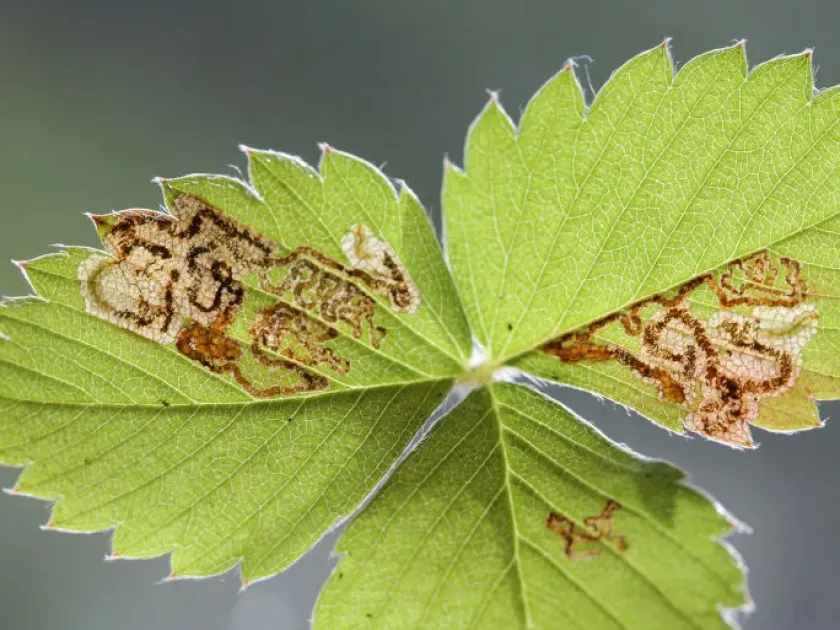
By consuming the internal layers of the leaf while leaving the epidermis intact, the larvae create winding, thread-like mines. As the larvae grow, these mines widen and can eventually cover a significant portion of the leaf surface.
Severe infestations lead to premature yellowing and dropping of leaves. This loss of photosynthetic capacity significantly weakens the plant, reducing its ability to store energy for the subsequent year's crop.
Plants affected by the leaf miner are generally less vigorous and more susceptible to environmental stressors. Consequently, the quality and size of the berries may decline as a result of poor plant nutrition and energy production.
The economic impact is primarily seen in poorly managed plantations where the accumulation of leaf litter allows the population of the moth to reach high levels year after year.
Signs of infestation
The most prominent sign of infestation is the appearance of winding, pale, or brownish lines on the foliage. These mines often contain a trailing line of dark excrement, which is a hallmark of this specific pest.
As the infestation progresses, the mines grow larger, causing the leaf tissue to dehydrate and the leaves to curl or deform. In extreme cases, affected leaves may turn brown and wither entirely before the growing season is over.
Visual inspection against light helps to reveal the maze-like patterns created by the larvae inside the leaves. This is the simplest way to confirm the presence of the pest in the early stages of the attack.
The premature drop of leaves in mid-summer is another indicator that the leaf miner population has become problematic. Checking the fallen leaves for pupal cases can confirm the pest's presence.
Monitoring the lower levels of the bushes during the late spring is essential, as this is where the initial infestation usually starts before spreading to the rest of the canopy.
Control measures
Sanitation is the most effective defense against the raspberry leaf miner. Removing and burning fallen leaves during the autumn eliminates the primary overwintering sites for the larvae and pupae.
Cultivating the soil around the base of the bushes in autumn or early spring can disrupt the pupation process and reduce the number of adults that successfully emerge in the following season.
If chemical control is necessary, it is important to apply authorized insecticides that target the larvae before they create deeper mines, while always respecting pre-harvest intervals to ensure fruit safety.
- Regular manual removal of heavily infested leaves.
- Promoting strong plant health through balanced fertilization.
- Encouraging natural predators by avoiding broad-spectrum pesticides.
Maintaining proper plant spacing improves airflow and makes the bushes less attractive to the moths for egg-laying, while also simplifying the monitoring and management of the plantation.
Taxonomy
- Latin name
- Ectoedemia arcuatella
- Order
- Lepidoptera (butterflies)
- Family
- Nepticulidae
- EPPO code
- NEPTAR
Discussion
No discussions yet — be the first.