
Apple leaf miner
Ectoedemia atricollis
Description
How to identify
The apple leaf miner (Ectoedemia atricollis) is a small moth species belonging to the Nepticulidae family. Adults are tiny insects with a wingspan of only about 5–6 mm, often going unnoticed by orchard managers.
The larvae are specialized internal feeders that spend their entire development period inside the leaf tissue of the host plant. They are characterized by a yellowish-white body and a flattened shape suited for mining.
Adult moths are generally dark, sometimes blackish with a metallic sheen, making them difficult to spot against the bark or foliage during the daytime.
The life cycle consists of the egg, larva, pupa, and adult stages. These insects typically overwinter as pupae, sheltered either in cocoons within the soil or in the crevices of the apple tree bark.
The species biology is highly synchronized with the growth stages of apple trees, ensuring that emerging larvae have immediate access to fresh leaf tissue for feeding.
What it damages
Apple trees are the primary host for this pest. The larvae create distinct mines within the leaves, feeding on the parenchyma and destroying the internal structures required for photosynthesis.
Severe infestations result in a significant loss of leaf surface area, which directly impairs the tree's ability to produce energy and store nutrients for the following season's fruit production.
Premature leaf drop is a common symptom of high infestation levels, weakening the tree's immune system and making it more susceptible to other diseases and environmental stress.
Nursery stock and young trees are particularly vulnerable, as the damage slows down vegetative growth and hinders the development of a healthy root system.
While a single mine might not cause critical damage, collective larval activity can cause extensive browning and drying of the foliage, negatively affecting overall crop yield.
When it appears
The flight of the first generation of adults typically occurs in spring, coinciding with the bud-burst phase of the apple trees. This allows the larvae to immediately begin feeding on developing leaves.
Depending on the climatic zone, the pest may complete one or two generations per year. Warmer summers tend to accelerate the life cycle, leading to higher population pressures.
The most active feeding stage of the larvae usually occurs during the early to mid-summer period, when foliage is lush and most conducive to development.
Temperature serves as a key driver for the insect's development rate; warm and stable weather conditions often lead to rapid increases in larval density throughout the orchard.
By late autumn, the final larval stage completes feeding and enters the pupal stage, entering diapause to survive the winter months until the next growing season.
Signs of infestation
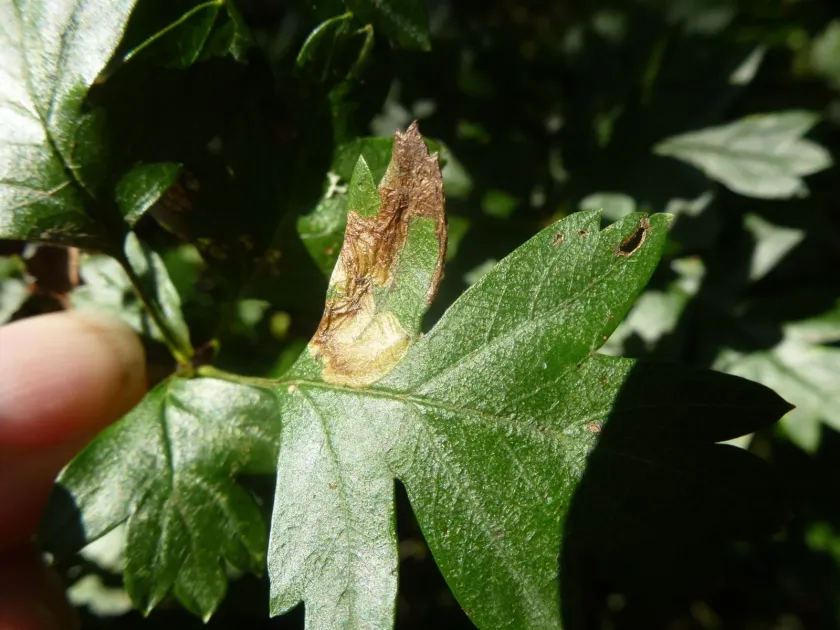
The primary symptom of an infestation is the presence of winding, thread-like mines on the leaves. These mines gradually increase in width as the larva matures and consumes more tissue.
A dark, continuous or broken line of larval excrement is usually visible in the center of the mine, which acts as a key diagnostic feature for identifying this specific pest.
In cases of heavy infestation, multiple mines can appear on a single leaf, often merging into larger, irregular discolored patches that appear brown or necrotic.
If you inspect the undersides of the leaves during the early summer, you can often spot the small larvae inside their translucent galleries before they cause extensive damage.
The affected areas of the leaf will eventually dry out and may crack, giving the tree canopy a scorched appearance if the infestation is widespread.
Control measures
Orchard sanitation is critical. Collecting and destroying fallen leaves in the autumn is essential to eliminate a significant portion of the overwintering population.
Cultivating the soil around the base of the trees helps disturb pupation sites, exposing them to environmental elements and natural predators, which significantly reduces local pest pressure.
Biological control methods, including the use of bacteria-based insecticides, can be effective if applied during the period when larvae are hatching and beginning their mining activities.
For chemical control, systematic insecticides are generally required to reach the larvae protected within the leaf tissue, ensuring effective management while minimizing impact on non-target species.
- Use pheromone traps for early population monitoring.
- Promote beneficial predator habitats within the orchard.
- Maintain tree vigor through proper irrigation and fertilization.
Taxonomy
- Latin name
- Ectoedemia atricollis
- Order
- Lepidoptera (butterflies)
- Family
- Nepticulidae
- EPPO code
- NEPTAN
Discussion
No discussions yet — be the first.