
Pigmy moth
Ectoedemia
Description
How to identify
The pigmy moth belongs to the family Nepticulidae, which includes the smallest moths in the entire Lepidoptera order.
Adult moths are extremely tiny, typically having a wingspan of only 3 to 5 millimeters, making them very difficult to observe in the field.
Their bodies are often dark, sometimes metallic in color, which acts as camouflage against tree bark or leaves during the day.
The life cycle involves an egg, larva, pupa, and adult stage, with most species having one or more generations per year depending on the climate.
Overwintering usually occurs in the pupal stage, protected within a silken cocoon hidden in leaf litter or soil crevices.
What it damages
These moths are primarily pests of various trees and shrubs, showing a strong preference for Rosaceae species such as apples, pears, and oaks.
The larvae are leaf miners, living exclusively within the leaf tissue between the upper and lower epidermal layers.
By consuming the parenchyma cells, they disrupt the plant's ability to photosynthesize effectively, leading to reduced plant vigor.
Heavy infestations can lead to premature leaf drop, which stresses the tree and can significantly reduce the fruit yield in the following season.
The specialized nature of their feeding makes them a chronic pest in many woody landscapes and commercial orchards if not managed early.
Signs of infestation
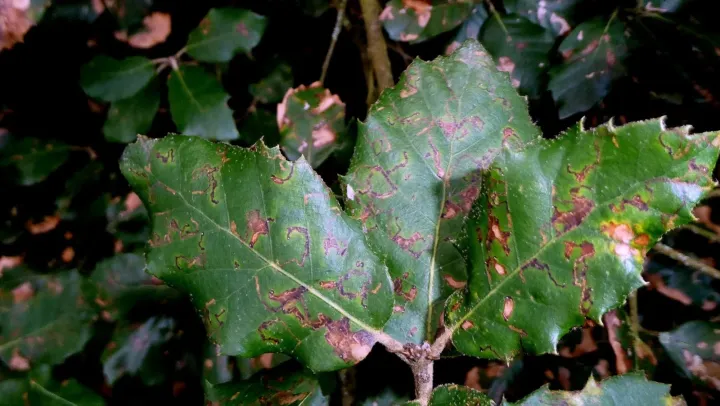
The most diagnostic sign is the presence of a leaf mine, which appears as a winding, serpentine, or spiral trail on the leaf surface.
These trails contain a clear central line consisting of larval frass (excrement), which helps distinguish them from other types of leaf miners.
As the larva grows, the width of the mine increases, creating a characteristic pattern that is often specific to the moth species involved.
Affected leaves may show localized yellowing or browning, and in severe cases, the leaf may distort or crack along the mine paths.
A small exit hole is typically visible at the end of the mine, where the mature larva exited the leaf to find a pupation site.
Control measures
Sanitation is key; removing and destroying fallen leaves during late autumn and early spring significantly reduces the population of overwintering pupae.
Monitoring using pheromone traps is essential for timing insecticide applications, targeting the egg-laying phase before larvae enter the leaves.
Systemic insecticides provide the best results because they are translocated through the leaf tissue, reaching larvae protected inside their mines.
Encouraging natural predators such as minute parasitic wasps can provide biological control and keep population densities below economic injury levels.
Maintaining tree health through proper irrigation and fertilization improves the plant's resilience, allowing it to withstand minor foliage loss without major impact.
Taxonomy
- Latin name
- Ectoedemia
- Order
- Lepidoptera (butterflies)
- Family
- Nepticulidae
- EPPO code
- ECTDSP
Discussion
No discussions yet — be the first.