
Birch pygmy moth
Ectoedemia argentipedella
Description
How to identify
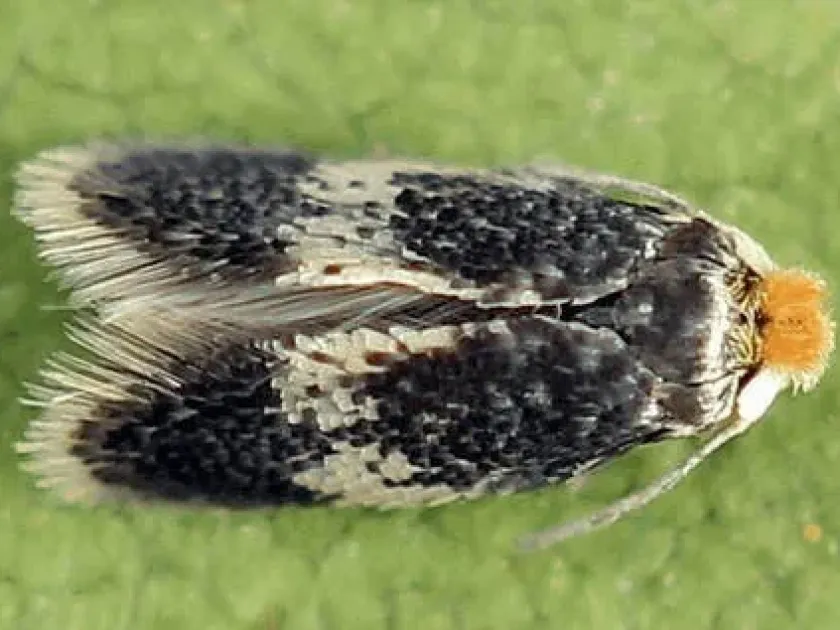
The birch pygmy moth (Ectoedemia argentipedella) belongs to the Nepticulidae family within the Lepidoptera order. It is an extremely small insect with a wingspan of only 5 to 7 millimeters.
Adults possess dark wings with a distinct metallic or silvery sheen. The insect’s body is covered in dense scales, and the head features a characteristic tuft of hair.
The larvae are legless, yellowish-white, and semi-transparent. They live exclusively inside the leaf tissues of their host plants, feeding on the parenchyma.
Moth eggs are minute and flat, deposited by females individually on the underside of young birch leaves. They are nearly impossible to detect without specialized optical equipment.
The life cycle is closely synchronized with the phenology of birch trees. This species overwinters as a pupa within a dense cocoon, typically found in the soil under the tree canopy or in the leaf litter.
What it damages
The primary hosts for this pest are various species of birch trees. During periods of mass outbreak, the insect can infest a significant portion of the tree canopy.
Mature larvae create winding mines inside the leaf tissue, consuming the parenchyma between the upper and lower epidermis. This significantly disrupts the photosynthesis process.
Severe infestations lead to premature yellowing and leaf fall, which weakens the tree's immune system. In nurseries or parks, this drastically reduces the aesthetic value of the trees.
Chronic infestation over several years leads to stunted growth and reduced shoot development. This makes the trees more susceptible to secondary diseases and environmental stressors.
- Damage to the foliage
- Reduced aesthetic appeal in parks
- Disruption of tree metabolism
- Increased vulnerability to fungal pathogens
Signs of infestation
The first sign of infestation is the appearance of characteristic "mines"—narrow, winding tracks that become visible on the leaf surface. As the larva grows, the mine widens.
The mine often ends in a circular spot or swelling where the larva prepares for pupation. Translucency tests reveal the larva or its frass (excrement) as a dark line within the leaf.
Heavily infested leaves quickly lose turgor, curl, and dry out. In direct sunlight, the affected areas appear as light, discolored streaks against the green leaf surface.
Mass leaf fall in autumn, marked by exit holes from larvae, is a strong indicator of high pest pressure from the previous season.
During a detailed inspection in late spring, adults can be spotted resting on the underside of leaves or on tree bark, where they remain relatively sedentary during the day.
Control measures
Cultural control measures involve the diligent collection and destruction of fallen leaves in autumn, as many larvae remain within the leaf litter or the top layer of soil.
In private gardens, manual pruning and disposal of heavily infested branches and leaves in early June can help reduce the pest population significantly.
For chemical control, systemic insecticides capable of penetrating leaf tissues are highly effective. Treatments should be timed during the adult flight period or the larval hatching stage.
Utilizing pheromone traps allows for monitoring the pest population levels, enabling precise timing of interventions and reducing the need for broad-spectrum pesticide application.
Promoting tree vigor through consistent watering and fertilization increases the birch's natural resilience against infestations by leaf-mining insects.
Taxonomy
- Latin name
- Ectoedemia argentipedella
- Order
- Lepidoptera (butterflies)
- Family
- Nepticulidae
- EPPO code
- ECTDAR
Discussion
No discussions yet — be the first.