
Apple leaf miner
Stigmella malella
Description
How to identify
Stigmella malella, commonly known as the apple leaf miner, is a tiny moth belonging to the family Nepticulidae. It is considered a significant micro-lepidopteran pest in apple-growing regions.
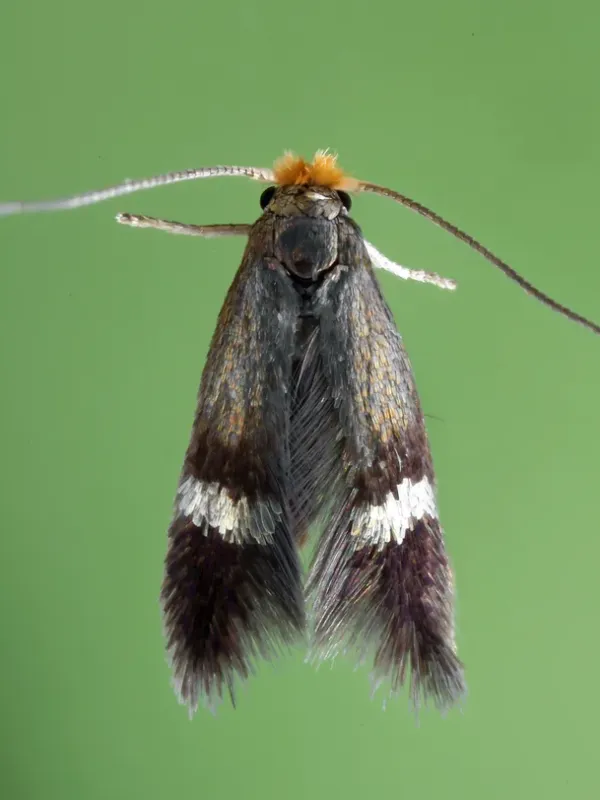
The adult moth is very small, with a wingspan of approximately 5 mm. Its appearance is characterized by dark-colored wings with a distinct metallic sheen.
The larvae are yellow-green with a brown head and grow to about 3-4 mm in length. They spend their entire larval stage feeding inside the leaf tissue of host plants.
The insect typically completes two to three generations per year, depending on the climate. It overwinters as a pupa inside a tough cocoon located in soil crevices or under loose bark.
The life cycle is closely synchronized with the apple tree's phenology, with the first adult generation emerging during the bud-burst stage in spring.
What it damages
The primary host for Stigmella malella is the domestic apple tree. Infestations are most severe in neglected orchards or high-density fruit tree nurseries.
Damage is caused exclusively by the larvae, which create narrow, serpentine tunnels (mines) between the upper and lower leaf epidermises.
Extensive mining reduces the photosynthetic surface area of the leaves. This hinders the tree's ability to produce necessary energy for fruit growth and winter storage.
Heavy infestations lead to premature leaf yellowing and shedding, which can cause significant physiological stress to the tree over the growing season.
In young trees, repeated damage over several years can suppress tree development and decrease the overall yield potential of the orchard.
Signs of infestation
The most obvious sign of infestation is the presence of visible, slender, winding white lines on the foliage known as mines. These tracks are distinct and easily recognizable.
Inside these tracks, a fine trail of dark frass (larval excrement) is often visible, which helps distinguish this species from other leaf-mining insects.
As the larva develops, the mine becomes wider and more irregular in shape. In severe cases, multiple mines may overlap, causing the entire leaf to wither and curl.
Checking the undersides of the leaves in spring reveals the presence of tiny, individual eggs laid by females near the leaf veins.
Orchard managers can observe increased moth activity in late spring and early summer, which often precedes the appearance of new mines on the foliage.
Control measures
Management of Stigmella malella requires a combination of monitoring and integrated pest management (IPM) practices to prevent economic damage.
- Apply specific insecticides during the peak period of egg hatching to target young larvae before they penetrate deep into the leaf.
- Install pheromone traps to monitor adult population levels and determine the optimal timing for chemical applications.
- Implement good orchard sanitation by raking and removing fallen leaves during autumn to destroy overwintering pupae.
- Promote the presence of natural predators and parasitoid wasps that feed on the larvae and keep populations in check.
- Maintain tree vigor through proper fertilization and pruning to help trees withstand minor levels of foliage loss.
Taxonomy
- Latin name
- Stigmella malella
- Order
- Lepidoptera (butterflies)
- Family
- Nepticulidae
- EPPO code
- NEPTMA
Discussion
No discussions yet — be the first.