
Apple pygmy moth
Stigmella incognitella
Description
How to identify
The Apple pygmy moth (Stigmella incognitella) belongs to the Nepticulidae family, a group of minute moths known for their leaf-mining larvae.
As the name suggests, the adults are extremely small, with a wingspan of only a few millimeters, making them difficult to spot in the orchard environment.
They typically exhibit dark, subtle coloration, which helps them blend in perfectly with the bark of host trees during the daytime.
The larva is the destructive stage of this insect, appearing as a tiny, translucent caterpillar that develops entirely within the foliage.
This species is highly specialized, primarily targeting apple trees and utilizing the leaf tissue both as a food source and as a protective shelter.
What it damages
The primary damage is caused by the larvae, which mine into the leaf blades, creating intricate, winding tracks known as galleries.
These mines disrupt the integrity of the leaf tissue, significantly impairing the tree's ability to perform photosynthesis effectively.
Severe infestations can lead to substantial leaf loss, which drains the tree's energy reserves and negatively impacts fruit quality and yield.
In young orchards, repeated attacks from this pest can stunt tree growth and reduce overall vigor, making the trees more susceptible to secondary stresses.
Because the larvae reside inside the leaves, they are shielded from many environmental hazards and contact-based predators, increasing their survival rate.
When it appears
The first generation of moths typically emerges in late spring, often correlating with the budding and flowering period of apple trees.
After mating, females lay individual eggs on the underside of young leaves, strategically placing them near the leaf veins.
The larval stage lasts for several weeks, during which they remain confined to the leaf tissue, systematically mining the surrounding area.
Depending on the climatic zone, the species can complete multiple life cycles throughout the growing season, potentially increasing population density.
The pupal stage occurs in the soil or within crevices of the tree bark, where the insect overwinters in a protected cocoon until the following spring.
Signs of infestation
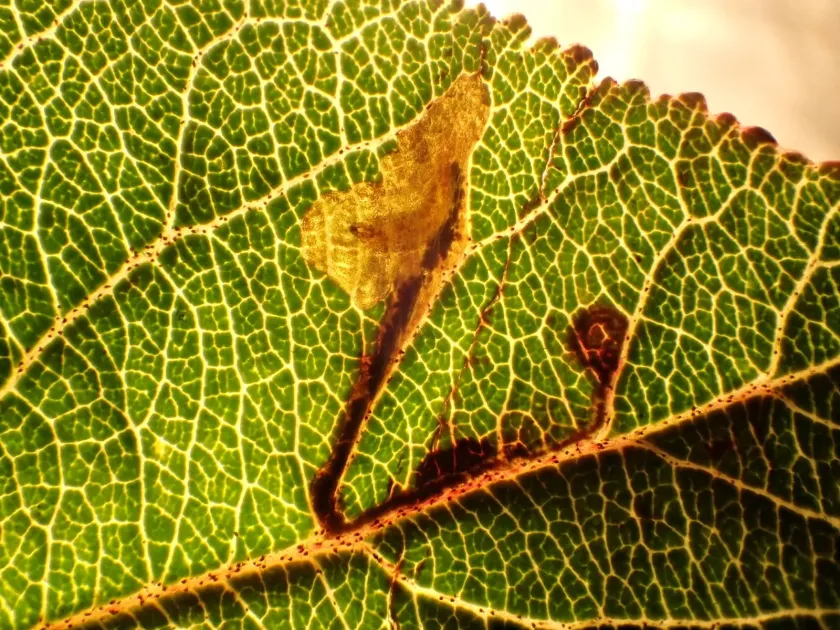
The most distinctive symptom of an infestation is the appearance of thin, serpentine trails on the surface of the apple leaves.
Within these tunnels, a dark, continuous or broken line of frass (larval waste) is visible, which is a key diagnostic feature for this specific pest.
As the larvae grow, the mines widen, and in heavy infestations, the leaves may turn chlorotic, shrivel, and drop prematurely from the branches.
Checking the underside of leaves for these characteristic patterns is the standard method for field scouting and assessing pest pressure.
- Presence of narrow, winding leaf mines with a central line of frass.
- Premature yellowing and drying out of the apple foliage.
- Visible signs of leaf tissue damage when held up against a light source.
Control measures
Integrated pest management (IPM) for this species begins with the use of pheromone traps to monitor adult activity and determine treatment thresholds.
Sanitation practices are essential, including the removal and destruction of fallen leaves during autumn to eliminate overwintering pupae.
Targeted insecticide applications are most effective when timed precisely to coincide with the period of egg hatching and the emergence of neonate larvae.
Encouraging natural predators, such as parasitic wasps, can help keep population levels in check without the need for intensive chemical sprays.
Maintaining a healthy, well-pruned orchard canopy improves airflow and light penetration, creating a less hospitable environment for the moth's development.
Taxonomy
- Latin name
- Stigmella incognitella
- Order
- Lepidoptera (butterflies)
- Family
- Nepticulidae
- EPPO code
- NEPTPO
Discussion
No discussions yet — be the first.