
Strawberry leaf miner
Stigmella fragariella
Description
How to identify
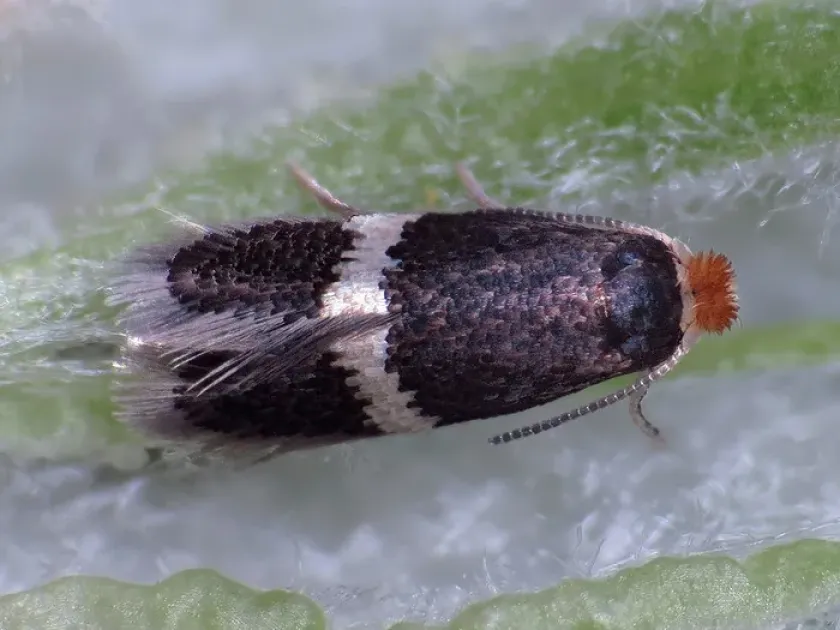
The strawberry leaf miner, scientifically known as Stigmella fragariella, belongs to the Nepticulidae family. These are extremely small moths with a wingspan of only 5–6 mm.
Adult moths are secretive, but their larvae are the primary stage causing damage. The larvae have flattened bodies that allow them to live and feed within the leaf tissue.
Larvae are typically pale yellow or greenish, blending in with the leaf color. Because of their tiny size, they are often overlooked until significant damage occurs.
The life cycle is closely tied to local weather conditions. In warm climates, several generations can emerge during a single growing season, increasing the pest pressure.
They overwinter as pupae or larvae in the soil or within organic debris under strawberry plants, which protects them from extreme cold and environmental factors.
What it damages
The primary host plants include garden strawberries and wild strawberries. These pests thrive in environments where host plants are dense and undisturbed.
Larvae feed on the inner leaf tissue, creating serpentine, winding mines. This damage significantly reduces the surface area available for photosynthesis.
As the plant loses photosynthetic capacity, its overall growth and vigor decline. Weakened plants are subsequently more vulnerable to secondary infections and diseases.
Heavy infestations can lead to premature leaf senescence and drying. This directly impacts the yield, reducing both the quantity and the quality of the harvested berries.
Damage is most severe during the critical stages of flower development and berry maturation, as the plant lacks the necessary energy to support heavy fruit production.
Signs of infestation
The most distinctive symptom is the appearance of narrow, pale, snake-like tracks on the upper or lower surfaces of the leaves.
These mines may turn brown or grey as the larvae accumulate frass (excrement) within the tunnels, making the damage more visible over time.
If you hold a leaf up to the light, you can often see the shadow of the larva moving inside the tunnel, confirming an active infestation.
Affected leaves often curl, warp, or develop yellow margins as the tissue dies. In severe cases, the entire leaf may shrivel and fall off prematurely.
Infested patches of strawberry beds will appear patchy and stunted compared to healthy areas, exhibiting slower development and poor foliage quality.
Control measures
Cultural control is essential: practice strict sanitation by removing and destroying old leaves and plant debris after harvest to reduce overwintering sites.
Cultivating the soil between rows in the autumn can disturb pupae in the soil, effectively reducing the population of emerging adults in the spring.
Regular monitoring allows for the early removal of infested leaves before the larvae emerge to pupate or move to neighboring healthy plants.
When chemical control is necessary, choose systemic or contact insecticides, but apply them carefully outside of the bloom period to protect pollinators.
Biological control, such as using beneficial nematodes or entomopathogenic fungi, provides a safer alternative for managing populations during the ripening stage.
Taxonomy
- Latin name
- Stigmella fragariella
- Order
- Lepidoptera (butterflies)
- Family
- Nepticulidae
- EPPO code
- NEPTFR
Discussion
No discussions yet — be the first.