
Rose leaf miner
Stigmella anomalella
Description
How to identify
The rose leaf miner (Stigmella anomalella) is a member of the Nepticulidae family, known for being one of the smallest moths in existence, with a wingspan of only 5 to 6 mm.
Adult moths are characterized by dark, metallic-colored wings. Their size is so small that they often remain unnoticed by casual observers unless they examine the foliage very closely.
The larvae are pale yellow-green with a distinct dark head capsule. They spend their entire feeding stage hidden within the leaf tissue, making them difficult to spot without dissecting the leaf.
Eggs are minute, translucent, and typically deposited singly on the underside of rose leaves, near the main veins, providing protection for the emerging larvae.
The life cycle is tightly synchronized with the growth of the rose plant, allowing the insect to exploit the seasonal availability of high-quality leaf material.
What it damages
This moth primarily targets roses and wild rose species (Rosa). The damage is caused by larvae mining the leaves, creating distinct patterns.
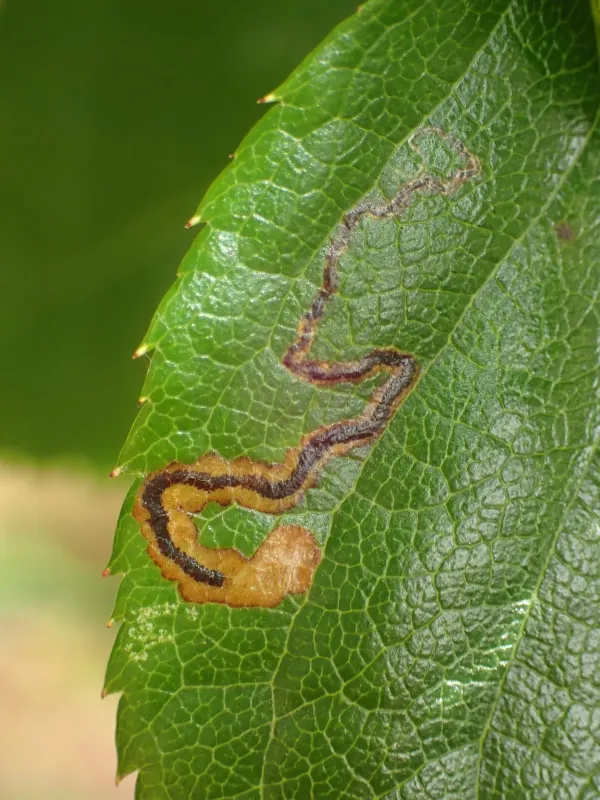
As the larva consumes the leaf tissue, it leaves behind a serpentine mine that gradually increases in width, matching the growth of the larva.
Severe infestations lead to premature leaf drop, which significantly weakens the plant. This loss of foliage hampers the plant's energy production before winter.
In nurseries, the presence of these miners can lead to poor plant development, resulting in stunted growth and a reduced ability to produce blooms in the following season.
While a few mines may not kill a healthy rose bush, heavy colonization can turn the entire canopy brown, severely reducing the aesthetic value of the garden.
When it appears
Adults emerge in late spring, coinciding with the development of the first flush of rose leaves, which provide the necessary food source for the next generation.
The larval stage lasts for several weeks throughout the summer. During this time, multiple generations can occur depending on the local climate and temperature.
The second generation is usually the most damaging, as it peaks during the mid-to-late summer months when the roses are under maximum stress.
Pupation occurs in small, tough cocoons often found in the leaf litter or on the surface of the soil around the base of the rose bushes.
Winter survival is achieved in the pupal stage, making the end of the season a critical time for sanitation efforts to reduce the population for the coming year.
Signs of infestation
The most diagnostic sign is the presence of winding, narrow galleries (mines) inside the leaf tissue that become visible as clear, irregular lines.
Inside these mines, a thin, dark line of excrement (frass) is visible, which helps distinguish this species from other leaf-mining insects on roses.
The leaf tissue surrounding the mine may eventually wither and turn brown as the plant cells die, creating a mottled appearance on the leaves.
- Serpentine mines on the leaf surface.
- Visible dark frass lines within the mines.
- Early chlorosis (yellowing) of the leaf blade.
- Premature defoliation of the shrub.
When the infestation is dense, the mines can intersect, leading to extensive tissue damage and causing the leaf to lose all function, eventually turning brown and falling off.
Control measures
Sanitation is the most effective cultural practice. Removing and destroying fallen leaves in the autumn removes the overwintering pupae from the environment.
Pruning out heavily infested leaves during the growing season can help keep the population in check, especially in small, managed rose gardens.
Systemic insecticides applied during the peak flight of the adults can effectively control the pest by targeting the larvae as they begin their mining activity.
Encouraging natural predators such as parasitic wasps can provide biological suppression, as these wasps often hunt for larvae inside the mines.
Maintaining vigorous plant health through appropriate irrigation and nutrition helps roses better withstand the stress caused by the leaf miner population.
Taxonomy
- Latin name
- Stigmella anomalella
- Order
- Lepidoptera (butterflies)
- Family
- Nepticulidae
- EPPO code
- NEPTAO
Discussion
No discussions yet — be the first.