
Stigmella
Stigmella
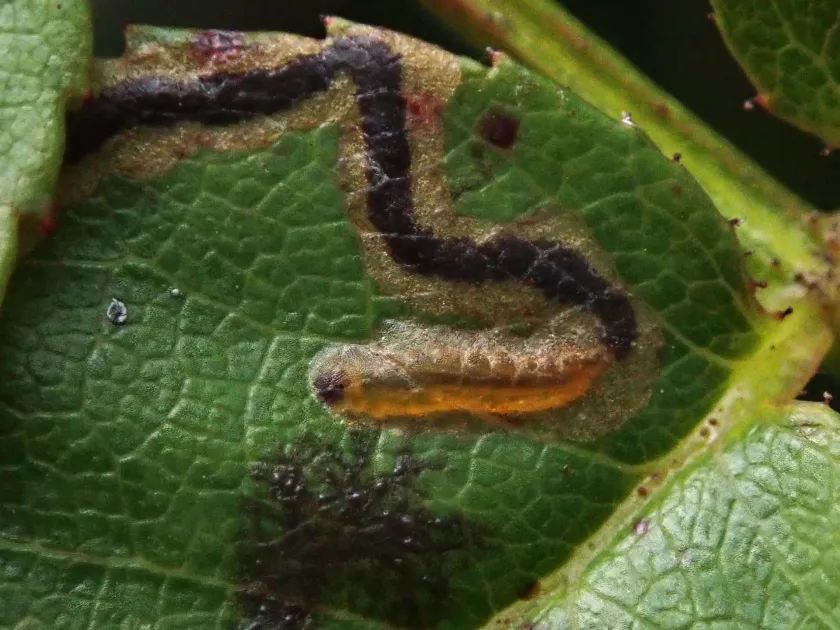
Description
How to identify
Stigmella is a genus of moths belonging to the family Nepticulidae (the pygmy moths). These are among the smallest lepidopterans in the world, with wingspans typically ranging from 3 to 5 millimeters.
Adult moths are generally inconspicuous, often featuring dark grey or brownish coloration with a metallic sheen. Their wings are characterized by a distinct fringe of long hairs along the margins.
The larvae, known as leaf miners, are entirely internal feeders. They possess a flattened body structure specifically adapted for life between the upper and lower epidermal layers of a leaf.
Due to their minute size, identification to the species level is rarely possible in the field; instead, agronomists rely on the morphology of the larval mines, which are unique to each host plant and species.
These insects are highly specialized, co-evolving with their specific host plants. This specificity makes them significant subjects in both forest entomology and commercial fruit production.
What it damages
Stigmella species are major pests of various deciduous trees and shrubs, showing a marked preference for members of the Rosaceae family, including apple, pear, cherry, and plum trees.
The larvae feed on the leaf parenchyma, creating intricate, winding tunnels known as mines. This feeding activity disrupts the leaf's ability to perform photosynthesis efficiently.
Heavy infestations can lead to significant premature leaf drop, which stresses the tree, reduces its vigor, and negatively impacts the accumulation of reserves for the following season.
In nursery settings, damage is particularly severe. Loss of leaf area in young plants significantly stunts growth and can lead to uneven development of the root system and crown.
In addition to physiological impact, the presence of these mines is unsightly for ornamental plants, often causing leaves to become chlorotic, curled, or necrotic at the site of the mining activity.
When it appears
The lifecycle typically begins in early spring, synchronized with the bud-burst of the host plant. Depending on local climate conditions, the insect may complete one to three generations per year.
Eggs are deposited singly on the underside of leaves. Upon hatching, the larva bores directly into the leaf tissue, ensuring it remains protected from external predators and environmental factors.
The peak activity of larvae occurs during the warmer months. As they grow, their mines expand correspondingly, providing a clear visual record of their feeding progression through the leaf.
Pupation generally occurs either in a tough, flattened cocoon hidden within bark crevices or in the soil beneath the host plant, where they remain protected during the dormant season.
By late summer or autumn, most populations have entered the pupal stage to overwinter, ensuring their survival until the following spring, when the cycle repeats with the emergence of the adults.
Signs of infestation
The most diagnostic sign of a Stigmella infestation is the presence of winding, thread-like mines on the leaves, which gradually broaden as the larva matures and feeds.
- Fine, serpentine tunnels visible on the surface of leaves.
- Gradual darkening of the tunnels caused by the deposition of larval frass (excrement) within the mine.
- Premature yellowing or browning of affected leaf segments.
- Visual confirmation of a small, pale larva inside the mine when held against a light source.
- Small, circular exit holes in the leaf where the larva emerged to pupate.
Control measures
Cultural control is the first line of defense; gathering and destroying fallen leaves during autumn is essential to eliminate a major reservoir of overwintering pupae.
Cultivating the soil around the base of trees (soil turning) in late autumn and early spring can disturb the pupae and significantly reduce the emergence rate of the following spring generation.
Chemical control should be timed to coincide with the period when larvae are hatching from eggs but have not yet fully embedded themselves in the leaf tissue, as this is when they are most vulnerable.
Encouraging biological control by protecting natural habitats for parasitic wasps (Hymenoptera) can help keep populations below the economic injury level without excessive pesticide use.
Maintaining optimal tree health through proper fertilization and pruning creates a resilient plant less susceptible to secondary stresses that might exacerbate the damage caused by these miners.
Taxonomy
- Latin name
- Stigmella
- Order
- Lepidoptera (butterflies)
- Family
- Nepticulidae
- EPPO code
- STGMSP
Discussion
No discussions yet — be the first.