
Andromeda lace bug
Stephanitis takeyai
Description
How to identify
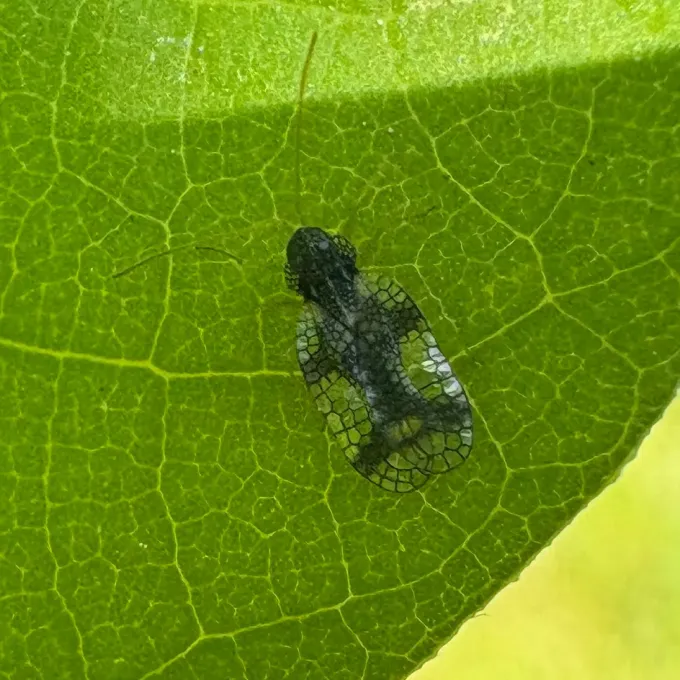
The Andromeda lace bug (Stephanitis takeyai) is a member of the Tingidae family, widely known for its distinct, intricate wing structure resembling delicate lace.
Adult bugs are very small, typically measuring between 3 and 4 millimeters in length, which makes them quite inconspicuous against the natural texture of leaves.
The coloration of these insects ranges from yellowish-brown to tan, providing an effective camouflage against the underside of the host plant's foliage.
Nymphs are significantly smaller than the adults and appear darker in color, often covered in tiny spines that help them cling to the plant tissue.
Identifying this pest usually requires a closer inspection of the leaf underside, where the bugs congregate to feed throughout their developmental stages.
What it damages
The primary hosts for the Andromeda lace bug are plants from the Ericaceae family, particularly rhododendrons, Andromeda, and Pieris japonica.
The insects feed by piercing the plant cells and extracting sap, which disrupts the photosynthetic process and weakens the overall structure of the leaves.
This feeding damage results in chlorosis, where the leaves develop a mottled, pale appearance that is often mistaken for a nutrient deficiency.
In addition to sap extraction, the insects secrete dark, lacquer-like waste that coats the underside of leaves, further damaging the aesthetic appeal of the plant.
Severe infestations cause the leaves to turn brown, curl, and eventually drop prematurely, leading to reduced vigor and stunted growth of the entire shrub.
When it appears
The life cycle begins in spring as temperatures rise, allowing overwintering adults to emerge and begin laying eggs on the leaves of their host plants.
Depending on the climatic conditions, this pest can produce multiple generations within a single season, leading to rapidly increasing population levels.
Peak activity typically occurs during the warm summer months, when the development of nymphs into adults accelerates due to higher temperatures.
The insects overwinter as adults or eggs, hidden within the foliage or near the base of the shrubs, allowing them to restart the cycle early in the following year.
Prolonged warm and dry periods during the growing season often contribute to more widespread outbreaks of the lace bug in landscape settings.
Signs of infestation
The most prominent sign of an infestation is the appearance of small white or yellow stippling on the upper surfaces of the leaves.
Turning a leaf over reveals the presence of the bugs themselves, along with dark, tar-like spots caused by their excrement on the leaf tissue.
As the infestation progresses, leaves may begin to brown at the margins and appear withered, which significantly impacts the health of the ornamental shrubs.
Heavy infestations can lead to premature leaf drop, leaving the plant looking thin and unhealthy by mid-to-late summer.
- Mottled or speckled leaf patterns
- Dark waste deposits on the underside of leaves
- Leaf yellowing and premature drying
- Noticeable presence of nymph colonies
Control measures
Management involves the use of systemic insecticides, which are most effective as they travel through the plant tissue to reach the feeding insects.
Applications should focus on thoroughly coating the underside of the foliage, as this is where the nymphs and adults are predominantly found.
Good garden hygiene, such as clearing away fallen leaf debris in the autumn, helps reduce the number of overwintering sites for the next generation.
Providing adequate water and mulch can help the shrubs remain resilient, making them better able to recover from the stress caused by pest feeding.
For sustainable control, it is recommended to monitor plants early in the season and intervene before the population reaches an uncontrollable level.
Taxonomy
- Latin name
- Stephanitis takeyai
- Order
- Hemiptera (bugs, aphids, leafhoppers)
- Family
- Tingidae
- EPPO code
- STEPTA
Discussion
No discussions yet — be the first.