
Rhododendron lace bug
Stephanitis rhododendri
Description
How to identify
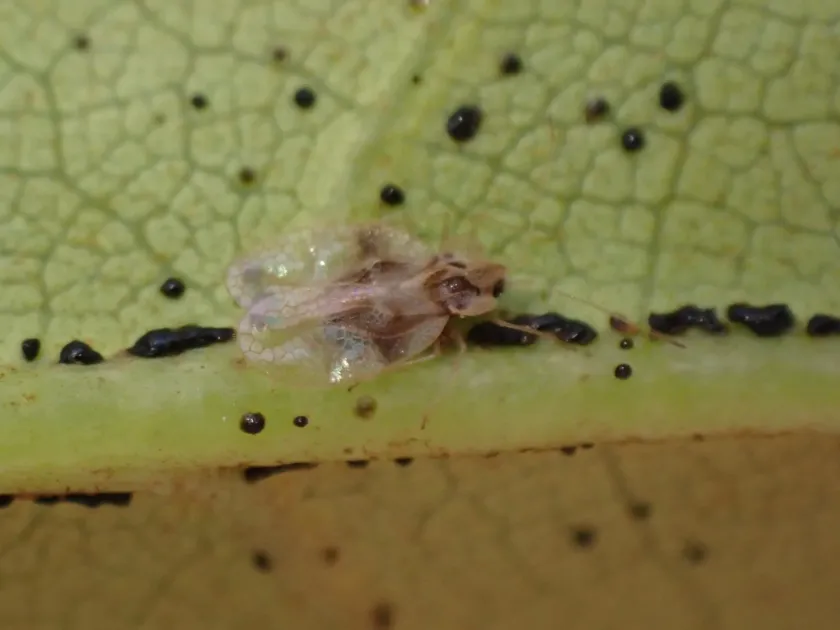
The rhododendron lace bug (Stephanitis rhododendri) is a member of the Tingidae family. Adults are small, measuring about 3–4 mm in length, and are easily identified by their intricate, lace-like wings.
The wings are clear with a complex network of veins, giving the insect a very delicate appearance that blends perfectly with the foliage of host plants.
Nymphs are wingless, darker in color, and often covered with small spines, making them difficult to spot without magnification during the early stages of infestation.
These insects primarily inhabit the undersides of leaves, staying away from direct sunlight and avoiding detection by gardeners and predators alike.
Both nymphs and adults remain on the lower leaf surface, where they spend most of their life cycle feeding and reproducing on the same plant.
What it damages
While named for its preference for rhododendrons, the lace bug also attacks azaleas and occasionally other broad-leaved evergreen plants in the garden.
They damage plants by piercing the leaf epidermis with their mouthparts and sucking out the cell contents, which destroys the chlorophyll and causes tissue death.
This persistent feeding reduces the plant's ability to produce energy through photosynthesis, leading to a general decline in plant health and vigor.
Heavily infested shrubs often fail to produce flowers, become stunted, and lose their natural ornamental beauty due to the damaged foliage.
Chronic infestation weakens the plant's immune system, making it much more susceptible to environmental stress, winter damage, and secondary diseases.
When it appears
The insect overwinters in the egg stage, with eggs embedded securely into the plant tissue, typically along the midrib of the leaves.
In spring, as temperatures rise, eggs hatch into nymphs, marking the beginning of the seasonal activity for the first generation of the year.
The life cycle from egg to adult is relatively fast, often allowing for multiple generations to develop during a single growing season under favorable conditions.
Adult activity peaks during the mid-summer months, during which they may spread to neighboring plants if they are not controlled effectively.
As autumn approaches and temperatures drop, the final generation of females lays the overwintering eggs, ensuring the cycle continues the following year.
Signs of infestation
The most characteristic sign of infestation is a stippled, mottled appearance on the upper surface of the leaves, resembling a light-colored, spotted texture.
The underside of the leaves is usually littered with small, dark, sticky fecal spots, which are a definitive indicator of lace bug presence.
Over time, infested leaves may turn yellow or grayish and eventually become dry and brittle, leading to premature leaf drop during the peak of the season.
Searching the undersides of damaged leaves for the presence of the bugs themselves or their shed skins can confirm that a lace bug colony is active.
- Stippled or mottled upper leaf surface
- Dark, sticky fecal spots on the underside
- Yellowing and premature senescence of leaves
- Presence of adults and nymphs on leaf undersides
Control measures
Systemic insecticides are generally the most effective control method, as they are absorbed by the plant and target the insects during their feeding process.
Applying treatments early in the spring, once nymphs become active, is crucial to prevent the population from exploding later in the season.
Maintaining proper cultural practices, such as adequate watering and soil health, helps plants withstand the stress caused by the feeding of the lace bugs.
In cases of light infestations, pruning and removing heavily infested leaves can significantly reduce the pest population and slow down its spread.
Ensuring good air circulation by avoiding overcrowding in plant beds can make the environment less favorable for the survival and colonization of these pests.
Taxonomy
- Latin name
- Stephanitis rhododendri
- Order
- Hemiptera (bugs, aphids, leafhoppers)
- Family
- Tingidae
- EPPO code
- STEPRH
Discussion
No discussions yet — be the first.