
Azalea lace bug
Stephanitis pyrioides
Description
How to identify
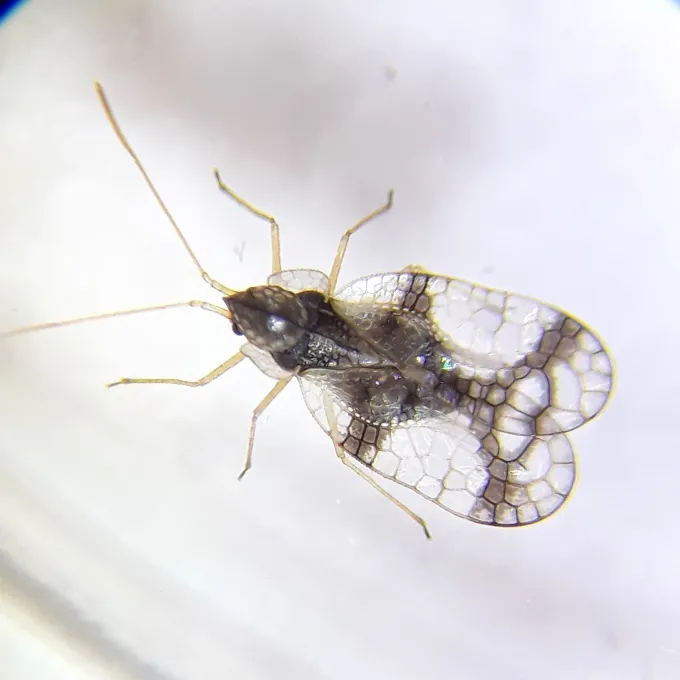
The Azalea lace bug (Stephanitis pyrioides) is a member of the Hemiptera order and the Tingidae family. Adults are approximately 3–4 mm long and are easily recognized by their highly detailed, lace-like wing structure, which acts as natural camouflage on host plants.
Adult bugs exhibit a mottled appearance with transparent and brown areas, allowing them to blend seamlessly with the foliage. The nymphs, or immature stages, are significantly smaller, typically paler or yellowish in color, and are covered with distinctive spines.
The name "lace bug" is derived from the intricate, reticulated pattern of their wings. This family of insects is highly specialized, and the species Stephanitis pyrioides primarily targets plants in the Ericaceae family, particularly azaleas and rhododendrons.
Their life cycle consists of egg, five nymphal instars, and the adult stage. Eggs are usually laid by females inside the leaf tissue on the underside, specifically along the midrib, providing protection against predators and fluctuating weather conditions.
Identifying these pests requires a keen eye and often a magnifying glass. Professionals should focus inspections on the lower leaf surfaces, particularly in the lower and interior sections of the shrub, where the infestation typically begins.
What it damages
Rhododendrons and azaleas are the primary hosts for this pest. In regions with favorable climate conditions, lace bugs can infest almost all ornamental cultivars within the Ericaceae family, leading to widespread damage if left unchecked.
Both adults and nymphs feed by piercing the leaf cells on the undersurface and extracting plant sap. This process causes severe physiological stress to the plant and interrupts the critical photosynthetic process, resulting in weakened overall plant health.
The most visible sign of damage is the appearance of chlorotic, stippled, or mottled patches on the upper surface of the leaves. Over time, these areas expand, turning the leaf silver or gray, which drastically reduces the plant's ornamental appeal.
The pest leaves behind dark, sticky excrement spots on the underside of the leaves. These deposits not only deface the plant but also serve as a substrate for sooty mold growth, which further blocks sunlight and exacerbates the decline of the shrub.
Severe infestations can lead to premature leaf drop and, in extreme cases, the total loss of the shrub's ornamental value. Continued heavy feeding over several seasons can compromise the plant's ability to survive winter dormancy, especially in young plants.
When it appears
Lace bugs overwinter in the egg stage, tucked away within the tissue of fallen leaves or in the bark of host shrubs. As temperatures rise in spring, nymphs emerge to begin feeding on the fresh, succulent new growth of the host plant.
The period of peak activity occurs during the warmer summer months, when development cycles are at their fastest. Under favorable conditions, the pest can complete several generations in a single growing season, leading to rapid population explosions.
Adults become highly active by early summer and spread throughout the plant canopy. The population density usually hits its maximum in July and August, coinciding with the most active vegetative growth period of rhododendrons and azaleas.
Temperature is the primary driver of the lace bug's life cycle. Elevated air temperatures significantly accelerate the development of all nymphal stages, resulting in a dramatic increase in the number of individuals present on the plant within a very short timeframe.
As autumn approaches and temperatures drop, the bugs prepare for the final stage of the season. Adults lay the overwintering eggs, ensuring the continuation of the species through the winter months and setting the stage for the next year's infestation.
Signs of infestation
The earliest symptom of an infestation is the presence of small, pale, stippled dots on the upper leaf surface. These dots are the result of chlorophyll depletion caused by the bug feeding from below, often appearing before any other signs are noticeable.
Inspecting the underside of an affected leaf will reveal clusters of tiny black waste deposits, along with the nymphs and adults themselves. Foliage that is heavily infested often loses its natural luster, appearing dull and unhealthy.
In advanced cases, leaf yellowing becomes widespread, eventually leading to leaves drying out and falling off prematurely. This defoliation significantly weakens the shrub and limits its capacity to produce flower buds for the following year.
The presence of sooty mold on the leaves is a secondary sign of lace bug activity. The dark, fungal growth thrives on the "honeydew-like" substances excreted by the nymphs, which can further obscure the foliage and reduce photosynthetic capacity.
Distinguishing lace bug damage from spider mite activity is crucial. Unlike spider mites, which typically create fine silk webs, lace bugs do not produce webbing, leaving only specific puncture marks, mottled spots, and black fecal deposits on the leaves.
Control measures
An effective management strategy for Azalea lace bug involves a combination of cultural practices and chemical control. Removing and properly disposing of fallen leaves in the autumn is essential to eliminate the primary overwintering sites for the eggs.
- Applying systemic insecticides during the peak nymph emergence in spring.
- Ensuring proper irrigation and mulching to keep plants vigorous and resilient.
- Pruning and removing heavily infested branches to reduce the initial pest population.
- Introducing biological control agents such as lacewings or predatory bugs.
Systemic insecticides are the most effective method, as the active ingredient is absorbed by the plant and ingested by the bugs during feeding. It is vital to ensure thorough coverage, especially on the undersides of the leaves where the insects congregate.
When selecting pesticides, choose products that minimize impact on beneficial insects and pollinators, especially if the plants are situated near flowering areas. Rotating between different chemical classes is recommended to prevent the development of resistance.
General horticultural care, including balanced fertilization, helps plants recover from pest-induced stress. Vigorous plants are less likely to experience severe damage and can withstand localized infestations better than drought-stressed or nutrient-deficient shrubs.
Taxonomy
- Latin name
- Stephanitis pyrioides
- Order
- Hemiptera (bugs, aphids, leafhoppers)
- Family
- Tingidae
- EPPO code
- STEPPY
Discussion
No discussions yet — be the first.