
Pear lace bug
Stephanitis pyri
Description
How to identify
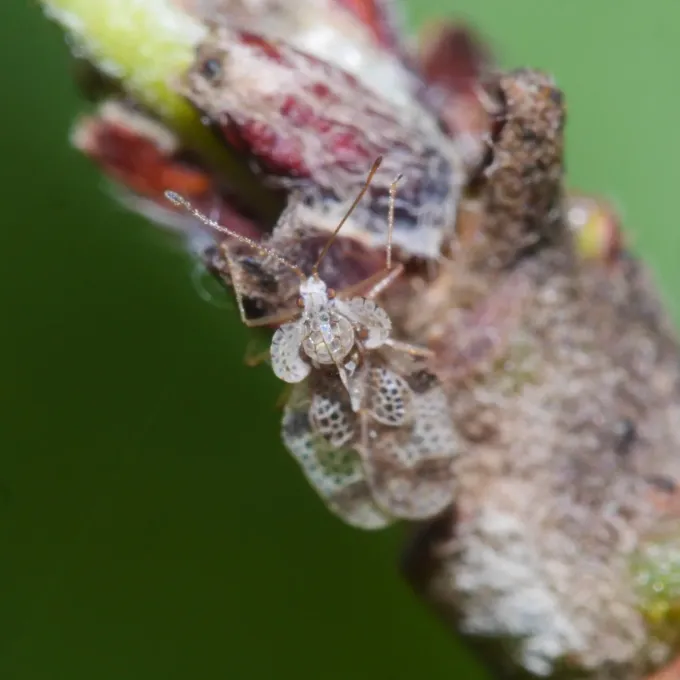
The pear lace bug (Stephanitis pyri) is a member of the Tingidae family, known for the intricate, lace-like pattern on its wings. These insects are small, typically measuring 3–4 mm in length, with a flattened body and brownish coloration.
The life cycle of the lace bug involves egg, nymph, and adult stages. Adults hibernate over the winter, typically finding shelter in the crevices of tree bark, fallen foliage, or debris around the base of the tree.
In spring, when temperatures rise, the overwintering adults emerge to feed and lay eggs. They insert their eggs directly into the leaf tissue on the underside of the leaves, often covering them with dark, hardening secretions.
Development occurs in multiple generations throughout the growing season. In warmer climates, the population can grow rapidly, especially during hot, dry summers that are conducive to the insect's reproductive success.
The nymphs go through several molting stages, gradually increasing in size and mobility. They tend to congregate in groups, feeding on the lower leaf surface, which makes early detection somewhat challenging.
What it damages
The pear lace bug is a significant polyphagous pest. While it primarily attacks pear trees, it also causes damage to apple, quince, and various stone fruit trees, including cherries, plums, and apricots.
Beyond fruit trees, this pest is frequently found on ornamental plants such as hawthorn, cotoneaster, and roses, making it a concern for residential gardens, nursery stock, and urban parks.
Damage is caused by both adults and nymphs sucking sap from the leaf cells. This continuous feeding disrupts the photosynthesis process, causing the leaves to lose their functional capacity to nourish the tree.
Heavy infestations lead to severe tree stress, reduced vigor, and increased susceptibility to other diseases and environmental stressors like drought or winter damage.
If left unchecked, the damage can lead to a drastic reduction in yield, with fruit remaining small, underdeveloped, and poor in quality, ultimately affecting the harvest outcome.
Signs of infestation
The most prominent symptom of an infestation is the appearance of tiny white or pale yellow stippling on the upper side of the leaves. Over time, these spots merge, creating a bleached or mottled appearance.
Upon closer inspection of the leaf undersides, one can observe the presence of the bugs, their nymphs, and sticky black droplets of excrement, which may also encourage the growth of sooty mold.
Deformation of the leaves and premature yellowing or browning often follow the feeding process. In severe cases, the foliage may wilt and drop from the tree well before the normal autumn season.
The presence of empty nymphal skins (exuviae) left behind after molting is a clear diagnostic indicator of an active lace bug population in the tree canopy.
Visually, the tree may look generally unthrifty. The reduction in leaf area effectively starves the tree, preventing the proper formation of fruit buds for the following year.
Control measures
Sanitation is a vital component of control. Removing and destroying fallen leaves and clearing debris around the trunk can significantly reduce the number of overwintering adults.
During the growing season, if monitoring indicates a high population, the use of insecticides is recommended. Systemic or contact-based insecticides should be applied specifically to the undersides of leaves.
Proper timing is essential for chemical control; it is most effective when the nymphs are young and active, before they have had the chance to cause extensive damage to the tree foliage.
It is important to follow all label instructions regarding application rates and pre-harvest intervals to ensure the safety of the fruit and the environment during treatment.
Enhancing biodiversity in the orchard can also help. Supporting natural predators such as lacewings and ladybirds can help suppress lace bug populations without relying solely on chemical intervention.
Taxonomy
- Latin name
- Stephanitis pyri
- Order
- Hemiptera (bugs, aphids, leafhoppers)
- Family
- Tingidae
- EPPO code
- STEPPR
Discussion
No discussions yet — be the first.