
Lace bug
Stephanitis oschanini
Description
How to identify
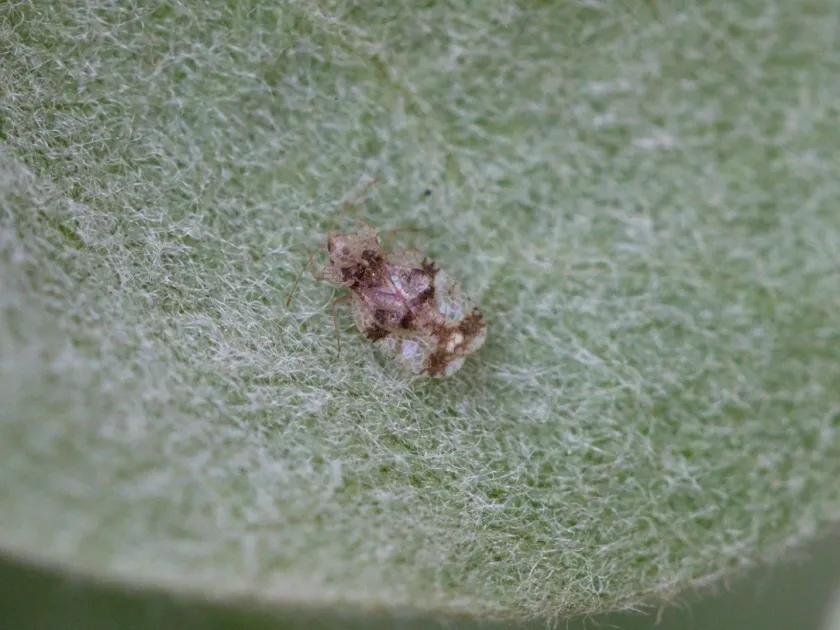
The lace bug (Stephanitis oschanini) is a small insect belonging to the order Hemiptera and the family Tingidae. Its common name is derived from the intricate, reticulated, lace-like appearance of its wings and pronotum.
Adult insects are typically 3–4 mm in length. They possess a flattened body and transparent wings with dark-colored veins. The nymphs (immature stages) resemble miniature adults but lack fully developed wings and reproductive organs.
These insects are primarily found on the undersides of leaves. Their cryptic coloration and tiny size often allow them to go unnoticed until high population densities cause visible plant stress.
The life cycle involves several nymphal stages before reaching adulthood. The insects are well-adapted to warm, dry climates, where they can complete multiple generations within a single growing season.
They overwinter as adults, finding shelter in bark crevices, leaf litter, or other protective plant debris. This overwintering strategy allows them to survive cold winters and re-emerge promptly in the spring.
What it damages
This pest primarily attacks fruit-bearing and ornamental woody plants. Favorite hosts include various species of Pyrus (pear) and Malus (apple), as well as several species of shrubs such as hawthorn.
The damage is caused by both adults and nymphs feeding on plant sap. They use their piercing-sucking mouthparts to puncture the leaf tissue, specifically targeting the spongy mesophyll on the lower leaf surface.
Feeding disrupts the leaf's ability to conduct photosynthesis, resulting in chlorosis and cell death. Severe infestations lead to the total loss of functional leaf area, which can significantly weaken the entire tree.
Beyond direct physical damage, the lace bug is considered a stressor that makes trees more susceptible to secondary pathogens and environmental factors like frost or drought.
In nursery settings, lace bug infestations are particularly harmful. They can lead to stunted growth in young trees, reduced wood maturity, and significantly diminished winter hardiness, ultimately impacting the economic value of the stock.
When it appears
Activity typically commences in early spring as temperatures rise and the first leaves begin to unfurl. Overwintered adults emerge from their shelters to feed and start the reproductive cycle.
The first nymphal generation usually appears in late May or early June. The duration of the life cycle is heavily dependent on ambient temperature, with warmer conditions significantly accelerating the development of the population.
Depending on the climatic zone, the insect may produce two or three generations per year. Peak populations are often observed during the mid-to-late summer months, coinciding with the hottest periods of the season.
As the days grow shorter and temperatures drop in early autumn, the lace bugs transition into a pre-diapause state. During this time, they gradually move to protected areas on the host plant or surrounding debris to overwinter.
Weather patterns are critical for population dynamics. Excessively dry and hot summers favor massive outbreaks, whereas heavy rainfall can suppress nymphal survival rates and decrease overall population pressure.
Signs of infestation
The initial sign of an infestation is the appearance of small, light-colored stippling or bleaching spots on the upper leaf surface. These spots correspond to feeding sites where chlorophyll has been depleted.
On the lower leaf surface, careful inspection will reveal small, dark, sticky droplets. These are the frass (excrement) of the insects and are a definitive diagnostic indicator of their presence.
Advanced infestations lead to the yellowing and eventual browning of leaves. In extreme cases, the entire leaf may dry out and drop prematurely, leaving the tree with an unhealthy, scorched appearance.
Reduced vigor and poor fruit development are secondary symptoms of long-term lace bug presence. The trees may exhibit slower shoot growth and fail to store sufficient carbohydrates for the upcoming winter.
- White or yellow chlorotic stippling on the upper leaves.
- Black, varnish-like excrement spots on the leaf underside.
- Early leaf yellowing and scorching.
- Premature defoliation of the tree.
- Decreased tree vitality and shoot elongation.
Control measures
Effective management requires an integrated approach. The most critical control measure is the early detection of nymphs, as they are most vulnerable during their early developmental stages before they become highly mobile.
Cultural practices include removing and destroying fallen leaves during the late autumn or winter. This sanitation effort effectively eliminates the primary overwintering sites, significantly reducing the initial population for the following spring.
Chemical control options include systemic insecticides that are absorbed by the plant and ingested during the lace bug's feeding process. Proper application timing is essential to target nymphs before they cause significant damage.
Biological control can be enhanced by fostering a healthy habitat for natural predators, such as lacewings, lady beetles, and predatory mites, which naturally keep lace bug numbers in check.
For sustainable control, growers should avoid over-relying on a single chemical class. Rotating insecticides with different modes of action is crucial to minimize the risk of the lace bug population developing resistance.
Taxonomy
- Latin name
- Stephanitis oschanini
- Order
- Hemiptera (bugs, aphids, leafhoppers)
- Family
- Tingidae
- EPPO code
- STEPOS
Discussion
No discussions yet — be the first.