
Laurel lace bug
Stephanitis lauri
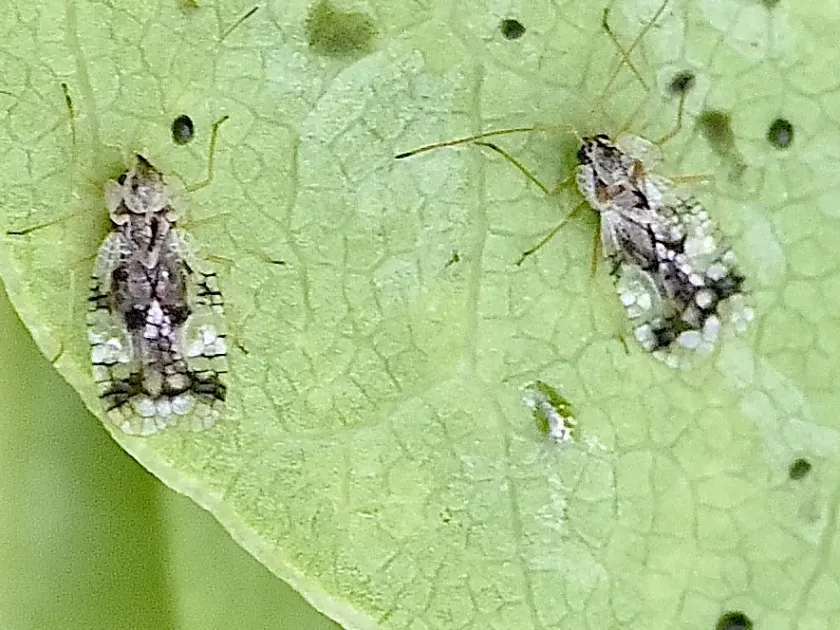
Description
How to identify
The laurel lace bug (Stephanitis lauri) is a member of the Tingidae family within the order Hemiptera. These insects are easily identified by the delicate, lace-like pattern on their wings, which gives them their common name.
The adult insect is small, measuring approximately 3–4 mm in length. Their bodies have complex, grid-like structures on their wings and pronotum, providing excellent camouflage against the foliage.
Females typically insert their eggs directly into the leaf tissue, usually along the central vein, where they remain protected from environmental stressors and many natural predators.
Nymphs go through several developmental stages (instars) before reaching adulthood. They are often covered in small, spiky outgrowths which help deter potential predators during their growth phase.
Being highly cryptic, these pests spend most of their life cycle on the underside of leaves, making them difficult to detect until the damage becomes severe.
What it damages
The primary host for this pest is the bay laurel (Laurus nobilis). The bug poses a significant threat to both ornamental gardens and commercial cultivation sites.
Both adults and nymphs feed by piercing the plant's epidermis and sucking out the cell sap, which disrupts the photosynthetic capacity of the foliage.
Feeding damage results in loss of vigor, premature yellowing, and eventual leaf drop. For ornamental plants, this significantly diminishes their aesthetic value and marketability.
The feeding punctures also serve as entry points for secondary pathogens, particularly fungal infections, which can further weaken the plant's structural integrity.
Continuous feeding causes stunting of new growth and, in severe cases, can lead to the death of entire branches or small saplings if not managed properly.
When it appears
Activity begins in the spring as soon as temperatures rise enough for the laurel to resume active vegetative growth. This marks the start of the primary infestation period.
The peak population growth usually occurs during the hot summer months, as warm weather significantly shortens the developmental cycle of the insect.
In favorable climates, multiple generations can occur within a single growing season, allowing the population to explode if left unchecked.
As autumn approaches, adults prepare for overwintering, seeking shelter in leaf litter, bark crevices, or protected areas within the canopy until spring returns.
In greenhouse settings, where temperatures remain consistently mild throughout the year, the pest may continue to reproduce, posing a year-round threat.
Signs of infestation
The earliest symptom is the appearance of mottled, chlorotic spots on the upper leaf surface, often referred to as stippling, which indicates sap extraction.
Small, dark, sticky spots of excrement are typically found clustered on the underside of the leaves, serving as a clear indicator of a current infestation.
Closer inspection of the leaf undersides reveals the presence of the bugs themselves, along with their cast-off skins (exuviae), which are left behind after molting.
As the damage progresses, leaves lose their deep green color, turn pale yellow, and eventually shrivel, leading to noticeable thinning of the plant's crown.
A sickly, sparse appearance of the laurel shrub is a strong diagnostic sign that Stephanitis lauri has successfully established a colony.
Control measures
Effective management requires an integrated approach that combines cultural practices with targeted chemical applications to keep the population under control.
Sanitation is a vital first step; removing and destroying heavily infested plant material can significantly reduce the local population of the pest.
Systemic insecticides are generally the most effective, as they are absorbed by the plant and kill the bugs during the feeding process.
- Always ensure full coverage of the underside of the leaves during spraying, as this is where the insects aggregate.
- Follow-up applications every 10–14 days are essential to target new nymphs that may hatch from eggs unaffected by the initial spray.
Biological control methods, including the use of entomopathogenic fungi or introducing natural predators, can be useful alternatives in controlled indoor environments.
Taxonomy
- Latin name
- Stephanitis lauri
- Order
- Hemiptera (bugs, aphids, leafhoppers)
- Family
- Tingidae
- EPPO code
- STEPLA
Discussion
No discussions yet — be the first.