
Annona fruit borer
Stenoma anonella
Description
How to identify
The Annona fruit borer (Stenoma anonella) is a lepidopteran pest belonging to the Elachistidae family. It is a highly specialized moth that targets plants within the Annonaceae family, causing significant economic damage.
Adult moths are relatively small with a wingspan of approximately 15 to 20 mm. Their wings possess a mottled grey-brown appearance, providing excellent camouflage against the bark of host trees during the day.
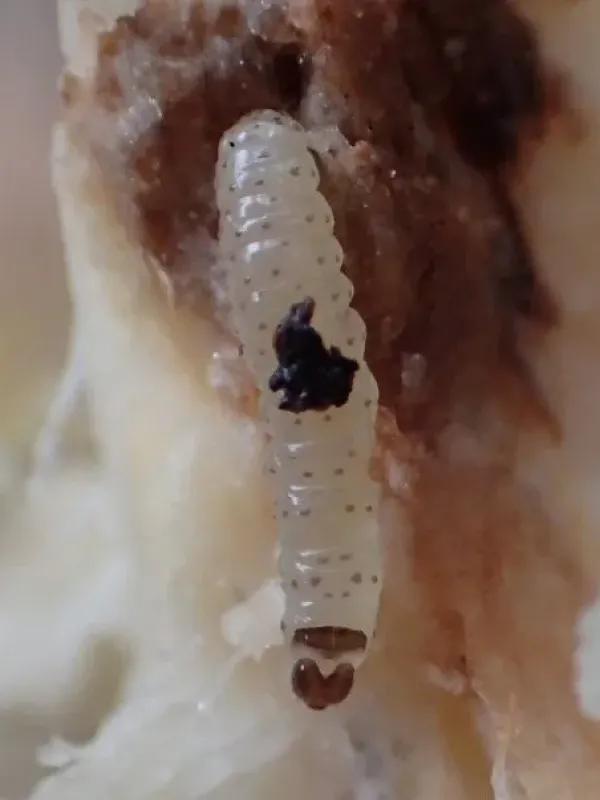
The larvae are the destructive stage of this pest. Upon hatching, they are creamy-white, becoming darker as they grow. They possess strong mandibles capable of boring deep into fruit tissues.
The life cycle typically spans several weeks, consisting of egg, larval, pupal, and adult stages. Favorable tropical climates allow for multiple overlapping generations throughout the growing season.
Pupation primarily occurs inside the infested fruit or within the soil beneath the canopy. Understanding this cycle is crucial for timing agricultural interventions effectively.
What it damages
The pest primarily affects crops like cherimoya, soursop, and sweetsop. It can infest trees throughout the year, provided there is suitable host tissue available for oviposition.
Larvae feed internally on the developing fruit, destroying the pulp and seeds. This feeding activity leads to stunted fruit growth and total loss of marketability.
Signs of infestation
Infested fruits typically display small entry holes often surrounded by larval frass (excrement). These holes are the most visible indicator that an infestation has occurred.
As the larvae feed internally, the fruit often turns black, dries out, or rots prematurely. In many cases, the fruit will drop from the tree before reaching its full size.
Control measures
Integrated Pest Management (IPM) is essential for controlling this moth. Sanitation, which involves the removal and destruction of all infested fruit, is the most effective cultural practice.
Chemical control should be targeted at the initial stages of fruit set when the larvae are most vulnerable. Furthermore, the use of pheromone traps is recommended to monitor populations and guide the timing of insecticide applications.
Taxonomy
- Latin name
- Stenoma anonella
- Order
- Lepidoptera (butterflies)
- Family
- Oecophoridae
- EPPO code
- STENAN
Discussion
No discussions yet — be the first.