
Swallow fly
Stenepteryx hirundinis
Description
How to identify
The swallow fly (Stenepteryx hirundinis) is a specialized ectoparasite that belongs to the Hippoboscidae family within the order Diptera.
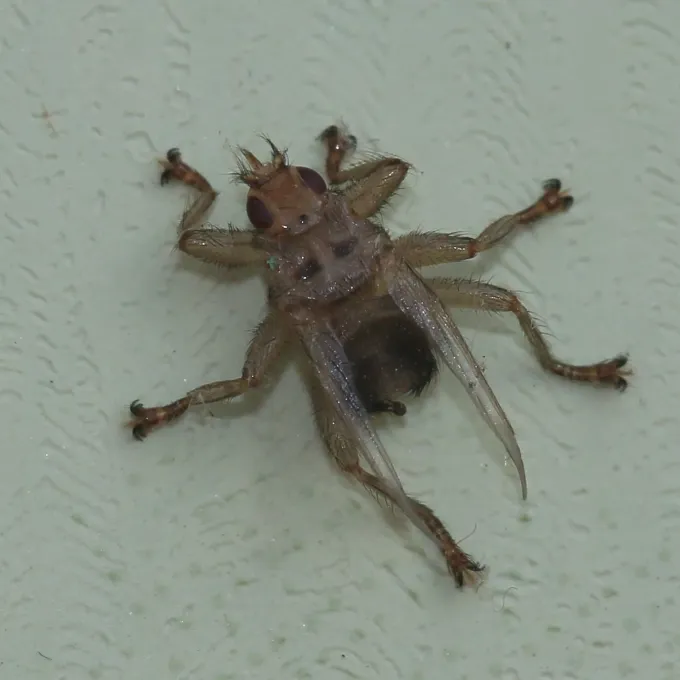
The insect possesses a flattened, leathery body covered in stout bristles, which allows it to navigate easily through the feathers of its avian host.
Most specimens have significantly reduced or non-functional wings, rendering them incapable of flight; they rely on running across the host's body.
The mouthparts are specifically adapted for piercing skin and feeding on the blood of birds, primarily swallows and house martins.
Measuring roughly 5 to 7 millimeters in length, these flies exhibit a durable chitinous exoskeleton that protects them from external pressures.
What it damages
While the swallow fly is not an agricultural crop pest, it poses a notable sanitary concern in bird-keeping environments and livestock facilities.
Heavy infestations can lead to significant blood loss in nestlings, causing anemia, stunted growth, and a generally weakened immune system.
The presence of these flies often causes restlessness in birds, which can disrupt normal breeding patterns and overall productivity in affected facilities.
Though they prefer birds, they may occasionally bite humans who enter infested areas like barns, sheds, or lofts, causing irritating skin reactions.
They act as potential vectors for various avian pathogens, complicating health management within bird populations.
When it appears
The activity cycle of the swallow fly is synchronized with the nesting period of their hosts, typically spanning from spring to late summer.
Population density peaks during the summer months when nestlings are present, providing a consistent and abundant food source for the adults.
Winter survival is managed by the pupal stage, which remains dormant within the nesting material until the birds return the following year.
The species reproduces via pupiparous development, where the female gives birth to a single mature larva that immediately pupates in the nest.
Recolonization of nesting sites occurs rapidly upon the arrival of returning bird populations, ensuring the continuation of the parasite's lifecycle.
Signs of infestation
A primary sign of infestation is the physical presence of flattened, fast-moving insects around known nesting areas of swallows or house martins.
Birds demonstrating persistent preening and obvious signs of agitation while in the nest are classic indicators of parasite annoyance.
The discovery of empty, dark brown pupal cases within the debris of old bird nests confirms an established population of the fly.
Human skin irritation, characterized by localized itching and redness after working in bird-frequented buildings, suggests an active infestation.
An increased number of insects congregating on walls near nesting sites often signals a high-density population level.
Control measures
The most effective cultural control is the removal and destruction of old bird nests during the off-season, which eliminates the dormant pupae.
Chemical control can be implemented using approved residual insecticides to treat surfaces in barns or outbuildings where flies may harbor.
- Physical exclusion by sealing entry points used by birds for nesting.
- Targeted insecticide spraying of walls, ceilings, and nesting cavities.
- Regular sanitation and removal of nesting debris from indoor structures.
Preventative measures, such as installing screens or netting on ventilation gaps, help limit bird access to undesirable areas.
Integrated pest management strategies should focus on maintaining hygiene in poultry areas to reduce the risk of future infestations.
Taxonomy
- Latin name
- Stenepteryx hirundinis
- Order
- Diptera (flies)
- Family
- Hippoboscidae
- EPPO code
- STNXHI
Discussion
No discussions yet — be the first.