
Forest fly
Hippobosca equina
Description
How to identify
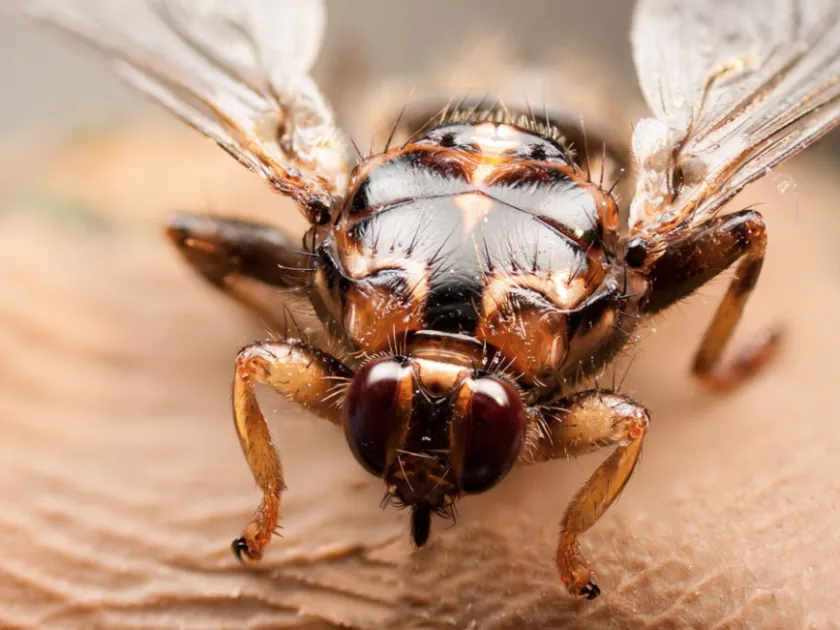
The Forest fly (Hippobosca equina) is a species of dipteran belonging to the family Hippoboscidae. It is a dorso-ventrally flattened fly, about 6–8 mm long, with a tough, leathery brown cuticle.
This insect is equipped with specialized claws on its legs, which provide an extremely firm grip on the hair of the host, allowing it to move rapidly while evading removal.
While capable of flight, the Forest fly prefers to remain on the host's body, using its wings primarily to find a new host when necessary or to disperse during summer.
Its mouthparts are designed specifically for piercing the skin and feeding on the blood of warm-blooded animals, primarily horses, cattle, and occasionally humans.
The species exhibits a unique reproductive strategy where the larva develops internally within the female before being deposited in a pupal stage, ensuring high survival rates.
What it damages
The Forest fly is not a crop pest; however, it is a significant veterinary pest that causes considerable distress and physiological damage to horses and livestock.
The primary concern is the extreme annoyance caused to the animals, leading to nervousness, constant tail swishing, and repetitive movements to ward off the parasites.
These flies act as potential mechanical vectors for several pathogens, including the Equine Infectious Anemia virus, posing a serious health risk to equine populations.
Frequent bites cause local skin irritation, dermatitis, and allergic reactions, which can lead to secondary infections if the horse constantly rubs or bites the affected area.
Productivity losses occur due to the animal's inability to graze peacefully, resulting in weight loss and increased stress during the warmer summer months.
When it appears
The Forest fly is most active during the summer season, typically from June to September, when temperatures are sufficiently high to support their biological cycle.
The flies thrive in warm, sunny, and humid conditions, which increase their flight activity and the frequency of attacks on grazing animals.
In stable environments or farm buildings, the population can remain active for longer periods if the temperature and humidity levels are kept stable and warm.
The lifecycle is closely tied to the grazing schedule, with adult flies often lying in wait for hosts among shrubs and tall grasses in pasture areas.
As autumn approaches and temperatures drop, the activity of adult flies decreases significantly, and the population declines due to their sensitivity to cold weather.
Signs of infestation
Infestation is usually identified by the presence of flat, fast-moving flies, particularly on the perineum, inner thighs, and under the tail of the horse.
Animals showing signs of extreme restlessness during grazing, such as sudden skin twitching, violent tail switching, or kicking at their own belly, indicate an active infestation.
Visible skin lesions, redness, and small bite marks are commonly found in the areas where the flies congregate, often leading to patchy hair loss or sores.
A noticeable decrease in the animal’s condition, such as weight loss or general weakness, can be observed when the parasite load becomes high enough to cause constant stress.
The presence of small dark fecal spots on the animal's coat is another common indicator that flies have been feeding on the host for an extended period.
Control measures
Effective control involves the application of veterinary-approved insecticides and repellents specifically formulated for use on equines against blood-feeding flies.
Maintaining clean stable environments and performing regular sanitation helps prevent the accumulation of pupae in crevices, floor gaps, and bedding materials.
The use of physical barriers, such as lightweight fly rugs or mesh sheets, is highly effective for protecting horses during peak grazing hours in the summer.
Pasture management, including the clearing of overgrown shrubs and dense weeds, helps reduce the habitat available for adult flies to wait for potential hosts.
- Use of systemic insecticides as prescribed by a vet
- Daily inspection of horses for parasite presence
- Strategic use of fly traps in stable areas
- Rotation of grazing paddocks to disrupt the lifecycle
Taxonomy
- Latin name
- Hippobosca equina
- Order
- Diptera (flies)
- Family
- Hippoboscidae
- EPPO code
- HIPOEQ
Discussion
No discussions yet — be the first.