
Horse ked
Hippobosca
Description
How to identify
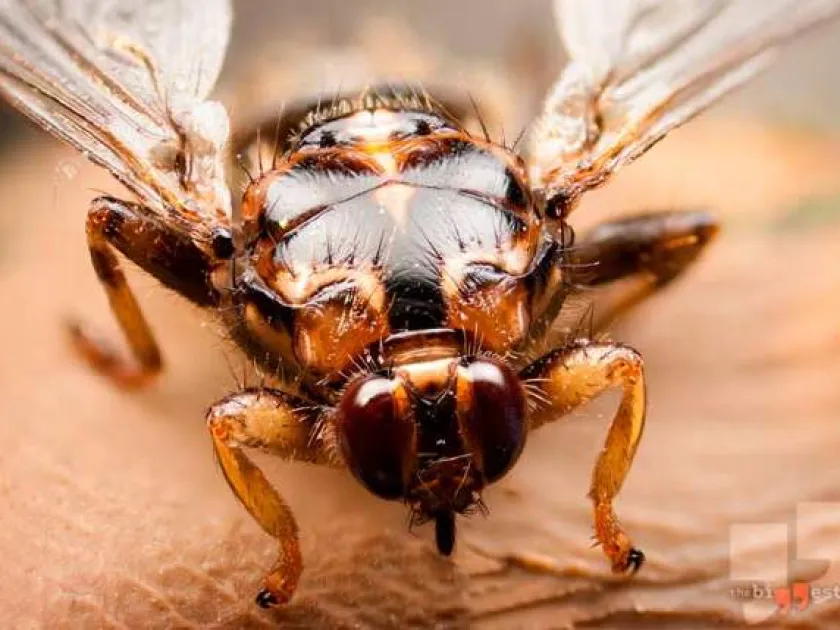
The horse ked (Hippobosca equina) is a specialized ectoparasite belonging to the family Hippoboscidae, order Diptera.
It is a flattened, brownish insect about 6–8 mm in length, possessing a very tough cuticle that makes it resistant to crushing.
The insect is characterized by strong, clawed legs adapted for clinging firmly to the hair coat of hosts, even during rapid movement.
Its mouthparts are specialized for piercing the skin and feeding on the blood of horses, donkeys, and other livestock.
The life cycle is unique as the insect is pupiparous: the female gives birth to a fully developed larva that immediately pupates, bypassing the free-living larval stage.
What it damages
The primary hosts are horses, mules, and donkeys, although they can occasionally infest cattle and humans.
Infestation causes constant irritation and distress, leading to reduced appetite, exhaustion, and overall loss of condition in affected animals.
Bites result in painful localized reactions, severe itching, and potential secondary dermatitis caused by constant scratching.
In young animals, heavy infestations can lead to anemia and significant blood loss, negatively impacting growth and immune system function.
Horse keds also act as mechanical vectors for various pathogens, potentially facilitating the spread of infectious diseases within a herd.
When it appears
Horse ked activity is highly dependent on temperature, typically peaking during the warm summer months from June to August.
In temperate climates, the insects emerge in late spring and remain active until the cooler autumn temperatures arrive.
Inside stables, where temperatures remain stable, the insects can survive and remain active for longer periods regardless of the external season.
The pupal stage occurs in the environment, primarily in bedding or soil, making sanitation of horse housing critical to disrupting the cycle.
Hot, humid weather conditions accelerate the development cycle, leading to increased pressure on livestock during these peaks.
Signs of infestation
The most common sign is restless behavior, with animals frequently tail-swishing, stamping their feet, or rubbing against objects to dislodge the flies.
Physical inspection reveals the insects, usually located on areas of thin skin, such as the perineum, groin, and inner thighs.
Small, inflamed bumps or swellings at the site of bites are common indicators of a recent infestation.
A decline in the general health, weight loss, and poor coat condition are often observed in heavily infested horses.
Animals may become difficult to handle or train due to the constant stress and pain caused by the presence of these parasites.
Control measures
Effective management requires the application of veterinary-approved insecticides, typically in the form of sprays, wipes, or pour-on formulations.
Regular sanitation of stable environments, including the frequent removal of bedding, is essential to destroy pupae and reduce future populations.
Applying repellent products to horses before turnout can significantly reduce the frequency of attacks during the active season.
Using fly sheets or protective blankets when horses are in the field can provide a physical barrier against the parasites.
- Regular grooming to manually remove keds.
- Application of insecticides to stabling areas.
- Strategic pasture rotation to break the life cycle.
Taxonomy
- Latin name
- Hippobosca
- Order
- Diptera (flies)
- Family
- Hippoboscidae
- EPPO code
- HIPOSP
Discussion
No discussions yet — be the first.