
Forest fly
Hippobosca rufipes
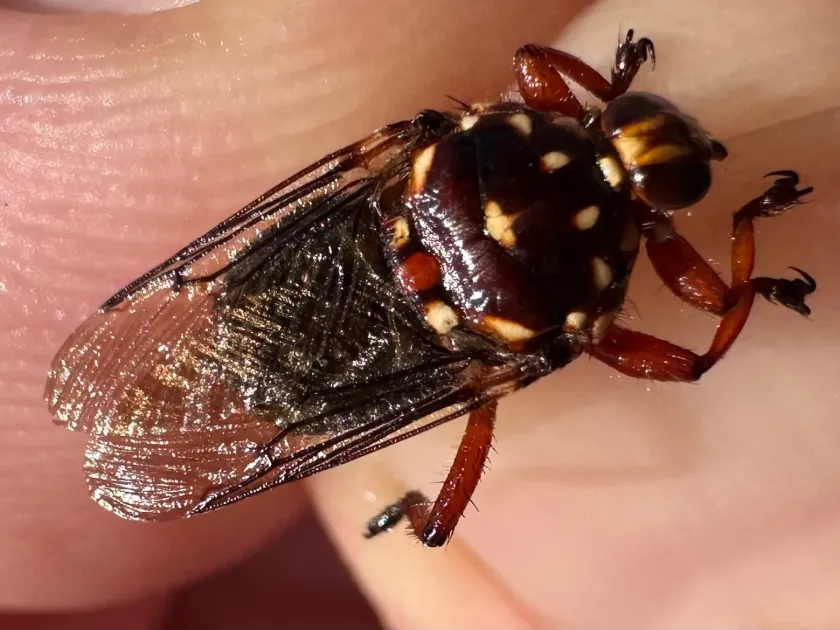
Description
How to identify
The forest fly, scientifically known as Hippobosca rufipes, belongs to the family Hippoboscidae within the order Diptera. These are specialized ectoparasites that have evolved to live on the bodies of warm-blooded animals.
They possess a flattened, leathery, brownish body measuring about 8–10 mm. This structure allows them to move rapidly and agilely through the dense fur of their hosts, making them difficult to remove.
Their mouthparts are designed for piercing and sucking blood, which is their sole source of nutrition. Their legs are equipped with robust, sharp claws that provide a firm grip on the animal's skin.
The species is viviparous, meaning the female gives birth to a fully developed larva that immediately pupates. These pupae are often found in the soil or bedding where the host animal rests.
Adult flies are strong flyers, enabling them to search for new hosts or re-infest animals after they have been moved to different pastures.
What it damages
It is crucial to clarify that the forest fly does not damage crops or plants. It is exclusively an animal parasite that causes significant economic losses in the livestock industry.
The primary damage is caused by the physical irritation and pain associated with blood-feeding, which leads to chronic stress in cattle, horses, and other domestic ungulates.
The constant biting creates painful lesions, which often become focal points for secondary bacterial infections, skin ulcers, and chronic dermatitis.
Infested animals suffer from reduced appetite, restlessness, and weight loss. This drop in physiological well-being directly leads to decreased milk yields and overall poor animal productivity.
Farmers face significant financial burdens due to the need for veterinary interventions, regular application of chemical protectants, and lost income from diminished product quality.
When it appears
The seasonal activity of the forest fly is highly dependent on environmental temperature and humidity levels. Activity typically peaks during the warmer months of late spring through early autumn.
In temperate climates, the fly population follows a distinct cycle, with emergence from pupae occurring in warm, sheltered environments where host animals gather.
Hot and humid conditions accelerate the development of the larvae, allowing for multiple generations to emerge within a single grazing season.
The persistence of the population in livestock housing depends on the sanitary status of the facility; poorly managed barns can provide a microclimate that supports fly survival year-round.
Monitoring for the presence of adult flies is essential during the grazing season, especially as temperatures increase, to prevent mass outbreaks among the herd.
Signs of infestation
The most prominent sign of infestation is behavioral change. Animals will be seen constantly swishing their tails, stomping, twitching their skin, or attempting to rub against solid objects to dislodge the flies.
A physical inspection of the animal will reveal the presence of flies, particularly in areas with thinner hair, such as the udder, perineum, groin, and inner thighs.
Skin lesions, characterized by clusters of red spots, inflammation, and potential crusting from scabs, are clear indicators of extensive feeding activity.
A decline in milk production or a failure to meet weight gain targets in growing animals despite adequate nutrition often points to a heavy parasite burden.
Because the flies move from animal to animal, the presence of these insects on a few individuals usually signifies a wider infestation throughout the herd that requires immediate action.
Control measures
Effective management requires a multi-pronged approach that combines chemical control, environmental sanitation, and careful herd management practices.
- Apply veterinary-approved pour-on or spray insecticides directly to the animals at regular intervals to maintain residual protection.
- Utilize insecticide-impregnated ear tags on cattle to repel flies and reduce landing frequency.
- Practice thorough sanitation of stables and pens by regularly removing manure and bedding where pupae accumulate.
- Improve barn ventilation to lower the humidity and temperature, making the environment less favorable for fly development.
- Isolate heavily infested animals to prevent the rapid spread of the parasite to the rest of the herd during grazing and handling.
Taxonomy
- Latin name
- Hippobosca rufipes
- Order
- Diptera (flies)
- Family
- Hippoboscidae
- EPPO code
- HIPORU
Discussion
No discussions yet — be the first.