
Camel keds
Hippobosca camelina
Description
How to identify
The camel ked (Hippobosca camelina) belongs to the family Hippoboscidae within the order Diptera. It is a highly specialized ectoparasite adapted to live on camels.
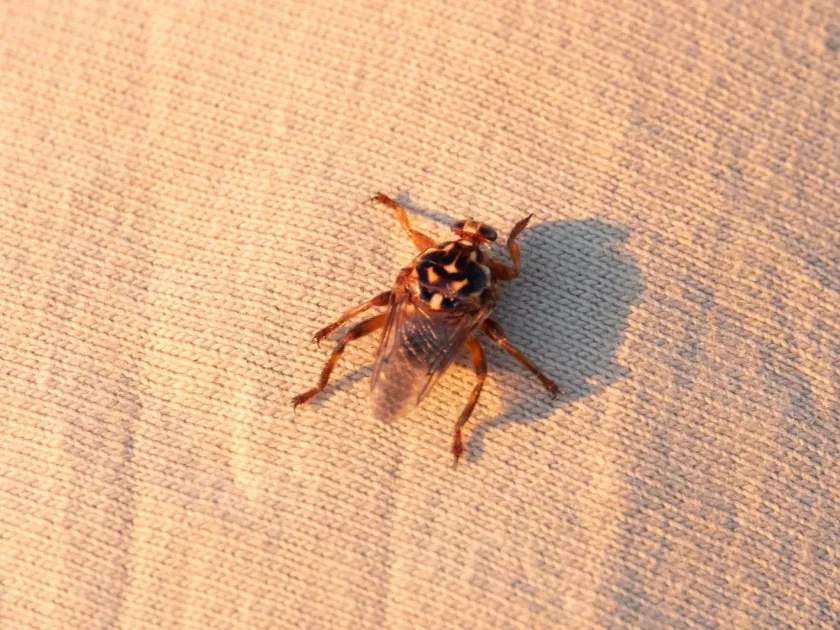
Physically, the insect resembles a fly but possesses a flattened, leathery body covered by a hard, brown chitinous shell, which makes it resistant to physical damage.
Adult insects grow up to 10–12 mm long. They are equipped with powerful, clawed legs that allow them to cling firmly to the camel's fur, even when the animal is running at high speeds.
The mouthparts are specifically adapted for piercing skin and feeding on the host's blood. The wings are well-developed, allowing the insects to fly actively in search of new hosts.
A unique biological feature of this species is larviparity. The female does not lay eggs but retains a single larva inside its body until it is ready to pupate.
What it damages
While this pest does not directly damage crops, its presence causes significant economic losses in the camel industry, indirectly affecting the agricultural sector.
It is an obligate parasite feeding on camel blood. Constant bites cause severe itching, stress, and anxiety in the animals, leading to reduced milk yield and slower weight gain.
In cases of heavy infestation, the parasites damage the animal's skin. This creates entry points for secondary infections and prevents the healthy growth of a dense fur coat.
Continuous skin irritation causes camels to rub against objects constantly, which damages the quality of hides and reduces their market value during processing.
Furthermore, camel keds can act as mechanical vectors for various blood-borne diseases, posing a serious threat to the overall health of the herd.
When it appears
The activity of the camel ked is directly dependent on environmental temperature. Warm months provide the most favorable conditions for their reproduction and active parasitism.
As spring temperatures rise, adult flies begin to attack camels more intensively, marking the acceleration of their life cycle.
Population peaks typically occur during the hottest summer months. In arid climates, where camels are kept, these parasites remain active until the onset of cold weather.
In winter, infestation levels decrease, although the insects can survive unfavorable periods by finding shelter or remaining in a dormant state on the host.
Pupation occurs in the debris accumulated in animal housing areas, where pupae can remain viable until conditions become favorable again.
Signs of infestation
The main sign of an infestation is abnormal behavior in camels. Animals become restless, constantly shift their weight, and attempt to rub against various objects to find relief.
During visual inspections, the parasites are most easily detected in areas with thinner fur, such as the groin, the udder area, or under the tail.
Small, pin-point hemorrhages on the animal's skin, left after the ked's proboscis has pierced the tissue, are a clear indicator of their presence.
The rapid movement of insect-shaped bodies through the fur when the animal is brushed is also a common sign of a ked infestation.
A decrease in body condition despite adequate nutrition is a strong indirect indicator that the animal is being subjected to constant parasite attacks.
Control measures
The primary method of control is the systematic application of contact-based insecticidal treatments that effectively kill the adult parasites on the animals.
- Application of specialized pyrethroid-based sprays and emulsions.
- Regular disinfection of barns, shelters, and livestock enclosures.
- Use of repellent sprays to protect animals during peak infestation seasons.
Maintaining high sanitary standards in animal housing areas is crucial to prevent larvae from successfully pupating in the bedding or soil.
Implementing a synchronized treatment program for the entire herd is the most effective way to break the parasite's reproduction cycle and significantly reduce its population.
Taxonomy
- Latin name
- Hippobosca camelina
- Order
- Diptera (flies)
- Family
- Hippoboscidae
- EPPO code
- HIPOCA
Discussion
No discussions yet — be the first.