
Deer ked
Stenepteryx
Description
How to identify
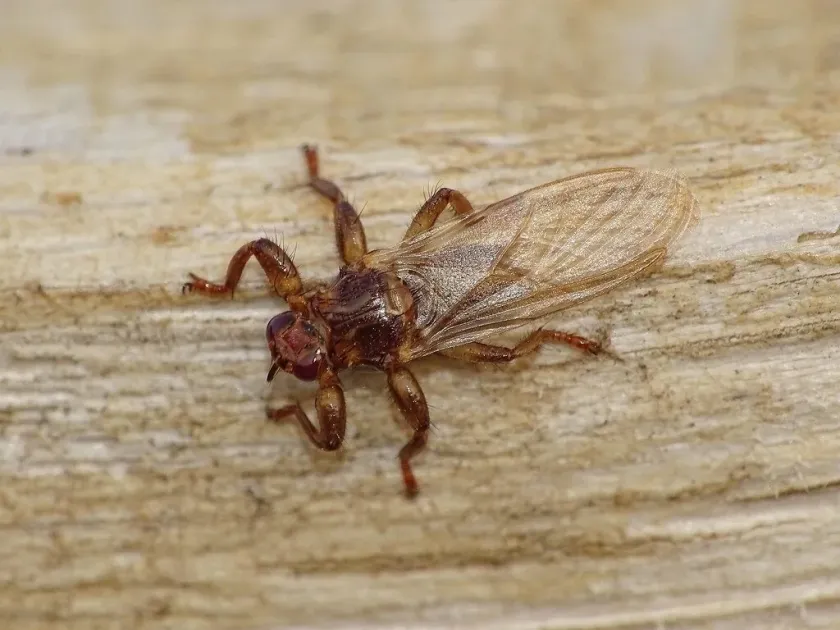
The deer ked (often scientifically associated with Lipoptena cervi or the genus Stenepteryx) is a specialized ectoparasitic fly belonging to the Hippoboscidae family. It is uniquely adapted for life on large mammals, such as deer and moose.
A distinctive feature of the adult deer ked is that it sheds its wings shortly after finding a host. Its body is flattened, allowing it to navigate easily through thick hair, and it is covered with robust setae to cling to the host's skin.
The insect possesses strong, hook-like claws on its legs, which enable it to stay attached even when the host attempts to remove it. Its mouthparts are specialized for piercing the skin and consuming blood meals.
Adult keds are typically 3 to 5 millimeters long and brownish in color. They are highly active during their search for a host and are attracted to heat and movement, which often leads them to land on humans or livestock.
The life cycle is unique because the larvae develop internally within the female. After being expelled, they pupate in the soil or leaf litter, completing their development cycle outside the host's body until the next season.
What it damages
While the deer ked is primarily a parasite of wild ungulates, it can cause significant issues in livestock management. Infestations result in significant blood loss, which weakens the animals and reduces their immune response.
Livestock affected by keds often exhibit restless behavior and decreased appetite, leading to poorer weight gain and lower productivity. The constant irritation from bites causes the animals to expend energy trying to ward off the parasites.
Secondary infections are a common consequence of heavy infestations. The skin lesions caused by ked bites are prone to bacterial contamination, potentially leading to dermatitis and severe discomfort for the livestock.
Agricultural operations near wooded areas are particularly at risk. The presence of these parasites can force farmers to alter grazing schedules, which can disrupt efficient land use and increase operational costs.
Human workers are also affected, as the bites can cause painful, itchy welts that often result in prolonged allergic reactions, significantly reducing the efficiency and comfort of agricultural personnel in affected areas.
When it appears
The activity of the deer ked is strictly seasonal. The primary period for adult infestation occurs in late summer and autumn, specifically from August through October, when the new generation of flies emerges from pupae.
Environmental temperatures play a crucial role in the development cycle. Warm and humid late-summer conditions facilitate the successful emergence of adults from the soil, leading to higher population density in the following months.
As winter approaches and temperatures drop, the activity of the deer keds significantly declines. While some keds may survive on their hosts, most of the population in the environment dies off due to cold conditions.
The spring season is generally quiet regarding adult deer ked activity, as the species is in its pupal stage in the soil. This dormancy period is essential for the species' survival over the winter months.
Monitoring seasonal patterns is vital for farmers. Predicting peaks in activity allows for timely intervention and preventative measures before the infestation reaches a level that impacts livestock health.
Control measures
Management of the deer ked involves the regular application of insecticides. Spot-on treatments, pour-on solutions, and insecticidal sprays containing pyrethroids are typically effective in controlling adult populations on animals.
Strategic grazing is an important management practice. Avoiding pastures adjacent to dense forests during peak flight months can significantly decrease the likelihood of livestock becoming infested with keds.
Personal protection for farm staff is essential during the high-activity season. Wearing tightly woven clothing with mesh netting and using insect repellents containing DEET or permethrin is highly recommended.
Regular monitoring of livestock and providing shelters during the day can help reduce contact. In severe cases, the environmental control of pupae in the soil under forest edges may be considered, although this is rarely practical.
- Applying systemic insecticides on livestock.
- Using protective clothing for farm workers.
- Adjusting grazing schedules to avoid peak flight times.
- Cleaning and disinfecting livestock holding areas.
Taxonomy
- Latin name
- Stenepteryx
- Order
- Diptera (flies)
- Family
- Hippoboscidae
- EPPO code
- STNXSP
Discussion
No discussions yet — be the first.